
About Elmer H. Fisher
Lived 1840 – 1905 (aged 64–65). Elmer H. Fisher was an American architect.
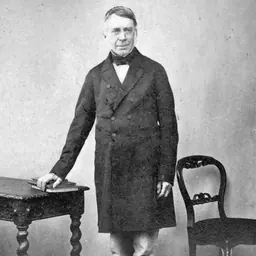
Elmer H. Fisher ( or – 1905) was an architect best known for his work during the rebuilding of the American city of Seattle after it was devastated by fire in 1889. He began his career as a carpenter and migrated from Massachusetts to the Pacific Northwest, starting his architectural career in Victoria, British Columbia in 1886 and eventually relocating to Seattle, where he practiced until 1891. After his reputation was damaged by litigation and personal scandal in Seattle, he moved to Los Angeles in 1893, where he only had modest success as an architect before returning to carpentry, dying around 1905 with his final years almost as mysterious as his early years; the details of his death and his burial location remain unknown. His commercial building designs played a major role in reshaping Seattle architecture in the late 19th century and many still survive as part of the Pioneer Square Historic District.
Life
Fisher claimed he was born in Edinburgh, Scotland, in 1840 and immigrated to Massachusetts at age 17 where he received an architectural apprenticeship in Worcester; this has yet to be substantiated by research and much conflicting information exists, most of it from coming from Fisher himself. In the 1870s he moved west to Minnesota, where he first appeared in the 1874 Minneapolis City Directory as a cabinet maker, the following year as a sash maker for R.P. Russell & Co., and the year after as a moulder for Smith, Parker & Co. He continued his journey west, arriving in Denver, Colorado, around 1880 where after first working as a foreman for a sash & door factory, began trading as an architect as well as a carpenter and builder with partner J.H. Corrin until his departure from that city in 1885.
After a brief residency in Butte, Montana, Fisher arrived in the Pacific Northwest in early 1886 where he established an architectural office in Victoria, British Columbia. Business in the booming city was brisk and within a year he had multiple substantial business buildings and homes to his credit and began receiving commissions further afield in Vancouver, British Columbia, and Port Townsend, Washington.
While the first few months of 1889 were some of Fisher's busiest, he and every other hopeful architect in the city would be given a clean slate when the Great Seattle fire of June 6, 1889, wiped out the majority of the business district. Many of Fisher's recent commissions were either outside of the burnt district or were only in the excavation stages at the time of the fire and despite common belief, many of his most famous buildings would have been built whether Seattle burned or not. Regardless, new commissions in the wake of the fire were numerous to the degree that several pre-fire commissions were halted or left un-built due to the glut of new construction. He is still considered the most prolific of the architects involved in rebuilding the city for designing almost half of the major downtown buildings between 1889 and 1890. The Abbott Hotel at Pike and Third, designed and built by Fisher in 1890. He would spend his last years in Seattle as the hotel's manager. Fisher began 1891 with an impressive list of buildings to his credit but large commissions became scarce as the economy began to cool. Besides finishing several buildings begun the previous year and repairing settling damage to an existing building, there were no new projects and Fisher turned to buying and selling real estate to supplement his income. Then in June 1891 Fisher was publicly accused of embezzlement by business associate and mill owner Fred Woodaman. Claiming to be owed a large amount by Fisher, Woodaman began spreading rumors that Fisher was cheating his creditors by transferring his properties to a friend's name and was even telling people that he had already skipped town. Other suits against Fisher soon followed. He countersued Woodaman in response for $15,000 for libel but the damage to his reputation and credit had already been done and his last classified ad as an architect appeared in Seattle newspapers on August 10, 1891. Only 2 days after his last ad as an architect, he was among those listed as being granted liquor licenses. Fisher spent the next year running the Abbott House Hotel at the Southeast corner of Pike Street and 3rd Avenue in a building that he had previously designed and built.
In early 1893, mere months after his marriage to Charlotte M. Willey (They would divorce by 1900), a former mistress that Fisher had traveled with from Colorado to Victoria brought a civil suit against him claiming to be his true wife. Although he was acquitted of any wrongdoing, the scandal ruined what was left of his reputation in Seattle. He had the contents of his home and office auctioned off and permanently removed to Los Angeles where he would form a new partnership with Carroll H. Brown. In Los Angeles he struggled to re-establish the career success he had enjoyed in Seattle, which had less to do with his reputation and more as a result of the Panic of 1893 which halted building projects across the nation. After a major commission for the Van Nuys Building in downtown Los Angeles fell through, his partnership with Brown was dissolved and he all but retired from architecture. After leading an unsuccessful 1897 expedition to Alaska during the Yukon Gold Rush, he returned to his first profession, carpentry, last appearing in the 1903 Los Angeles city Directory working as a construction superintendent for his former Seattle peer, John Parkinson who, unlike Fisher, had taken Los Angeles by storm upon his arrival a decade prior. He died around 1905 in relative obscurity. His official date of death as well as his final resting place is unknown.
Work Fisher's early commercial designs were of Victorian and Italianate influence and were typified by exposed brick with corbelling, selective exterior plastering and massive Aedicular window surrounds; motifs were reused to the extent that several buildings built between Victoria, Vancouver and Port Townsend in the mid-1880s were nearly identical. Romanesque elements heavily utilizing decorative terra cotta began to make their way into his designs by 1888 and would play a major role in his later work, such as the now demolished Burke block (1889–91), whose many elaborate terra cotta elements were incorporated into the public plaza surrounding the Henry M. Jackson Federal Building (1975).
On June 6, 1889, a fire destroyed most of Seattle's business district. The buildings were primarily constructed of wood so the large-scale rebuilding campaign focused on new "fireproof" buildings constructed of brick, stone and iron. Fisher designed many of the new buildings and some can still be seen in what is now the Pioneer Square neighborhood.
Fisher favored the Richardsonian Romanesque style which led to a unity of appearance in the district.
His best-known work is the Pioneer Building in Seattle. Designed and first proposed in 1888, It was completed in 1892 for Henry Yesler and it served as a "prestige office address" throughout the decade. It won an award from the American Institute of Architects for "being the finest building West of Chicago".
Projects
Pre-Fire Spencer's Arcade (1886, Destroyed) - Government & Broad St, Victoria, BC Stelly Block [Clarence Hotel] (1886-7, Demolished) - Johnson & Blanshard St, Victoria, BC Denny Building (1886-7, Destroyed) - Broad St, Victoria, British Columbia Reid Residence (1886, Demolished?) - Esquimalt Road, Victoria, BC Goldstream Hotel (1887, Destroyed) - Langford, BC 2 Houses for A.J. Langley (1887) - 1133 & 1141 Fort St, Victoria, BC Byrnes Block (1887) - Vancouver, British Columbia Willie Bakery (1887) - 537 Johnson St, Victoria, BC Seavy Block (1887, Destroyed) - Water St, Port Townsend, Washington Bank of British Columbia (1887, Destroyed) - Columbia & Mary St, New Westminster, British Columbia McLennan & McFeely Block (1887-8, Demolished) - 132 Cordova St, Vancouver, BC Pimbury Block (1887-8, Demolished) - Nanaimo, British Columbia Cameron Bldg (1888) - 581 Johnson St, Victoria, BC Young Building (White House) [New Facade] (1888, Demolished) - 67 Government St, Victoria, BC Sheam & Lee Building (1888) - 539-45 Fisgard St, Victoria, BC 4 Terrace Houses for A.A. Bell [Fisher & Clark] (1888, Demolished) - NW Corner of Bell St & 2nd Ave, Seattle, WA Craft & Norris Block (1888, Altered) - 95 Douglas St, Victoria, BC Armory Hall (1888, Destroyed) - Union Ave near 4th St, Seattle, WA Bow Block (1888, Destroyed) - 314 1st Ave S, Seattle, WA Korn Block (1888, Destroyed) - 119 Yesler Way, Seattle, WA James & Hastings Building [Fisher & Clark] (1888–89) - 940 Water St, Port Townsend, WA Pioneer Building [Fisher & Clark] (1889–91) - 600 1st Ave, Seattle, WA N.D. Hill Building (1889) - 635 Water St, Port Townsend, WA Hastings Building [Fisher & Clark] (1889) - 899 Water St, Port Townsend, WA Gilmore & Kirkman Building (1889–90, Destroyed) - 1225 1st Ave, Seattle, WA Denny Hotel [Fisher & Clark] (1889, Unbuilt) Hull Building (1889) - 2405 1st Ave, Seattle, WA
Post-Fire Lowman & Hanford Building/Puget Sound Bank (1889, Demolished) 1st & Cherry, Seattle, WA Seattle Times Building (1889, Demolished) - 113 Columbia St, Seattle, WA New England Hotel (1889–90, Altered) - 219 1st Ave S, Seattle, WA Scurry Residence (1890, Demolished) - 11th Ave & James St, Seattle, WA Lottie Roth Block (1890–91) - W Holly St at G St, Bellingham, WA State Building (1890–91) - 300 Occidental Ave S, Seattle, WA Semi-Detached House at Washington St & 11th (now 10th) Ave (1890, Demolished) - Seattle, WA George & Nugent Building (1890, Demolished) - 211 S Washington St, Seattle J.W. George Building [Lebanon Building/Tourist Hotel] (1890–91, Destroyed) - 224 Occidental Ave S, Seattle, WA Meek's Bakery Co. (1896, Demolished) - 6th & San Pedro St, Los Angeles, CA
Don’t just read it —
keep it.
Full-length biographies made to live with: read them, listen on the way to work, watch them tonight.
- E-book
- Audio
- Video
Instant download · yours to keep · every purchase keeps this site free
Important facts
People in Elmer H. Fisher's life
Named in this biography and alive at the same time




Related people
Same field, nearest in time


Contemporaries
People whose lives overlapped Elmer H. Fisher's

Frequently asked questions
Who was Elmer H. Fisher?
American architect
When was Elmer H. Fisher born?
Elmer H. Fisher was born in 1840.
When did Elmer H. Fisher die?
Elmer H. Fisher died in 1905 in Los Angeles.
What was Elmer H. Fisher's occupation?
Elmer H. Fisher was an architect.
What nationality was Elmer H. Fisher?
Elmer H. Fisher was American.
Sources & further reading
Cite this page
APA: Biography.guide. (2026). Elmer H. Fisher. https://biography.guide/elmer-h-fisher/
MLA: "Elmer H. Fisher." Biography.guide, https://biography.guide/elmer-h-fisher/.
Chicago: "Elmer H. Fisher." Biography.guide. https://biography.guide/elmer-h-fisher/.
Data last updated: 2026-09-20 · Spot an error? Report a correction.
Page generated 2026-09-27 05:26 UTC