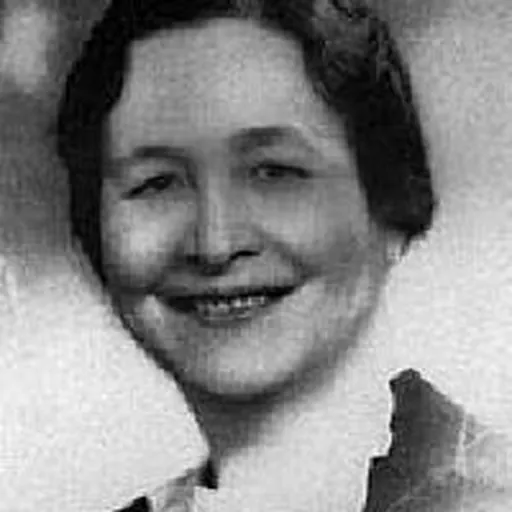
About Ella Cara Deloria
Lived 1889 – 1971 (aged 82). Ella Cara Deloria was an American anthropologist, linguist, writer, educator and ethnographer, known for Latin language, Legend and Oral history.
Life Deloria was born in 1889 in the White Swan district of the Yankton Indian Reservation, South Dakota. and brother Vine Victor Deloria Sr., who became an Episcopal priest like their father. The noted writer Vine Deloria Jr. is her nephew.
Deloria was brought up among the Hunkpapa and Sihasapa Lakota people in Sioux Falls.
She went on to become "one of the first truly bilingual, bicultural figures in American anthropology, and an extraordinary scholar, teacher, and spirit who pursued her own work and commitments under notoriously adverse conditions. At one point she lived out of a car while collecting material for Franz Boas." Throughout her professional life, she suffered from not having the money or the free time necessary to take an advanced degree. She was committed to the support of her family. Her father and step-mother were elderly, and her sister Susan depended on her financially. She held positions at the Sioux Indian Museum in Rapid City, South Dakota, and as assistant director at the W.H. Over Museum in Vermillion.
Deloria had a series of strokes in 1970, dying the following year of pneumonia.
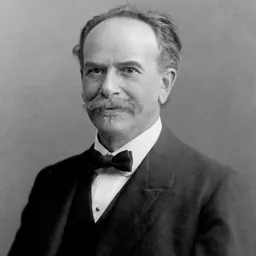
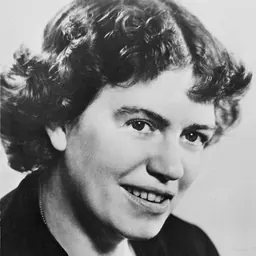
Work and achievements Deloria met Franz Boas while at Teachers College, and began a professional association with him that lasted until his death in 1942. She worked with Margaret Mead and Ruth Benedict, anthropologists who had been graduate students of Boas. For her work on American Indian cultures, she had the advantage of fluency in the Dakota, Lakota, and Nakota dialects of Sioux, in addition to English and Latin. Therefore, "exam[ining] Deloria's reciprocal mentoring relationships, in this way intervening in previous scholarship’s emphasis upon Deloria’s cultural mediation and personal hardships to highlight her impact on the field of anthropology (...) was instrumental in bringing about important advances to the field."
In 1938–39, Deloria was one of a small group of researchers commissioned to do a socioeconomic study on the Navajo Reservation for the Bureau of Indian Affairs; it was funded by the Phelps Stokes Fund. They published their report, entitled The Navajo Indian Problem. This project opened the door for Deloria to receive more speaking engagements, as well as funding to support her continued important work on Native languages.
In 1940, she and her sister Susan went to Pembroke, North Carolina to conduct some research among the Lumbee of Robeson County. Deloria believed she could make an important contribution to their effort for recognition by studying their distinctive culture and what remained of their original language. In her study, she conducted interviews with a range of people in the group, including women, about their use of plants, food, medicine, and animal names. She came very close to completing a dictionary of what may have been their original language before they adopted English. She also assembled a pageant with, for and about the Robeson County Lumbee in 1940 that depicted their origin account.
Deloria received grants for her research from Columbia University, the American Philosophical Society, the Bollingen Foundation, the National Science Foundation, and the Doris Duke Foundation, from 1929-1960s.
She was compiling a Lakota dictionary at the time of her death. Her extensive data has proven invaluable to researchers since that time. In 2010, the Department of Anthropology of Columbia University, Deloria's alma mater, established the Ella C. Deloria Undergraduate Research Fellowship in her honor. " "The Forum on Public Policy," the online journal of the Oxford Roundtable [Harris Manchester College, Oxford, England]. Gardner, Susan. 2014. "Subverting the Rhetoric of Assimilation: Ella Cara Deloria (Dakota) in the 1920s." Hecate 39.1/2: 8–32. Gere, Anne Ruggles. 2005. "Indian Heart/White Man's Head: Native-American Teachers in Indian Schools, 1880–1930", History of Education Quarterly 45:1. Gibbon, Guy E. 2003. The Sioux: the Dakota And Lakota Nations. Malden, MA: Blackwell Pub. Heflin, Ruth J. 2000. 'I Remain Alive:' The Sioux Literary Renaissance. Syracuse Univ. Press. I Remain Alive: the Sioux Literary Renaissance. Kelsey, Penelope Myrtle. 2008. Tribal Theory in Native American Literature. University of Nebraska Press; Medicine, Bea. 1980. "Ella C. Deloria: The Emic Voice." MELUS 7.4: 23–30. Murray, Janette. 1974. Ella Deloria: A Biographical Sketch and Literary Analysis. Ph.D. thesis, University of North Dakota. Rice, Julian. 1992. Deer Women and Elk Men: The Lakota Narratives of Ella Deloria. Albuquerque: University of New Mexico Press. . Rice, Julian. 1993. Ella Deloria's Iron Hawk. Albuquerque: University of New Mexico Press. . Rice, Julian. 1994. Ella Deloria's The Buffalo People. Albuquerque: University of New Mexico Press. . Rice, Julian. 1998. Before the Great Spirit: The Many Faces of Sioux Spirituality. Albuquerque: University of New Mexico Press. . (Includes extended quotation and analysis of stories and cultural commentary from several of Deloria's unpublished manuscripts.) Rice, Julian. 1983. "An Ohunkakan Brings a Virgin Back to Camp," American Indian Quarterly 7.4: 37–55. Rice, Julian. 1984. "Why the Lakota Still Have Their Own: Ella Deloria's Dakota Texts." Western American Literature 19.3, 205–17. Reprinted in Native North American Literature. Ed. Janet Witalec. New York: Gale Research, Inc., 1994: 243–44. Rice, Julian. 1984. "Encircling Ikto: Incest and Avoidance in Dakota Texts," South Dakota Review 22.4: 92–103. Rice, Julian. 1984. "How Lakota Stories Keep the Spirit and Feed the Ghost." American Indian Quarterly 8.4: 331–47. Rice, Julian. 1989. Lakota Storytelling: Black Elk, Ella Deloria, and Frank Fools Crow. New York: Peter Lang. . Rice, Julian. 1992. "Narrative Styles in Dakota Texts," in On the Translation of Native American Literatures. Ed. Brian Swann. Washington D.C.: Smithsonian Institution Press, 276–92. . Reprinted in Sky Loom: Native American Myth, Story, and Song. Ed. Brian Swann. Lincoln: University of Nebraska Press, 2014. 73–93. . Rice, Julian. 1997. "Ella C. Deloria." Dictionary of Literary Biography: Native American Writers of the United States. Ed. Kenneth Roemer. Detroit, Washington, D.C., London: Bruccoli Clark Layman, Gale Research, 47–56. . (Includes an extended analysis of Waterlily.) Rice, Julian. 1998. "It Was Their Own Fault for Being Intractable: Internalized Racism and Wounded Knee," American Indian Quarterly. 221/2: 63–82. (An interview Deloria conducted twenty years after the massacre at Wounded Knee with the mixed-blood wife of a white employee at the Pine Ridge Agency. Deloria condemns her condescending attitude toward the victims.) Rice, Julian. 2000. "Akicita of the Thunder: Horses in Black Elk's Visions." In The Black Elk Reader. Ed. Clyde Holler. Syracuse: Syracuse University Press, 59–76. . (Includes an analysis of "The Gift of the Horse" from Deloria's Dakota Texts.) Rice, Julian. 2004. "Double-Face Tricks a Girl." In Voices from Four Directions: Contemporary Translations of the Native Literatures of North America. Ed. Brian Swann. Lincoln: University of Nebraska Press, 397–407. . Rosenfelt, W. E. 1973. The Last Buffalo: Cultural Views of the Plains Indians: the Sioux Or Dakota Nation. Minneapolis: Denison. Sligh, Gary Lee. 2003. A Study of Native American Women Novelists: Sophia Alice Callahan, Mourning Dove, And Ella Cara Deloria. Lewiston, N.Y.: Edwin Mellen Press. Ullrich, Jan. 2008. New Lakota Dictionary. Lakota Language Consortium. . (includes a detailed chapter on Deloria's contribution to the study of the Lakota language) Visweswaran, Kamala. 1994. Fictions of Feminist Ethnography. Univ. of Minnesota Press. James R. Walker Collection On The Oglala Sioux
Don’t just read it —
keep it.
Full-length biographies made to live with: read them, listen on the way to work, watch them tonight.
- E-book
- Audio
- Video
Instant download · yours to keep · every purchase keeps this site free
Important facts
People in Ella Cara Deloria's life
Named in this biography and alive at the same time





Related people
Same field, nearest in time

Contemporaries
People whose lives overlapped Ella Cara Deloria's


Frequently asked questions
Who was Ella Cara Deloria?
Yankton Dakota Author (1889–1971)
When was Ella Cara Deloria born?
Ella Cara Deloria was born on 31 January 1889 in Yankton Indian Reservation.
When did Ella Cara Deloria die?
Ella Cara Deloria died on 12 February 1971 in Tripp.
What was Ella Cara Deloria's occupation?
Ella Cara Deloria was an anthropologist, linguist, writer, educator and ethnographer.
What was Ella Cara Deloria known for?
Ella Cara Deloria was known for Latin language, Legend, Oral history and Sioux language.
What nationality was Ella Cara Deloria?
Ella Cara Deloria was American.
Sources & further reading
· Wikipedia: Ella Cara Deloria
Cite this page
APA: Biography.guide. (2026). Ella Cara Deloria. https://biography.guide/ella-cara-deloria/
MLA: "Ella Cara Deloria." Biography.guide, https://biography.guide/ella-cara-deloria/.
Chicago: "Ella Cara Deloria." Biography.guide. https://biography.guide/ella-cara-deloria/.
Data last updated: 2026-09-22 · Spot an error? Report a correction.
Portrait: Wikimedia Commons · author & licence
Page generated 2026-09-27 04:58 UTC