
About Elizabeth Philpot
Lived 1780 – 1857 (aged 76–77). Elizabeth Philpot was a British paleontologist and fossil collector.
Elizabeth Philpot (1779–1857)
Life and friendship with Anning Born on 5 July 1779 , Elizabeth Philpot and her sisters Mary and Margaret moved to Lyme from London in 1805. They shared a house purchased for them by their brother, a London lawyer. They lived in Lyme for the rest of their lives. The Philpots became well known locally for their fossil collecting, as well as for a home made medication, a soothing salve, that they made and distributed. Elizabeth Philpot befriended Mary Anning when Anning was still a child; despite the almost 20-year age difference and the fact that the working class Anning was from a much poorer background, the two became close and were frequently seen collecting fossils together. Philpot encouraged the young Anning to read about geology and understand the science behind the fossils she collected and sold.
Fossils The Philpot sisters' extensive and meticulously labelled fossil collection was used for research by many geologists. All three sisters contributed to the collection, but it was Elizabeth Philpot who corresponded with leading geologists like William Buckland, William Conybeare, and Henry De la Beche about the collection. It also contained the fossil teeth that William Buckland combined with a famous partial skeleton discovered by Mary Anning when he described the pterosaur Pterodactylus macronyx (later renamed by Richard Owen to Dimorphodon macronyx), in 1829. In his famous 1824 paper that described the almost complete plesiosaur skeleton discovered by Anning in 1823 Conybeare mentioned examining a plesiosaur skull in the possession of "Miss Philpot".
In 1834 Buckland arranged for the Swiss palaeontologist Louis Agassiz to visit Lyme to work with Elizabeth Philpot and Anning to obtain and study fish fossils found in the region. They were able to show him fossils of 34 different species, and he was so impressed by the knowledge of Philpot and Anning that he wrote in his journal: "Miss Philpot and Mary Anning have been able to show me with utter certainty which are the ichthyodorulites dorsal fins of sharks that correspond to different types." He thanked both women for their help in his monumental book, Studies of Fossil Fish, and he named a fossil fish species, Eugnathus philpotae (now Furo philpotae), after Philpot and another two species after Anning.
Fossil ink
A fossil Sepia ink sac drawn with fossil sepia in 1834 by Philpot. The pencil annotation, "fossil sepia", is by William Buckland. alt=Sepia-coloured blob with a narrow elongate extension to the left, a drawing of a cephalopod ink sac with a pencil caption.
In 1826 Mary Anning discovered what appeared to be a chamber containing dried ink inside a belemnite fossil. She showed it to her friend Elizabeth Philpot. Philpot was able to revivify the ink by mixing it with water and used it to illustrate some of her own ichthyosaur fossils, and other local artists were soon doing the same as more such fossilised ink chambers were discovered.
Legacy The Philpot sisters' important fossil collection ended up at the Oxford University Museum of Natural History. In 2009 Tracy Chevalier wrote a historical novel entitled Remarkable Creatures about Elizabeth Philpot and Mary Anning, and in March 2010 an Australian production company acquired the rights to produce a feature film from the book. Elizabeth is portrayed by actress Fiona Shaw in the romantic drama film Ammonite (2020).
Don’t just read it —
keep it.
Full-length biographies made to live with: read them, listen on the way to work, watch them tonight.
- E-book
- Audio
- Video
Instant download · yours to keep · every purchase keeps this site free
Important facts
People in Elizabeth Philpot's life
Named in this biography and alive at the same time



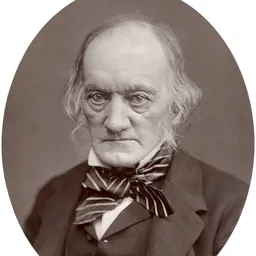
Related people
Same field, nearest in time

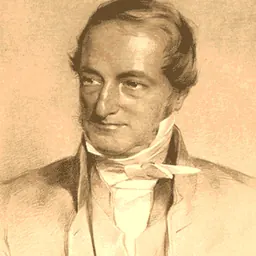



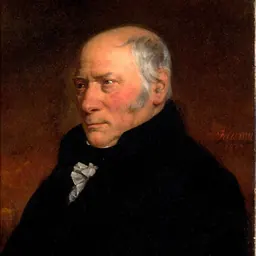
Contemporaries
People whose lives overlapped Elizabeth Philpot's


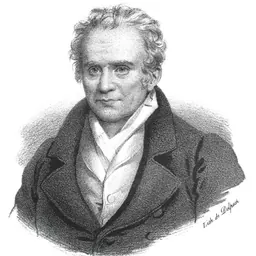

Frequently asked questions
Who was Elizabeth Philpot?
British palaeontologist (1780-1857)
When was Elizabeth Philpot born?
Elizabeth Philpot was born in 1780 in London.
When did Elizabeth Philpot die?
Elizabeth Philpot died in 1857 in Lyme Regis.
What was Elizabeth Philpot's occupation?
Elizabeth Philpot was a paleontologist and fossil collector.
What nationality was Elizabeth Philpot?
Elizabeth Philpot was British.
Sources & further reading
· Wikipedia: Elizabeth Philpot
Cite this page
APA: Biography.guide. (2026). Elizabeth Philpot. https://biography.guide/elizabeth-philpot/
MLA: "Elizabeth Philpot." Biography.guide, https://biography.guide/elizabeth-philpot/.
Chicago: "Elizabeth Philpot." Biography.guide. https://biography.guide/elizabeth-philpot/.
Data last updated: 2026-09-20 · Spot an error? Report a correction.
Page generated 2026-09-27 05:08 UTC