
Elizabeth More
English canoness
About Elizabeth More
Lived 1732 – 1807 (aged 74–75). Elizabeth More was a canoness.
Mary More (1732–1807) was born to Thomas More and Catherine Gifford, in Barnborough, Yorkshire. She is the last lineal descendant of Sir Thomas More. Mother More is known for being the seventh Prioress at the Priory of Nazareth and leading her community through crises during the reign of Joseph II and the French Revolution.
Priory of Nazareth
More made her first profession at the Priory of Nazareth, Bruges, in 1753. Later, in 1766, she would replace Mother Olivia Darrell as the seventh Prioress of the community. The primary job of a canoness was to provide education. The Priory of Nazareth was like a boarding school and was the female counterpart to the Jesuit College at Saint-Omer.
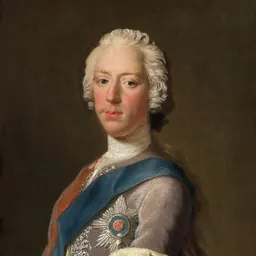
The convent was politically active throughout the eighteenth century and financially supported Prince Charles Edward Stuart as he tried to reclaim the English Throne in 1745, as well as the Patriots of Brabant against Emperor Joseph II. Mother More was, however, “obliged to send away two from other Order who had sought refuge with them with great regret.” In 1781 Joseph II took control of the Carmelites, Carthusians and Poor Clares in Bruges. The convent was, however, exempt from some of his laws because it was also a school. Following the interrogation, the commissioners demanded to see the inventory, but More refused and the commissioners did not return. Later, in 1784, Mother More provided assistance and shelter to members of two other communities, the Penitents and the Nuns of Bethania. “Mother More’s resolute leadership is the reason that the community survived as the only English convent remaining in mainland Europe.” Bruges remained under Imperial forces until 1792, when the French Revolutionary Army invaded and seized control. Mother More gave shelter to French refugees, including the “cure of Longuenesse and four Benedictine nuns of Montargis, sister of Lady Jerningham." Mother More relied on protection from General O’Maron, an Irishman serving in the French army.
Exile More and the rest of the community that fled traveled for seven days. More had been researching possible places of refuge in England before they had left, but was not immediately successful. During their first few weeks in London, the nuns lodged in various housing throughout the city. The nuns were mainly taken in by relatives of the community. Mother More urged the need for the community to find a “retreat that was discreet, permanent, and secure.”.
Once they were settled in Hengrave, Mother More attempted to get in touch with those who had stayed behind. However, upon realizing they had not gotten to London, she made inquiries and discovered that Bruges was full of French troops and the nuns would be unable to leave or stay in contact. Prior to learning this, More had sent £125 for their safe passage to London, but it never got to them.
Mother More was instrumental in organizing the necessities at Hengrave to get life back to being as normal as possible. In January 1796, More traveled to the Quarter Sessions in Bury. There she took the oath, required under the Roman Catholic Relief Act 1791 (31 Geo. 3. c. 32), to set up a school and licensed Catholic chapel. She had previously begun writing to the Vicars in charge of the Diocese of Bruges to ask permission for the sisters that had remained there to travel to England. While the nuns, with the exception of Sr. Olivia Darrell, eventually made their way to Hengrave, some died soon after the trip.
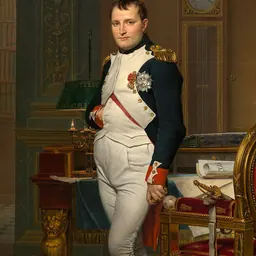
Return to Bruges In March 1802, the Peace of Amiens was signed by Napoleon and the British government. This treaty forced the acceptance and toleration of Christianity in France. Now, it was up to Mother More to decide whether or not to return to Bruges or stay at Hengrave Hall. More held a vote to decide and twenty of twenty-five voted to return. “The Bury and Norwich Post announced the nuns' imminent departure with great sadness. Local people would miss 'the courtesy shown to their visitors by the sequestered females and their amiable patroness, Mrs. More'.” Although warmly welcomed, More’s community had to slowly and incrementally regain their status within the new French laws. Mother More received Last Rites on March 5, 1807 and died later that month. (picture- https://francisyoung.files.wordpress.com/2015/08/more-inscription.jpg)
“The convent annals record that 'nature had endowed her with a fine intelligence, capable of grasping great things as well as little ones . . . She was able to adapt herself with ease to every situation, not without that sense of humour common to her race and reminiscent of her illustrious ancestor, St Thomas More.’” Francis Young wrote, “The memory of Mother More and of her community's sometimes mundane but nevertheless heroic struggle to maintain its ancient form of life in the face of persecution and indifference is preserved both at Bruges and Hengrave.”
Don’t just read it —
keep it.
Full-length biographies made to live with: read them, listen on the way to work, watch them tonight.
- E-book
- Audio
- Video
Instant download · yours to keep · every purchase keeps this site free
Important facts
People in Elizabeth More's life
Named in this biography and alive at the same time
Related people
Same field, nearest in time


Contemporaries
People whose lives overlapped Elizabeth More's





Frequently asked questions
Who was Elizabeth More?
English canoness
When was Elizabeth More born?
Elizabeth More was born in 1732.
When did Elizabeth More die?
Elizabeth More died in 1807.
What was Elizabeth More's occupation?
Elizabeth More was a canoness.
Sources & further reading
Cite this page
APA: Biography.guide. (2026). Elizabeth More. https://biography.guide/elizabeth-more/
MLA: "Elizabeth More." Biography.guide, https://biography.guide/elizabeth-more/.
Chicago: "Elizabeth More." Biography.guide. https://biography.guide/elizabeth-more/.
Data last updated: 2026-09-20 · Spot an error? Report a correction.
Page generated 2026-09-27 05:30 UTC