
Elizabeth Hawes
American fashion designer
About Elizabeth Hawes
Lived 1903 – 1971 (aged 67). Elizabeth Hawes was an American fashion designer, journalist, women's rights activist and writer.
Elizabeth Hawes (December 16, 1903 – September 6, 1971) was an American clothing designer, outspoken critic of the fashion industry, and champion of ready to wear and people's right to have the clothes they desired, rather than the clothes dictated to be fashionable, an idea encapsulated in her book Fashion Is Spinach, published in 1938. She was among the first American apparel designers to establish their reputations outside of Paris haute couture. In addition to her work in the fashion industry as a sketcher, copyist, stylist, and journalist, and designer, she was an author, union organizer, champion of gender equality, and political activist.
Early life Elizabeth Hawes was born in Ridgewood, New Jersey, the second child of four. Her father was an assistant manager for the Southern Pacific Company, and her mother worked on the Board of Education and was actively involved in local politics, especially the rights of the local African-American community. She had graduated from Vassar in 1925 and headed the Federal Emergency Relief Administration for Bergen County, New Jersey, from 1932 to 1936. The family lived an average middle-class existence in a shingle house in a commuter town about twenty-five miles from New York City.
Hawes' mother was an early advocate of Montessori education, and taught her children various handicrafts, such as raffia basket-weaving and beadwork. At the age of 10, Hawes also made clothes and hats for her dolls, before beginning to sew her own clothes. When she was 12 years old, she began dressmaking professionally by making clothes for the young children of her mother's friends. She also sold a few children's dresses to a shop called The Greenaway Shop in Haverford, Pennsylvania. This brief, precocious career ceased when she went to high school and while she continued making her own clothes, she ceased to make them for others.
Education Like her mother and elder sister Charlotte, she attended Vassar. She was very intelligent and a good student, passing her comprehensives without difficulty. During her freshman year, she assisted the costume designer for the annual outdoor play. She found she was good at the compulsory courses, such as mathematics and chemistry, getting A grades, but was bored by the literature and art courses she chose to take, only earning B's. She chose to focus on economics, eventually working up to advanced Economic Theory. Her thesis, based upon the words of Ramsay MacDonald, gained her an A. She became a full-time fashion correspondent for the Cosmos Newspaper Syndicate, contributing to a regular article that appeared in the New York Post, Detroit Free Press, The Baltimore Sun, and other newspapers. This led to a regular column for the New Yorker under the pen name "Parisite", which ran for three years. She worked as a fashion buyer for Macy's, and then as a stylist in Lord and Taylor's Paris offices. In April 1928, Main Bocher, editor of Paris Vogue, offered her a job, but when she explained her ambition was to design he secured her a job with Nicole Groult, the sister of Paul Poiret. In this position, Hawes was permitted to develop her own designs, as well as work alongside Groult and her assistant designer. Working alongside these experienced designers, Hawes developed her method of designing based upon Vionnet's technique of draping on a wooden mannequin.
Fashion career in America (1928–1940) Hawes returned to New York in 1928. She hoped to fill a niche in the American market, where only Jessie Franklin Turner designed and made gowns to order, and the other competition was made to order or ready-to-wear copies of French fashion. Hawes-Harden gradually attracted a clientele that appreciated "original without being eccentric" designs. Hawes used advertising and publicity and was very cautious with expenses to enable her business to survive the Great Depression. She also sold small decorative works designed for her by Alexander Calder and Isamu Noguchi, friends from her years in Paris. On July 4, 1931, Hawes presented her collection in Paris. It was the first time that a non-French design house had shown its collection during the Paris season, which won Hawes a great deal of media attention. A second show featured Hawes alongside Clare Potter and Muriel King. These innovative promotions led to a flood of newspaper and magazine articles on American fashion designers. Hawes generated publicity with humorous political names for her collections, including "The Five-Year Plan" (a cotton nightgown and bed jacket), "The Yellow Peril" (a silk afternoon dress), and "Disarmament" (an embroidered evening dress). The overall style was bold: "wide stripes and large prints were used in simple, comfortable silhouettes", by one account. She advocated trousers for women and followed her own advice.
In 1935, she showed her designs in Moscow, the first display of haute couture there since the Russian Revolution of 1917. She said that the interest of large crowds of women showed that the country was becoming stable and that people were free to express counter-revolutionary ideas without punishment. She reported seeing permanent waves and painted nails and hats, mostly berets, and dispensed fashion advice:
In 1936, she designed the costumes for two Broadway plays, Roy Hargrave's A Room in Red and White, and Triple-A Plowed Under, part of the WPA's Federal Theatre Project directed by Joseph Losey.
When Hawes had visited the Soviet Union in 1935, she either accompanied or was accompanied by Losey, who was studying the Russian stage. They had a son, Gavrik Losey, in 1938.
In 1937, she presented an all-male fashion show of her own brightly colored designs, followed in 1939 by the publication of another fashion manifesto, Men Can Take It.
Her mother's wedding trousseau came from Paris, and her grandmother annually travelled to Paris, bringing dresses back for her grandchildren. When Hawes began designing and making her own clothes, she referred to Vogue and Harper's Bazaar. The prevalence of Paris and French fashion in these magazines reinforced the impression that only French fashion was worthy of attention. Sometimes it is style's utilitarian nature, its close adaptation to the needs of the user, that she praises: "Style in 1937 may give you a functional house and functional clothes to wear in it. Style doesn't give a whoop whether your comfortable clothes are red or yellow or blue, or whether your bag matches your shoes. Style gives you shorts for tennis because they are practical. Style takes away the wasp-waisted corset when women get free and active." She noted how men by contrast were not subject to fashion:
Hawes was an outspoken champion of dress reform. She encouraged women to wear trousers, and felt that men should feel free to wear robes, coloured clothing, and soft garments if they so wished. She preferred the concept of style to that of fashion, stating that style evolved naturally, whereas fashion was faddish and artificial.
Life magazine used the publication of Fashion Is Spinach to present its readers with a series of fashions photos so they could determine which deserved which of Hawes' two labels, fashion or style. The magazine quoted her:
According to one fashion historian, Hawes's stylish writing made her "the Dorothy Parker of fashion criticism, with her snappy tone and tell-it-straight attitude", and suggests this was the true cause of her notoriety: "In reality, her clothes did not appear radical for their time; it was her outspoken philosophy that set her apart." She wrote the "News for Living" column, which has been called "a cross between the traditional women's page of newspapers and the consumer activism of the Popular Front." The FBI placed Hawes and other PM contributors under surveillance.
As a leader of the Committee for the Care of Young Children in Wartime she campaigned for child daycare centers. She opposed the passage of an Equal Rights Amendment for women, fearing it would remove protective legislation. She called for a restructuring of home life to acknowledge that women were now expected to work outside the home while continuing their traditional roles as housewives. It was the only way the U.S. could avoid "the Hitlerian routine of children-kitchen-church for the next generation of Common American women and do away with economic slavery for their husbands." Still, she tried to keep her feminist rhetoric from being divisive: "Men must work along with us in the solution of our basic home problems, or there will, in the end, be no homes worth mentioning in the U.S.A." Betty Friedan thought that Why Women Cry could launch a revolution from the nation's kitchens.
In 1945, Hawes published an essay in Antioch Review titled "The Woman Problem". She called on American women to become "active citizens". She described how housework was taken for granted and no longer a matter of pride now that so many products once made in the home are bought in the store, to the point that:
She called for an education campaign aimed at men, who needed to face competition from the female workforce she wanted to unleash. She cited group child care during the war as an example of what women could to lighten their own workloads. She challenged those who thought they were leaders on women's issues:
She considered working women as well, and their subsidiary role in unions. These women, she wrote, "aren't fooled by veiled male condescension", but needed to learn their way around the mechanics if union politics and win the respect of their male co-workers by slowly pressing their own issues. Yet she complained as well: "the women of this country with their tendency to keep quiet, to individualistic rather than group behavior on the one hand, and doing what some man says on the other, these women are a fine base for fascism."
When the war ended, Hawes worked for a time as a union organizer for the United Auto Workers focusing on women.
Later life Hawes spent much of 1947 in Saint Croix, U.S. Virgin Islands and then relaunched her fashion house in New York in 1948, early in the McCarthy era, opening a shop on Madison Avenue.
She tried to relaunch her design work in California in 1954, again without success,
Her time in the Virgin Islands period provided the basis for another book, But Say It Politely, published in 1954, that discussed racial and cultural issues in the islands.
Personal life On December 12, 1930, she married a sculptor she first met in Paris, Ralph Jester. They separated in 1933 and divorced in 1935. They had a son, Gavrik Losey, in 1938, and divorced in 1944.
Hawes died on September 6, 1971, of cirrhosis of the liver at her home in the Hotel Chelsea in New York City.
Exhibitions Two Modern Artists of Dress: Elizabeth Hawes and Rudi Gernreich, Fashion Institute of Technology, New York, 1967
Writings Fashion Is Spinach (New York, 1938), German edition Zur Hoelle mit der Mode (Berlin, 2019) Men Can Take It (New York, 1939) Why Is a Dress? (New York, 1942) Good Grooming (Boston, 1942) Why Women Cry, or Wenches with Wrenches (New York, 1943) Hurry Up Please Its Time (New York, 1946) Anything But Love (New York, 1948) But Say It Politely (Boston, 1951) It's Still Spinach (Boston, 1954)
Don’t just read it —
keep it.
Full-length biographies made to live with: read them, listen on the way to work, watch them tonight.
- E-book
- Audio
- Video
Instant download · yours to keep · every purchase keeps this site free
Important facts
People in Elizabeth Hawes's life
Named in this biography and alive at the same time

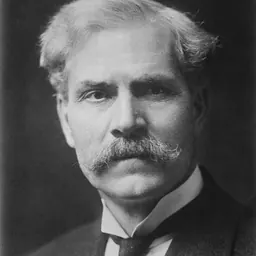

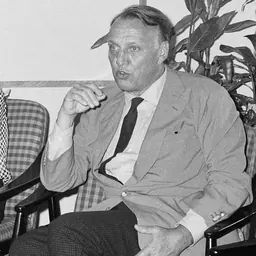




Related people
Same field, nearest in time


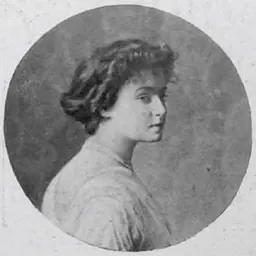

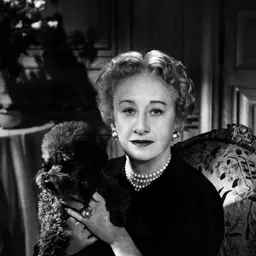
Contemporaries
People whose lives overlapped Elizabeth Hawes's

Frequently asked questions
Who was Elizabeth Hawes?
American fashion designer (1903-1971)
When was Elizabeth Hawes born?
Elizabeth Hawes was born on 16 December 1903 in Ridgewood.
When did Elizabeth Hawes die?
Elizabeth Hawes died on 6 September 1971 in Hotel Chelsea.
What was Elizabeth Hawes's occupation?
Elizabeth Hawes was a fashion designer, journalist, women's rights activist and writer.
What nationality was Elizabeth Hawes?
Elizabeth Hawes was American.
Sources & further reading
Cite this page
APA: Biography.guide. (2026). Elizabeth Hawes. https://biography.guide/elizabeth-hawes/
MLA: "Elizabeth Hawes." Biography.guide, https://biography.guide/elizabeth-hawes/.
Chicago: "Elizabeth Hawes." Biography.guide. https://biography.guide/elizabeth-hawes/.
Data last updated: 2026-09-20 · Spot an error? Report a correction.
Page generated 2026-09-27 04:58 UTC