
About Elizabeth French
Lived 1931 – 2021 (aged 90). Elizabeth French was a British anthropologist and archaeologist.
Elizabeth Bayard French ( Wace; 19 January 1931 – 10 June 2021), also known as Lisa French, was a British archaeologist and academic, specialising in Mycenaean Greece, especially pottery and terracotta figurines and the site of Mycenae. She was the first woman to serve as director of the British School at Athens (BSA).
Wace spent much of her early life in Greece, where her father, Alan Wace, was director of the BSA. She attended her first archaeological excavations at the age of eight, at Mycenae. During the Second World War, she was evacuated from Greece to the United States, and subsequently lived briefly in Egypt before finishing her education at Cheltenham Ladies' College and Newnham College, Cambridge. After leaving Cambridge, she studied archaeological conservation at University College London and worked as a secondary school teacher while completing a part-time doctorate at London, which she was awarded in 1961.
Wace married the archaeologist David French in 1959. She excavated over many years at Mycenae and at other sites in Greece and Turkey, where she lived with her husband at the British Institute at Ankara. After her divorce in 1975, she returned to the UK, where she worked at the University of Manchester from 1976 until 1989. As director of the BSA between 1989 and 1994, she completed further fieldwork and excavation at Mycenae and published accounts of the finds from the site. She returned to Cambridge from 1994, where she lectured on Mycenaean pottery, and died in 2021.
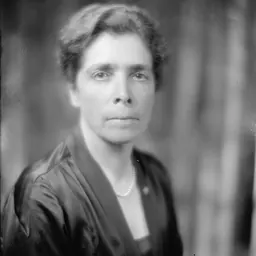
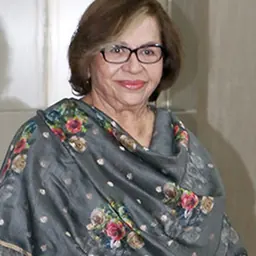
Early life and education Elizabeth Bayard Wace was born in 1931 in London, the daughter of the archaeologists Alan Wace and Helen Wace , and god-daughter of Wace's colleague Carl Blegen; the family moved to Cambridge when she was 3 years old. She first joined her father's excavations at Mycenae in 1939, aged 8. Following this excavation, the family stayed in Athens, where Wace attended a British Council school; after the outbreak of World War II, Wace and her mother left for America in June 1940, before joining her father in Alexandria, Egypt, in 1944 on his appointment as Professor of Classics and Archaeology at the Farouk I University at Alexandria. In 1946, the family returned to the UK, where Wace completed her schooling at Cheltenham Ladies' College. during the summers she joined Wace's excavations at Mycenae. During this time she also attended the British School at Athens as a student (1958–59) and, thanks to a Virginia Gildersleeve Fellowship from the International Federation of University Women, spent the next year (1959–60) in Greece studying Mycenaean material for her thesis as well as finds from Ayios Stephanos and Tiryns, and excavating at Mycenae and Knossos. In her PhD thesis, she developed a detailed classification scheme for a series of Mycenaean terracotta figurines dating from the Late Helladic period (c. 1500–1100 BC). She excavated at Mycenae for many years, from 1950-1957 with her father Alan Wace, and following his death with Lord William Taylour and George Mylonas until 1969, and developed a systematic classification of Mycenaean pottery, enabling its use in establishing the relative date of archaeological finds. French and Taylour were also joint editors, with Kenneth Wardle, of the series of publications arising from the Mycenae excavations, Well-Built Mycenae (1981-). becoming the first woman to hold the post. She served as director until 1994. and completed and published a survey of the remains around Mycenae in collaboration with Spiros Iakovidis and the Archaeological Society of Athens, Her joint publication with P. S. Stockhammer, "Correlating recent research: the pottery of Mycenae and Tiryns in the second half of the 13th century BC", is the first attempt to align discoveries at these two important Mycenaean sites.
Personal life French was married to the archaeologist David French (1933–2017) from 1959 to 1975; the couple, who met while studying material from Mycenae in 1956, had two daughters. She died in Cambridge on 10 June 2021, aged 90.
Selected publications
Mycenae: Agamemnon's Capital. The Site and its Setting. (Tempus, 2002) Archaeological Atlas of Mycenae, with Spiros Iakovidis (Archaeological Society of Athens, 2003)
Resources
Archive of Elizabeth French's professional papers (University of Cambridge Faculty of Classics Archives) Mycenae excavation and publication archive (University of Cambridge Faculty of Classics Archives)
Don’t just read it —
keep it.
Full-length biographies made to live with: read them, listen on the way to work, watch them tonight.
- E-book
- Audio
- Video
Instant download · yours to keep · every purchase keeps this site free
Important facts
People in Elizabeth French's life
Named in this biography and alive at the same time






Related people
Same field, nearest in time


Contemporaries
People whose lives overlapped Elizabeth French's
Frequently asked questions
Who was Elizabeth French?
British archaeologist (1931-2021)
When was Elizabeth French born?
Elizabeth French was born on 19 January 1931 in London.
When did Elizabeth French die?
Elizabeth French died on 10 June 2021 in Cambridge.
What was Elizabeth French's occupation?
Elizabeth French was an anthropologist and archaeologist.
What nationality was Elizabeth French?
Elizabeth French was British.
Sources & further reading
Cite this page
APA: Biography.guide. (2026). Elizabeth French. https://biography.guide/elizabeth-french/
MLA: "Elizabeth French." Biography.guide, https://biography.guide/elizabeth-french/.
Chicago: "Elizabeth French." Biography.guide. https://biography.guide/elizabeth-french/.
Data last updated: 2026-09-20 · Spot an error? Report a correction.
Page generated 2026-09-27 05:22 UTC