
About Eliyahu Zini
Born 1946. Eliyahu Zini is an Israeli mathematician.
Eliyahu Rahamim Zini (born 11 August 1946) is the rosh yeshiva of Yeshivat Or Vishua, which he founded in Haifa in 2001. In the past, he has served as the rabbi of the Technion, as a lecturer in its Faculty of Mathematics, and in the Department of Humanities and Arts.
Biography Eliyahu Zini was born on 11 August 1946 to a family of Torah scholars, the eldest of Rachel and Rabbi Meir Zini, the rabbi of Taharat, Algeria. It is claimed that the origins of the Zini family are traced back to Rabbi Joseph Yoshto, a student of Isaac Alfasi from Jaén, Spain in northeastern Andalusia. His mother Rachel, a survivor of the Auschwitz death camp, met his father while he was an officer in the Free French Forces when the camp was liberated.
With the end of French sovereignty in Algeria in 1962, Eliyahu Zini moved with his family to Paris, where he finished his secondary school studies and began studying mathematics in the University of Paris. He began rabbinical studies under Rabbi Shlomo Dahan. He also studied karate and earned his second-degree black belt.
In 1970 he made aliyah to the land of Israel, living first in Bnei Brak and then moving to Haifa. There he became close with Rabbi Professor Benjamin Ze'ev Benedict, rabbi of the Ahuza neighborhood, from whom he would later receive semikhah. At the Technion, he completed his doctorate in mathematics which he had begun in Paris, and he did his post-doctorate at the Weizmann Institute of Science. Afterward, he returned to the Technion as a senior associate lecturer in the Faculty of Mathematics and as a senior associate lecturer of Talmud and Jewish philosophy in the Department of Humanities and Arts.
He served in Israel's Medical Corps and fought in the 1982 Lebanon War.
When the previous rabbi of the Technion decided leave his position, he advised the senate of the Technion to appoint Zini in his place. In 1980, Zini began serving as the rabbi of the Technion in addition to his position as a lecturer.
In 2001, he founded Yeshivat Or Vishua, a hesder yeshiva located near the Technion.
Zini currently lives with his wife and eight children in the Neve Sha'anan neighborhood of Haifa.
Public activities
Education and research in Jewish disciplines Rabbi Zini dedicates his time to disseminating Torah to the public. He began a program at the Technion which enabled students to add Torah study to their science and engineering studies.
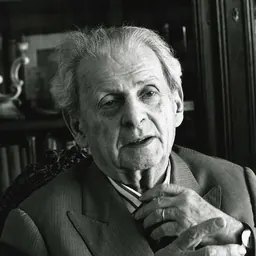
Zini's research in Torah-related fields focuses on books of the Geonim. Some of his research has been published in books, pamphlets, and articles. He has published series of books in Hebrew such as "Olamot BeIhudam" ("Worlds in their Unity"), "Erets Hemdatenu" ("Land of Our Desires"). He has published chidushim (original Torah thoughts) of Rashbatz on tractates Rosh Hashanah and Kinnim of the Babylonian Talmud, as well as "Magen Avot," Rashbatz' commentary on Pirkei Avot. Similarly, he has published research on the history of halakha and the editing of the Talmud, such as "Rabanan Savora'ei ve-Klalei ha-Halakha" ("The Savoraim and the Rules of Halakha"). He has also published letters of Elijah Benamozegh, Hebrew translations of Professor Emmanuel Levinas, Hebrew translations of Rabbi Léon Ashkenazi (with whom he was particularly close), and others. He also printed new Land of Israel editions of the "Tefilat ha-Hodesh" siddur and "Mo'adei Hashem" mahzor for the Shalosh Regalim (the Three Pilgrimage Festivals).
Zini advocates for the joining of Torah study and science, claiming that it is fundamentally impossible for them to be contradictory. He opposes the methodology employed by Professor Nathan Aviezer in Aviezer's book "Bereishit Bara." The book uses scientific fact to prove the accuracy of the Torah, while Zini does not believe that such explanations are necessary.
Zini's method of Torah study is based on a broad knowledge of the literature of the Tanaim and Amoraim, a deeper study of the earlier sources in Midrash halakha, and only then a discussion of the words of the Talmud and Rishonim. In Talmud study, Zini uses the writings of the Geonim.
Zini is also involved in philosophy. He met Professor Emmanuel Levinas in France and translated some of his essays. He published four of Levinas' articles in a pamphlet entitled "Divrei Emmanuel" ("The Words of Emmanuel") and cites him in his lectures.
Encouragement of Aliyah and absorption into Israel Rabbi Zini immigrated to Israel in 1970. He moved to Bnei Brak and began finishing his doctoral studies at the Technion. On his return to the Technion as an associate senior lecturer, Zini began activities to draw in the new immigrants from amongst the student body. A group of French immigrants formed the original basis of the minyan at the Technion synagogue.
Rabbi of the Technion At the start of his operations at the Technion, Rabbi Zini acted privately, delivering lectures and organizing events for students. In 1980, the previous rabbi of the Technion, Rabbi Aharon She'ar-Yashuv, left the institution, recommending that Zini take his place.
As rabbi of the Technion, Zini headed the organization of religious students there, called Ahvat Aharon. He opposed the plan to grant homosexual couples dorms reserved for married students. Once this plan was put into action, Zini ruled that the mezuzot must be removed from any of those dorms that were given to homosexual couples, though the institution did not comply.
In 2013, on reaching retirement age, he left his position.
Political stance Rabbi Zini is well known within the world view that sees the land of Israel as one of the foundations of Judaism, and it is within this world view that his political stance manifests itself. In November 1994, during the harsh debates within Israeli society over the Oslo Accords, he said in his weekly broadcast on Israeli news station Arutz Sheva: "Apparently God knows why the ways of the evildoers who currently run our country have succeeded, for apparently we and you did not do what He expected of us...Meanwhile, of the one primarily responsible for the deterioration of the situation, Mr. Rabin, it is said disgrace on your holiday tomorrow and those who celebrate with you, and may it be God's will to save us quickly from you and then there will be much peace for those who love His name and Torah."
In the libel suit which Zini brought against the local newspaper "Kolbo," the judge ruled that the paper was guilty of libel against Zini, but only awarded him 1,000 NIS compensation, explaining: "From the material that is presented, the image arises of a man with extreme opinions, who is not averse to [making] statements bordering on incitement, using language that approaches—if not reaches—verbal abuse," and adding: "And this is not a case of an innocent man upon whom guilt of incitement was cast. His opinions and style arouse hatred and separatism while causing difficult injuries to large parts of the population that do not share his world view, and the creation of polarization within society as directly connected to the advertisement under discussion should be taken into account when awarding the compensation." Zini's appeal on the amount of compensation was rejected by the district court.
Books
Books written Olamot be-Ihudam (Worlds in their Unity)Volumes 1 – 3: On religion and science, Judaism in reality, relations between secular and religion Jews, and Judaism and Zionism Volume 4: On Passover in halahkha and thoughtRabanan Savora'ei u-Klalei ha-Halakha (The Savoraim and the Rules of Halakha) – Talmudic research, Haifa 1992. This book is part of a series of books on the subject which has not yet been published.Etz Erez (Cedar Tree) – series of books with halakhic and philosophical articles Volume 1: Recitation of Hallel on Rosh Chodesh and Chol HaMoed of Passover, recitation of Hallel by an individual without a minyan, the prohibition of eating meat with milk, Joshua ben Perachiah Volume 2: Eating the Afikoman after midnight, women leaning at the Passover Seder, one who has only a kezayit (volume of an olive) of shmurah matzah, Counting of the Omer, the Bar Kokhba revolt Volume 3: The mitzvah of leaning at the Seder, the sale of chametz (leaven), Shabbat, Chanukah Volume 4: Recitation of piyyutim (liturgical poems) during prayer, the tradition of Kapparot, recitation of the Avinu Malkeinu and Tzidkatecha prayers on Shabbat Rosh Chodesh, standing during the shofar blasts, the question of whether mitzvot require intention, Selichot, repentance, and mercy Part 1: On the method of Torah study Part 2: On Purim Arazim Aleph – on Purim, Haifa 2014
Books translated to Hebrew or edited Chidushei ha-Rashbatz on Tractates Rosh Hashana and Kinnim, based on ancient manuscripts and first editionsYachin u-Vo'az, responsa of Rabbi Tzemach ben Shlomo Duran, part 1 Magen Avot, Jerusalem 2000 Passover Haggadah Magid Devarav le-Yaakov, commentary of Rabbi Israel Jacob Algazi, Haifa 2010 Introduction to the Oral Torah by Elijah Benamozegh, part 1, Jerusalem 2002 Musar Yehudi Le'umat Musar Notsri (Jewish Ethics Compared with Christian Ethics), by Elijah Benamozegh, Haifa 2007 Divrei Emmanuel'' (Words of Emmanuel), four articles by Emmanuel Levinas from "Heirut Kashah" ("Difficult Freedom") Translations of Emmanuel Levinas, eight articles from "Heirut Kashah''", online edition Ozar Hageonim Abodah zara, Haifa 2016
Don’t just read it —
keep it.
Full-length biographies made to live with: read them, listen on the way to work, watch them tonight.
- E-book
- Audio
- Video
Instant download · yours to keep · every purchase keeps this site free
Important facts
People in Eliyahu Zini's life
Named in this biography and alive at the same time

Related people
Same field, nearest in time

Contemporaries
People whose lives overlapped Eliyahu Zini's




Frequently asked questions
Who is Eliyahu Zini?
Rabbi and educator
When was Eliyahu Zini born?
Eliyahu Zini was born on 11 August 1946 in Algeria.
What is Eliyahu Zini's occupation?
Eliyahu Zini is a mathematician.
What nationality is Eliyahu Zini?
Eliyahu Zini is Israeli.
Sources & further reading
Cite this page
APA: Biography.guide. (2026). Eliyahu Zini. https://biography.guide/eliyahu-zini/
MLA: "Eliyahu Zini." Biography.guide, https://biography.guide/eliyahu-zini/.
Chicago: "Eliyahu Zini." Biography.guide. https://biography.guide/eliyahu-zini/.
Data last updated: 2026-09-20 · Spot an error? Report a correction.
Page generated 2026-09-27 05:21 UTC