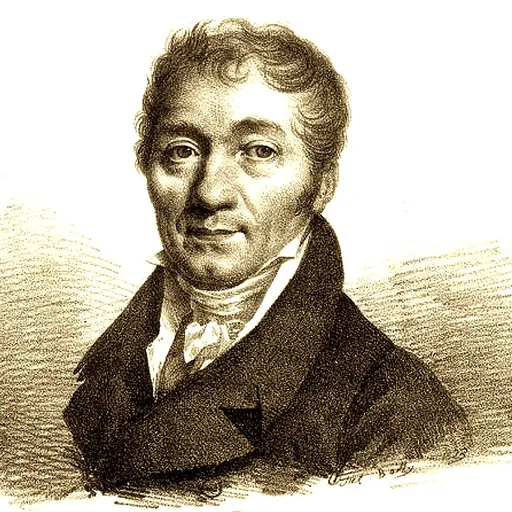
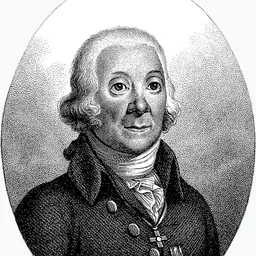
Elisabeth Paul Edouard Rossel
French explorer, astronomer and hydrographer
About Elisabeth Paul Edouard Rossel
Lived 1765 – 1829 (aged 64). Elisabeth Paul Edouard Rossel was a French explorer, astronomer, military personnel, engineer, hydrographer and naval officer.
Élisabeth-Paul-Édouard de Rossel (1765–1829), also known as Chevalier de Rossel, was a French naval officer, explorer, and hydrographer. He took part in the voyage of Antoine Bruni d'Entrecasteaux to the Pacific (1791–1793), and became the leader of the expedition after the deaths of the senior officers. The expedition disintegrated in the revolutionary wars, but Rossel was able to bring the records and collections of the expedition back to Europe and write the record of the voyage, which was published in 1808.
He was noted for his magnetic observations, which showed that the earth's magnetic field is not constant, but increases from the equator towards the poles. His subsequent career was with the French Hydrographic Office, of which he became director. He was important in planning the chain of lighthouses that were constructed around the French coast from 1825 to 1854.
Life Rossel was born on the 11 September 1765 in Sens the son of Christophe-Colomban de Rossel, a Maréchal de Camp in the French army, and his wife Elisabeth-Jacqueline L'Hermite de Chambertrand. His mother was guillotined during the Terror, and his father was killed fighting for the Royalists in the Battle of Quiberon in 1795, at the age of 70.
Rossel was educated at the College of La Flèche, and joined the Navy in July 1780 as a Garde de Marine. He served in the ships Ville de Paris, Magnanime, and Vénus, taking part in naval battles against the British in the American War of Independence as part of the squadron of de Grasse in the Antilles. He was promoted to Enseigne in 1784. At some point he was trained in astronomical observations at the Paris Observatory, and in 1785 he joined the Résolution under d'Entrecasteaux who was Commander of the French naval forces in the East Indies. He was promoted to Lieutenant de Vaisseau in February 1789.
Voyage in search of La Pérouse In 1785, La Pérouse had set out on a major voyage of exploration. He travelled to Chile, Hawaii, Alaska, California, Macau, the Philippines, Korea, the Pacific coast of Russia, Japan, Samoa, Tonga, and Australia. He left Botany Bay on 10 March 1788, and no further word was heard from him. Concerns grew, and in 1791 it was agreed to send an expedition in search for him. D'Entrecasteaux was appointed commander, and two ships were fitted out, Espérance and Recherche. The expedition had scientific goals as well as the remit to search for the La Pérouse expedition, and included hydrographers, naturalists, a mineralogist, a botanist, and two astronomers. Rossel was appointed second Lieutenant on Recherche. The expedition left Brest on 29 September 1791, and travelled to the Cape of Good Hope via Tenerife. At the Cape, d'Entrecasteaux received a report suggesting that inhabitants of the Admiralty Islands had been seen wearing French uniforms and sword belts, he decided to sail there via Van Diemen's Land (Tasmania) rather than exploring the south coast of New Holland (Australia) as had been originally intended. While at the Cape, several of the expedition scientists left due to poor health. This led to d'Entrecasteaux giving Rossel the care of the chronometers and the conduct of the astronomical observations.
The expedition reached Tasmania on 23 April, anchoring in a bay they named Recherche Bay, and remained for five weeks, provisioning, making repairs, collecting specimens, and surveying. Rossel carried out as many astronomical observations as possible, given that the weather was nearly always rainy. One eclipse of a satellite of Jupiter was observed, as well as some lunar distances. They then travelled along the west coast of New Caledonia before reaching their next anchorage in the south of New Ireland. After provisioning they left on 24 July 1792, and reached the Admiralty Islands four days later. At Nauna (Vendola Island) they were unable to land because of the reefs, but sent an armed boat with trading goods towards the island, commanded by Rossel. They were met by islanders, some swimming out to meet them, some walking on the reefs. Exchanges were friendly, but the sailors saw no signs of European clothing or other adornments, and d'Entrecasteaux concluded that there was no evidence of interaction with La Pérouse's expedition.
The ships then set sail for Tanjung Goede Hoop in Western New Guinea and on to Amboina (Ambon) in the Moluccas where they arrived on 5 September, and were able to reprovision and send despatches home. After a stay of five weeks they headed towards SW Australia, following the west coast of Timor, and reaching the Savu Islands on 25 October, where Rossel fixed the latitude and longitude. In SW Australia they discovered Esperance Bay which gave them welcome shelter from stormy weather, but had no source of fresh water, so they headed directly to Tasmania, reaching Recherche Bay for the second time on 21 January 1793. They remained in Tasmania until 27 February, exploring, collecting, and making friendly contact with the inhabitants. They next sailed to Tongatapu, passing the North Cape of New Zealand, then to Balade, New Caledonia. Here, Huon de Kermadec, commander of Espérance died, on 6 May 1793. D'Auribeau then took over command of Espérance, and Rossel became capitaine de pavillon on the Recherche. He lived in London until 1802, when the Treaty of Amiens brought peace between Britain and France, at least temporarily. He was invited to return by the French Government, and he judged it safe to do so. Volume 2 also contained a description of the magnetic experiments carried out, which showed for the first time that the intensity of the earth's magnetic field is not constant, but is greater nearer to the poles than at the equator.
In 1810, Rossel was requested by Jean-Baptiste Biot to write a treatise on nautical astronomy, which was appended to the second edition of Biot's Elementary Treatise on Physical Astronomy. In 1811 Rossel was appointed a member of the Bureau of Longitudes, and in the following year became a member of the Academy of Sciences. In 1820 he was made Chevalier de le Légion d'honneur and in 1822 honorary Contre-Amiral.
In 1820 Augustin-Jean Fresnel built his first refractor using an assemblage of small lenses and prisms rather than a single large lens (too heavy for practical use) or a reflector (less efficient). An improved version was demonstrated to the Commission des Phares from the top of the Arc de Triomphe, and was visible for 32 km. In 1823 the system was then installed in the Cordouan Lighthouse at the mouth of the Gironde estuary, greatly increasing the visible range of the light. This success led to a project to creation of a network of lights so that navigators approaching the French coast could always be in sight of a lighthouse. In 1825, Rossel prepared a report for the commission with specific proposals for the location and power of the lights, and this was adopted. The project was completed in 1854 with the lighting of the Baleines lighthouse on the Île de Ré.
Rossel wrote a number of articles in the Biographie universelle, ancienne et moderne, including those on Christopher Columbus, James Cook, d'Entrecasteaux and La Pérouse. His last published work was the first report of the voyage of l'Astrolabe commanded by Jules Dumont d'Urville, who had returned from a three-year circumnavigation in March 1829. The report was read to the Academy of Sciences in August of that year. Rossel died on 20 November. At his funeral oration, Dumont d'Urville said "had many friends and not one enemy". Rossel Island in the Louisiade Archipelago is named after him.
Don’t just read it —
keep it.
Full-length biographies made to live with: read them, listen on the way to work, watch them tonight.
- E-book
- Audio
- Video
Instant download · yours to keep · every purchase keeps this site free
Important facts
People in Elisabeth Paul Edouard Rossel's life
Named in this biography and alive at the same time


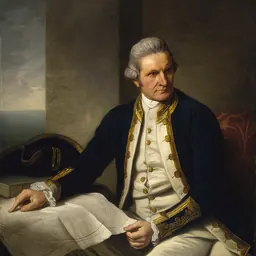
Related people
Same field, nearest in time
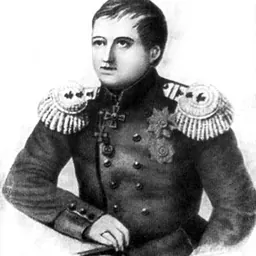


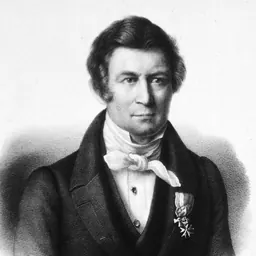
Contemporaries
People whose lives overlapped Elisabeth Paul Edouard Rossel's





Frequently asked questions
Who was Elisabeth Paul Edouard Rossel?
French explorer, astronomer and hydrographer
When was Elisabeth Paul Edouard Rossel born?
Elisabeth Paul Edouard Rossel was born on 11 September 1765 in Sens.
When did Elisabeth Paul Edouard Rossel die?
Elisabeth Paul Edouard Rossel died on 20 November 1829 in Paris.
What was Elisabeth Paul Edouard Rossel's occupation?
Elisabeth Paul Edouard Rossel was an explorer, astronomer, military personnel, engineer, hydrographer and naval officer.
What nationality was Elisabeth Paul Edouard Rossel?
Elisabeth Paul Edouard Rossel was French.
Sources & further reading
· Wikipedia: Elisabeth Paul Edouard Rossel
· DBpedia: Élisabeth-Paul-Édouard de Rossel
Cite this page
APA: Biography.guide. (2026). Elisabeth Paul Edouard Rossel. https://biography.guide/elisabeth-paul-edouard-rossel/
MLA: "Elisabeth Paul Edouard Rossel." Biography.guide, https://biography.guide/elisabeth-paul-edouard-rossel/.
Chicago: "Elisabeth Paul Edouard Rossel." Biography.guide. https://biography.guide/elisabeth-paul-edouard-rossel/.
Data last updated: 2026-09-23 · Spot an error? Report a correction.
Portrait: Wikimedia Commons · author & licence
Page generated 2026-09-27 05:08 UTC