
About Elie Hobeika
Lived 1956 – 2002 (aged 45). Elie Hobeika was a Lebanese politician and military personnel.
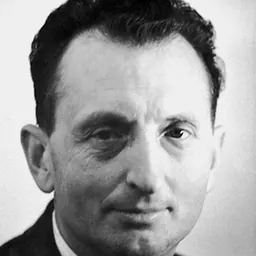
Elie Hobeika (also transliterated as Hubayqa; ; 22 September 1956 – 24 January 2002) was a Lebanese militia commander in the Lebanese Forces militia during the Lebanese Civil War and one of Bachir Gemayel's close confidants. He became infamous for his overseeing of the 1982 Sabra and Shatilla massacre. Hobeika initially supported the IDF during their invasion, but later switched sides and supported the Syrians. He became head of the Lebanese Forces until he was ousted in 1986. He then founded the Promise Party and was elected to serve two terms in the Parliament of Lebanon. In January 2002, he was assassinated in a car bombing at his house in Beirut, shortly before he was to testify about the Sabra and Shatila massacre in a Belgian court.
Early life Elias Joseph Hobeika was born in Qleiat in Keserwan District, Lebanon, to a Maronite family on 22 September 1956. According to The Guardian, he was deeply influenced by the deaths of much of his family and his fiancée at the hands of Palestinian militiamen in the Damour massacre of 1976.
Lebanese Civil War Hobeika distinguished himself as a ruthless fighter in the Lebanese Civil War, gaining the nickname "HK" after the Heckler & Koch machine gun he carried. In July 1977, Hobeika, then only known under the pseudonym "Chef Edward", led a massacre against civilians and Palestinian people in the south Lebanese village of Yarin where about 80 people of which probably 20 to 30 were civilians were lined up in front of the school and shot.
He steadily became prominent in the Phalange, part of the pro-Christian Kataeb Party, which had defeated rival Christian militias by July 1980 and incorporated them into the Lebanese Forces (LF). Over the next three days, the LF killed between 762 and 3,500 residents of the camp. However, then he began to support Syria's presence in Lebanon. Geagea was especially displeased that Hobeika had changed his allegiance to Syria. In 2000, Hobeika lost his parliament seat.
Personal life Hobeika married Gina Raymond Nachaty in 1981. The explosion killed his three bodyguards as well, and wounded six more people.
Perpetrators A group, Lebanese for a Free and Independent Lebanon, issued a statement after the assassination, claiming responsibility for the killing of Hobeika. The group announced that it killed Hobeika, since he was a "Syrian agent" and an "effective tool" in the hands of Ghazi Kenaan, the then head of Syrian military intelligence. Prior to his assassination, Elie Hobeika had stated: "I am very interested that the [Belgian] trial starts because my innocence is a core issue." Security sources have also noted the blast occurred in a high-security zone under total Syrian control, further claiming Damascus had a clear motive to silence Hobeika who possessed extensive knowledge of Syrian-directed war crimes, while using his death to manufacture a diplomatic crisis for the Ariel Sharon government.
Condemnation President Emile Lahoud and Hezbollah condemned the assassination of Hobeika and blamed Israel.
Don’t just read it —
keep it.
Full-length biographies made to live with: read them, listen on the way to work, watch them tonight.
- E-book
- Audio
- Video
Instant download · yours to keep · every purchase keeps this site free
Important facts
People in Elie Hobeika's life
Named in this biography and alive at the same time
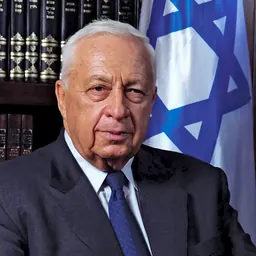

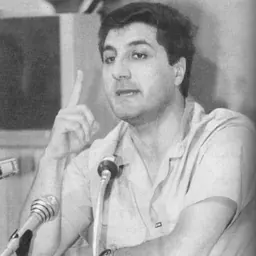

Related people
Same field, nearest in time


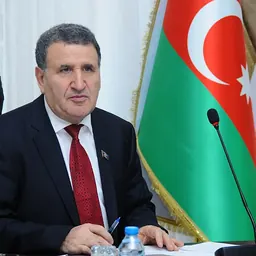


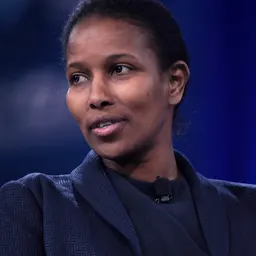
Contemporaries
People whose lives overlapped Elie Hobeika's

Frequently asked questions
Who was Elie Hobeika?
Lebanese politician and militia commander (1956–2002)
When was Elie Hobeika born?
Elie Hobeika was born on 22 September 1956 in Keserwan District.
When did Elie Hobeika die?
Elie Hobeika died on 24 January 2002 in Beirut.
What was Elie Hobeika's occupation?
Elie Hobeika was a politician and military personnel.
What nationality was Elie Hobeika?
Elie Hobeika was Lebanese.
Sources & further reading
Cite this page
APA: Biography.guide. (2026). Elie Hobeika. https://biography.guide/elie-hobeika/
MLA: "Elie Hobeika." Biography.guide, https://biography.guide/elie-hobeika/.
Chicago: "Elie Hobeika." Biography.guide. https://biography.guide/elie-hobeika/.
Data last updated: 2026-09-20 · Spot an error? Report a correction.
Page generated 2026-09-27 05:21 UTC