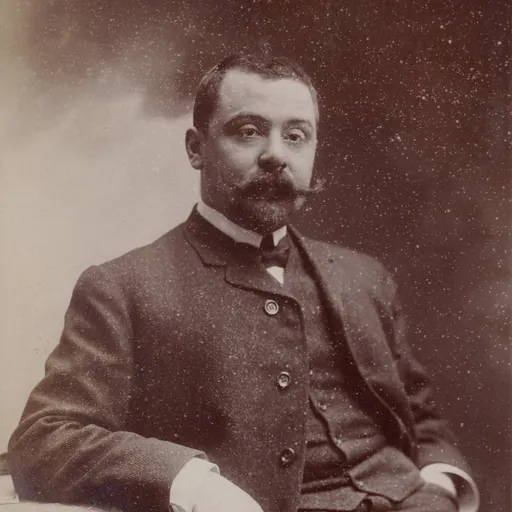
About Élie Faure
Lived 1873 – 1937 (aged 64). Élie Faure was a French art historian, physician, historian, writer, critic and art collector.
Jacques Élie Faure (; 4 April 1873 in Sainte-Foy-la-Grande, France – 29 October 1937 in Paris) was a French medical doctor, art historian and essayist.
He was called "the greatest art critic of the 1920s and 30s". He is the author of the History of Art, considered a historiographical pillar in the discipline.
Biography
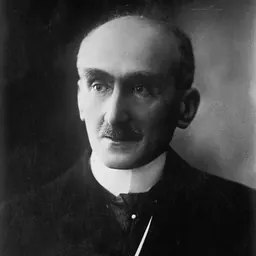
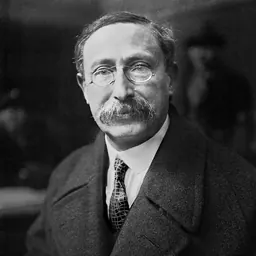
Youth and Training Élie Faure was the son of Pierre Faure, a merchant, and Zéline Reclus. He was close to two of his uncles, namely the geographer and anarchist activist Élisée Reclus and the ethnologist Élie Reclus. In 1888, he joined his brothers Léonce and Jean-Louis in Paris and enrolled at the Lycée Henri-IV, where he had as classmates in philosophy class Léon Blum, R. Berthelot, Gustave Hervé, and Louis Laloy.
Passionate about painting, he often visited the Louvre and immersed himself in the works of his philosophy teacher, Henri Bergson.
With his baccalaureate in hand, he enrolled in the faculty of medicine and began practicing in working-class neighborhoods in Paris. He worked as an anesthesiologist and specialized in embalming with his brother Jean-Louis, a surgeon and gynecologist. Nevertheless, he continued to attend exhibitions and regularly visited workshops of painters and sculptors.
On 7 April 1896, he married Suzanne Gilard, daughter of the pastor of Eynesse. They had a daughter, Elisabeth, whom his friend, the painter Eugène Carrière, sketched in 1902. On May 3, 1899, Élie Faure presented his doctoral thesis in medicine, which dealt with an innovative treatment for lupus. From 1927 onwards, he took the artist on trips with him, settled several of his debts, and bought a few of his works. He also devoted a monograph to him in 1929.
This close friendship was, however, cut short. Soutine fell in love with Faure's daughter Marie-Line, known as Zizou, and in 1930 Soutine and Faure fell out. Nevertheless, Faure wrote to him: "You were, you still are, apart from my two sons, the only man I love."
Works
Vélasquez (1903). Formes et Forces (1907). Eugène Carrière (1908). Les Constructeurs (1914). La Conquête (1917). La Sainte Face (1917). La Roue (1919). La Danse sur le Feu et l'Eau (1920). Napoléon (1921). Histoire de l'Art (1919–1921). L'Arbre d'Éden (1922). Cervantes (1926). L'Esprit des Formes (1927). Découverte de l'Archipel (1932). D'Autres Terres en Vue (1932). Mon Périple Suivi de Reflets dans le Sillage (1931). Critical edition by Juliette Hoffenberg, Seghers 1987, 10:18 1994. Équivalences (1951). Fonction du Cinéma: De la Cinéplastique à son Destin Social, 1921–1937 (1953, with a preface by Charles Chaplin). Méditations Catastrophiques (2006).
Translated into English Cézanne (1913, translated by Walter Pach). History of Art (1921–1930, translated by Walter Pach). The Art of Cineplastics (1923, translated by Walter Pach). Napoleon (1924, translated by Jeffery Eardley Marston). The Dance Over Fire and Water (1926, translated by John Gould Fletcher). The Italian Renaissance (1929).
Selected articles "Reflections on the Greek Genius," The Dial, Vol. LXXIII (1922).
Miscellany In the opening scene of Jean-Luc Godard's film Pierrot le Fou (1965), Jean-Paul Belmondo's character sits in a bathtub reading Elie Faure's Histoire de l'art to his daughter. In Henry Miller's novels Tropic of Capricorn (novel), Plexus The Books in My Life and Nexus Miller speaks of Faure's works. Will Durant included Faure's 4-volume History of Art on his list of 100 Best Books for an Education.
Don’t just read it —
keep it.
Full-length biographies made to live with: read them, listen on the way to work, watch them tonight.
- E-book
- Audio
- Video
Instant download · yours to keep · every purchase keeps this site free
Important facts
People in Élie Faure's life
Named in this biography and alive at the same time





Related people
Same field, nearest in time


Contemporaries
People whose lives overlapped Élie Faure's

Frequently asked questions
Who was Élie Faure?
French art historian and essayist (1873-1937)
When was Élie Faure born?
Élie Faure was born on 4 April 1873 in Sainte-Foy-la-Grande.
When did Élie Faure die?
Élie Faure died on 30 October 1937 in 6th arrondissement of Paris.
What was Élie Faure's occupation?
Élie Faure was an art historian, physician, historian, writer, critic and art collector.
What nationality was Élie Faure?
Élie Faure was French.
Sources & further reading
Cite this page
APA: Biography.guide. (2026). Élie Faure. https://biography.guide/elie-faure/
MLA: "Élie Faure." Biography.guide, https://biography.guide/elie-faure/.
Chicago: "Élie Faure." Biography.guide. https://biography.guide/elie-faure/.
Data last updated: 2026-09-23 · Spot an error? Report a correction.
Portrait: Wikimedia Commons · author & licence
Page generated 2026-09-27 05:06 UTC