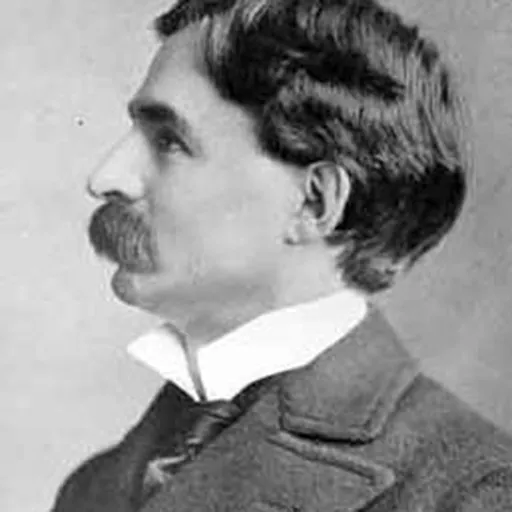
About Eliakim Hastings Moore
Lived 1862 – 1932 (aged 70). Eliakim Hastings Moore was an American mathematician and university teacher, known for Axiomatic system, Closure operator and Functional analysis.
Eliakim Hastings Moore (; January 26, 1862 – December 30, 1932), usually cited as E. H. Moore or E. Hastings Moore, was an American mathematician.
Life Moore, the son of a Methodist minister and grandson of US Congressman Eliakim H. Moore, discovered mathematics through a summer job at the Cincinnati Observatory while in high school. He subsequently studied mathematics at Yale University, where he was a member of Skull and Bones and obtained a BA in 1883 and the PhD in 1885 with a thesis supervised by Hubert Anson Newton, on some work of William Kingdon Clifford and Arthur Cayley. Newton encouraged Moore to study in Germany, and thus he spent an academic year at the University of Berlin, attending lectures by Leopold Kronecker and Karl Weierstrass.
On his return to the United States, Moore taught at Yale and at Northwestern University. When the University of Chicago opened its doors in 1892, Moore was the first head of its mathematics department, a position he retained until his death in 1932. His first two colleagues were Oskar Bolza and Heinrich Maschke. The resulting department was the second research-oriented mathematics department in American history, after Johns Hopkins University.
Accomplishments Moore first worked in abstract algebra, proving in 1893 the classification of the structure of finite fields (also called Galois fields). Around 1900, he began working on the foundations of geometry. He reformulated Hilbert's axioms for geometry so that points were the only primitive notion, thus turning David Hilbert's primitive lines and planes into defined notions. In 1902, he further showed that one of Hilbert's axioms for geometry was redundant. His work on axiom systems is considered one of the starting points for metamathematics and model theory. After 1906, he turned to the foundations of analysis. The concept of a closure operator first appeared in his 1910 Introduction to a form of general analysis. He also wrote on algebraic geometry, number theory, and integral equations.
At Chicago, Moore supervised 31 doctoral dissertations, including those of George Birkhoff, Leonard Dickson, Robert Lee Moore (no relation), and Oswald Veblen. Birkhoff and Veblen went on to lead departments at Harvard and Princeton, respectively. Dickson became the first great American algebraist and number theorist. Robert Moore founded American topology. According to the Mathematics Genealogy Project, as of December 2023, E. H. Moore had 29,982 known "descendants."
Moore convinced the New York Mathematical Society to change its name to the American Mathematical Society, whose Chicago branch he led. He presided over the AMS, 1901–02, and edited the Transactions of the American Mathematical Society, 1899–1907. He was elected to the National Academy of Sciences, the American Academy of Arts and Sciences, and the American Philosophical Society. He was an Invited Speaker at the International Congress of Mathematicians in 1908 in Rome and in 1912 in Cambridge, England.
In 2002, the American Mathematical Society established the E. H. Moore Research Article Prize in his honor.
Don’t just read it —
keep it.
Full-length biographies made to live with: read them, listen on the way to work, watch them tonight.
- E-book
- Audio
- Video
Instant download · yours to keep · every purchase keeps this site free
Important facts
more
Net (mathematics)People in Eliakim Hastings Moore's life
Named in this biography and alive at the same time
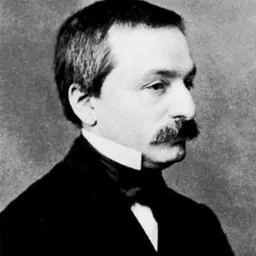



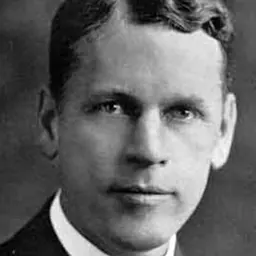
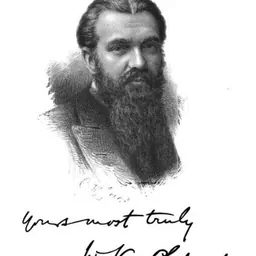

Related people
Same field, nearest in time
Contemporaries
People whose lives overlapped Eliakim Hastings Moore's



Frequently asked questions
Who was Eliakim Hastings Moore?
American mathematician (1862–1932)
When was Eliakim Hastings Moore born?
Eliakim Hastings Moore was born on 26 January 1862 in Marietta.
When did Eliakim Hastings Moore die?
Eliakim Hastings Moore died on 30 December 1932 in Chicago.
What was Eliakim Hastings Moore's occupation?
Eliakim Hastings Moore was a mathematician and university teacher.
What was Eliakim Hastings Moore known for?
Eliakim Hastings Moore was known for Axiomatic system, Closure operator, Functional analysis, Galois representation, General topology and Moore–Penrose inverse.
What nationality was Eliakim Hastings Moore?
Eliakim Hastings Moore was American.
Sources & further reading
· Wikipedia: Eliakim Hastings Moore
Cite this page
APA: Biography.guide. (2026). Eliakim Hastings Moore. https://biography.guide/eliakim-hastings-moore/
MLA: "Eliakim Hastings Moore." Biography.guide, https://biography.guide/eliakim-hastings-moore/.
Chicago: "Eliakim Hastings Moore." Biography.guide. https://biography.guide/eliakim-hastings-moore/.
Data last updated: 2026-09-21 · Spot an error? Report a correction.
Portrait: Wikimedia Commons · author & licence
Page generated 2026-09-27 05:00 UTC