
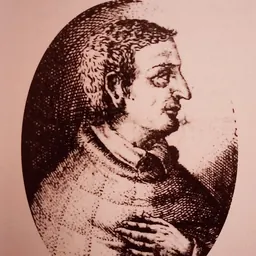
Elia Levita
Renaissance Hebrew grammarian, scholar and poet
About Elia Levita
Lived 1469 – 1549 (aged 79). Elia Levita was a German writer, translator, bible translator, university teacher, grammarian and orientalist.
Elia Levita (, 13 February 1469 – 28 January 1549) was a Renaissance Hebrew grammarian, Hebraist, and poet. He was the author of the Bovo-Bukh, the most popular Yiddish chivalric romance. He was one of the foremost teachers of Hebrew and Jewish mysticism to Christian clergy, nobility, and intellectuals during the Renaissance.
Early life Levita was born in Neustadt (near Nuremberg) to Levite Jewish family, the youngest of nine brothers. He preferred to call himself "Ashkenazi", and bore also the nickname Bokher, meaning youth or student, which later he gave as title to his Hebrew grammar. The Jews were expelled from this area during his early adulthood, thus he would move to Italy, which would remain his primary home until death.
He wrote the 650 ottava rima stanzas of the Bovo-Bukh in Padua in 1504, based on the popular romance Buovo d'Antona, itself based on the Anglo-Norman romance, Bevis of Hampton. He was living in Venice by 1514, where he wrote two scathing satirical pasquinades. He moved to Rome that same year, where he acquired a friend and patron, the Renaissance humanist cardinal, Giles of Viterbo, whose palace he lived in for more than a decade. Levita taught Hebrew to Giles, and copied Hebrew manuscripts, mostly related to the Kabbalah, for the cardinal's library. containing 712 words used in Talmud and Midrash, with explanations in German and a Latin translation by Fagius. Sefer Meturgeman, explaining all the Aramaic words found in the Targum; Shemot Devarim, an alphabetical list of Yiddish technical terms translated into Hebrew, Latin, and German;, and a new and revised edition of his Baḥur. While in Germany, he also printed his Bovo-Bukh.
Works
Elia Levita Bachur's Bovo-Buch: A Translation of the Old Yiddish Edition of 1541 with Introduction and Notes by Elia Levita Bachur, translated and notes by Jerry C. Smith, Fenestra Books, 2003. Helia Levita (das ist: Elijah Levita): [...] Nomenclatura Hebraica Autore Helia Levita Germano Grammatico, in gratiam omnium tyronum ac studiosorum linguæ sanctę. Isny, published by Paul Fagius, 1542. Kaltenstadler, Wilhelm (ed.), Helia Levita: Nomenclatura Hebraica: Wörterbuch Jiddisch-Deutsch-Latein-Hebräisch. [Nomenclatura Herbraica: Yiddish-German-Latin-Hebrew Dictionary], facsimile, Utopia Boulevard U.B.W. Press, Hamburg 2004, ISBN 3-9809509-6-4. Rosenfeld, Moshe N. (ed.): Nomenclatura Hebraica. London 1988. Short description in English p. 189. (books.google.com) Paris and Vienna (attributed) miscellaneous shorter poems The Massoreth Ha-Massoreth of Elias Levita, being an exposition of the Massoretic notes on the Hebrew Bible, or the ancient critical apparatus of the Old Testament in Hebrew, with an English translation, and critical and explanatory notes, London, Longmans, 1867
Don’t just read it —
keep it.
Full-length biographies made to live with: read them, listen on the way to work, watch them tonight.
- E-book
- Audio
- Video
Instant download · yours to keep · every purchase keeps this site free
Important facts
People in Elia Levita's life
Named in this biography and alive at the same time
Related people
Same field, nearest in time


Contemporaries
People whose lives overlapped Elia Levita's



Frequently asked questions
Who was Elia Levita?
Renaissance Hebrew grammarian, scholar and poet (1469–1549)
When was Elia Levita born?
Elia Levita was born on 13 February 1469 in Ipsheim.
When did Elia Levita die?
Elia Levita died on 28 January 1549 in Venice.
What was Elia Levita's occupation?
Elia Levita was a writer, translator, bible translator, university teacher, grammarian and orientalist.
What nationality was Elia Levita?
Elia Levita was German.
Sources & further reading
Cite this page
APA: Biography.guide. (2026). Elia Levita. https://biography.guide/elia-levita/
MLA: "Elia Levita." Biography.guide, https://biography.guide/elia-levita/.
Chicago: "Elia Levita." Biography.guide. https://biography.guide/elia-levita/.
Data last updated: 2026-09-20 · Spot an error? Report a correction.
Page generated 2026-09-27 05:28 UTC