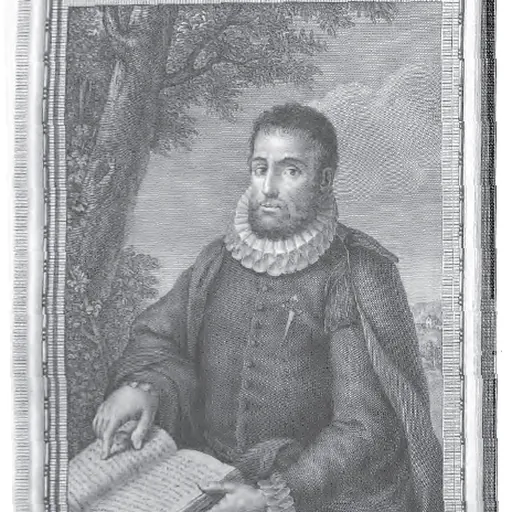
About Hernán Núñez
Lived 1475 – 1553 (aged 77–78). Hernán Núñez was a Spanish writer, bible translator, linguist and polymath.
Hernán Núñez de Toledo y Guzmán (Valladolid, 1475 - Salamanca, 1553) was a Spanish humanist, classicist, philologist, and paremiographer. He was called el Comendador Griego, el Pinciano (from Pintia, the Latin name of Valladolid) or Fredenandus Nunius Pincianus. He earned his degree in 1490 from the Spanish College of San Clemente in Bologna. He returned to Spain in 1498 and served as a preceptor to the Mendoza family in Granada. In this city, he studied classical languages as well as Hebrew and Arabic. Cardinal Gonzalo Ximénez de Cisneros hired him as censor of the cardinal's press at Alcalá de Henares. There, Nuñez worked on the Complutensian Polyglot Bible, specifically on the Septuagint. Nuñez was named professor of rhetoric at the Universidad Complutense, which had recently been founded. He then taught Greek from 1519. During the Castilian War of the Communities, Nuñez sided with the comuneros but avoided execution. He then taught at the University of Salamanca, occupying the post once filled by Antonio de Nebrija. At the age of 50, he retired from teaching to dedicate himself fully to research, although he seems to have still given classes on Hebrew at the University of Salamanca.
Works Nuñez wrote a gloss on the Laberinto de Fortuna by Juan de Mena, which appeared in two editions (Seville, 1499; and Granada, 1505).
In 1508, he collected and glossed a diverse body of proverbs and adages, first published in Seville. After his death, it was published as Refranes o proverbios en romance (Salamanca, 1555). He included proverbs from many languages, including Catalan, Galician, Portuguese, French, Italian, Asturian, Aragonese, Latin, and Greek. The work was popular: it was reprinted several times, although it suffered censorship (some of its obscene or foreign proverbs were removed). It inspired imitators in Spain and abroad, such as the French work Proverbiorum Vulgarium Libri Tres (1531) and the Italian Opera quale contiene le Dieci Tavole de proverbi (Turin, 1535).
In 1509, he translated into Castilian Enea Silvio Piccolomini's History of Bohemia. In 1519, he published a Greek and Latin text of the letter “To the Christian youths,” written by Saint Basil.
He published critical studies on the works of Pliny the Elder, Theocritus, Seneca, and Pomponius Mela. He also studied the work of Saint Jerome.
List of works Glosa sobre las Trezientas de Juan de Mena, Sevilla (1499) y Granada (1505) [Hernán Núñez de Toledo, Las ‘Trezientas’ del famosíssimo poeta Juan de Mena con glosa. Julian Weiss & Antonio Cortijo Ocaña eds. https://web.archive.org/web/20110720075550/http://www.ehumanista.ucsb.edu/projects/Weiss%20Cortijo/]. L. Annaei Senecae Opera, Basilea, 1529. Se hicieron diez ediciones hasta 1627. Observationes Fredenandi Pintiani in loca obscura et depravata Hist. Natur. C. Plinii, Salamanca, 1544. Refranes de la lengua castellana, Salamanca, 1555. Hay edición crítica moderna, Refranes o proverbios en romance (1555) de Hernán Núñez. Edición crítica. Madrid, Ediciones Guillermo Blázquez, 2001; 2 vols.
Don’t just read it —
keep it.
Full-length biographies made to live with: read them, listen on the way to work, watch them tonight.
- E-book
- Audio
- Video
Instant download · yours to keep · every purchase keeps this site free
Important facts
People in Hernán Núñez's life
Named in this biography and alive at the same time
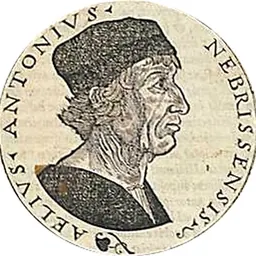
Related people
Same field, nearest in time

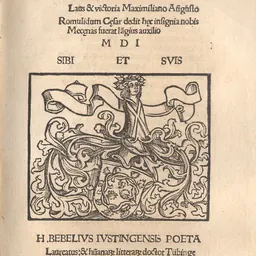
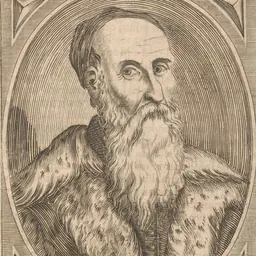


Contemporaries
People whose lives overlapped Hernán Núñez's

Frequently asked questions
Who was Hernán Núñez?
Spanish writer
When was Hernán Núñez born?
Hernán Núñez was born in 1475 in Illescas.
When did Hernán Núñez die?
Hernán Núñez died in 1553 in Salamanca.
What was Hernán Núñez's occupation?
Hernán Núñez was a writer, bible translator, linguist and polymath.
What nationality was Hernán Núñez?
Hernán Núñez was Spanish.
Sources & further reading
Cite this page
APA: Biography.guide. (2026). Hernán Núñez. https://biography.guide/hernan-nunez/
MLA: "Hernán Núñez." Biography.guide, https://biography.guide/hernan-nunez/.
Chicago: "Hernán Núñez." Biography.guide. https://biography.guide/hernan-nunez/.
Data last updated: 2026-09-22 · Spot an error? Report a correction.
Portrait: Wikimedia Commons · author & licence
Page generated 2026-09-27 05:02 UTC