
About Paul Fagius
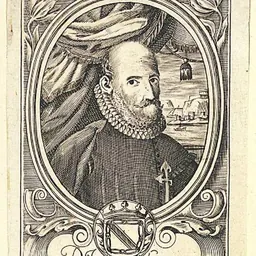
Lived 1504 – 1549 (aged 44–45). Paul Fagius was a German theologian, university teacher, printer, hebraist and protestant theologian.
Paul Fagius (1504 – 13 November 1549) was a Renaissance scholar of Biblical Hebrew and Protestant reformer.
Life
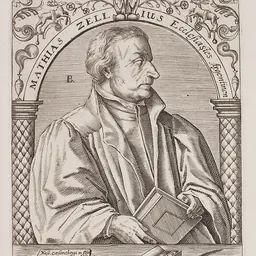
Fagius was born at Rheinzabern in 1504. His father was a teacher and council clerk. In 1515 he went to study at the University of Heidelberg and in 1518 was present at the Heidelberg Disputation. In 1522 he moved to the University of Strasbourg, where he learned Hebrew and met Matthäus Zell, Martin Bucer and Wolfgang Capito.
In 1527, he became a school master in the free imperial city of Isny im Allgäu. Fagius took part in the Bern Colloquy, where he met the reformer Huldrych Zwingli. In 1535, he returned to the University of Strasbourg to devote himself to his study of theology.
Fagius returned to Isny as a priest in 1537. There he learnt Hebrew from the Jewish grammarian and publisher Elia Levita, and they founded a printing office together. One of the few known works to be published by this partnership was Shemot Devarim, an Old Yiddish-Hebrew-Latin-German dictionary, in 1542.
In 1543, he organized the Kirchenwesen in Konstanz and in 1544 was appointed Professor of Old Testament studies at Strasbourg. In 1546, he moved back to Heidelberg, after Elector Frederick II charged him with reforming the University of Heidelberg. Fagius however encountered such strong opposition that his reform failed and he returned to Strasbourg.
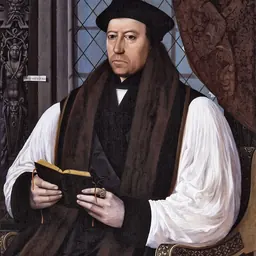
With the rise of the Counter-Reformation Paul Fagius found himself under pressure. After the defeat of the Schmalkaldic League in 1547, Fagius, who had opposed the Augsburg Interim, found himself dismissed from his position, along with Martin Bucer. Both sought refuge in England, where they were taken in by Thomas Cranmer. In 1549, Fagius was appointed Hebrew lecturer at the University of Cambridge.
After being briefly active in Hebrew philology and interpreting the Old Testament Fagius died from plague in 1549, and was buried in St Michael's Church, Cambridge. Under Queen Mary's Catholic restoration, his remains were exhumed and burned (as were Martin Bucer's); in 1560, a memorial was again set up to him.
Works
Latin translations from Hebrew Pirḳe Abot (1541) Levita's "Tishbi" (1541) Tobit (1542) Alfabeta de Ben Sira (1542) David Ḳimḥi's commentary on Psalms, ch. i.-x. (1544)
Editions Targum Onḳelos (1546)
Original works Exegesis of the first four chapters of Genesis (1542) Elementary Hebrew grammar (1543) Liber Fidei ספר אמנה (1542) Parvus Tractulus (1542)
Don’t just read it —
keep it.
Full-length biographies made to live with: read them, listen on the way to work, watch them tonight.
- E-book
- Audio
- Video
Instant download · yours to keep · every purchase keeps this site free
Important facts
People in Paul Fagius's life
Named in this biography and alive at the same time



Related people
Same field, nearest in time



Contemporaries
People whose lives overlapped Paul Fagius's


Frequently asked questions
Who was Paul Fagius?
German academic
When was Paul Fagius born?
Paul Fagius was born in 1504 in Rheinzabern.
When did Paul Fagius die?
Paul Fagius died on 13 November 1549 in Cambridge.
What was Paul Fagius's occupation?
Paul Fagius was a theologian, university teacher, printer, hebraist and protestant theologian.
What nationality was Paul Fagius?
Paul Fagius was German.
Sources & further reading
Cite this page
APA: Biography.guide. (2026). Paul Fagius. https://biography.guide/paul-fagius/
MLA: "Paul Fagius." Biography.guide, https://biography.guide/paul-fagius/.
Chicago: "Paul Fagius." Biography.guide. https://biography.guide/paul-fagius/.
Data last updated: 2026-09-26 · Spot an error? Report a correction.
Page generated 2026-09-27 05:15 UTC