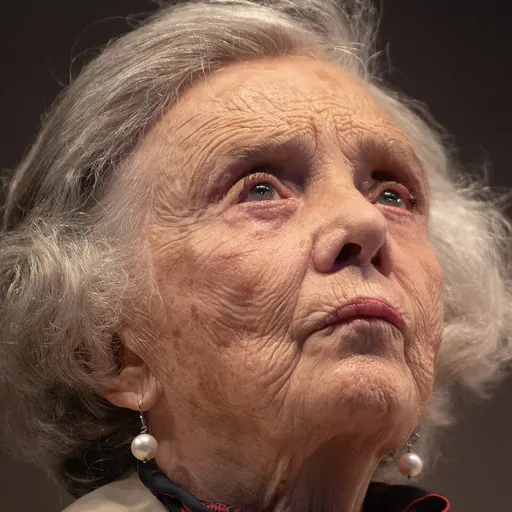
About Elena Poniatowska
Born 1932. Elena Poniatowska is a Mexican and French journalist, writer, novelist, poet, short story writer and literary scholar.
Hélène Elizabeth Louise Amélie Paula Dolores Poniatowska Amor (born May 19, 1932), known professionally as Elena Poniatowska , is a French-born Mexican journalist and author, specializing in works on social and political issues focused on those considered disenfranchised, especially women and the poor. She was born in Paris to upper-class parents. Her mother's family fled Mexico during the Mexican Revolution. She left France for Mexico when she was ten to escape World War II. When she was 18, she began writing for the newspaper Excélsior, doing interviews and society columns. Despite the lack of opportunity for women from the 1950s to the 1970s, she wrote about social and political issues in newspapers and both fiction and nonfiction books. Her best-known work is (The Night of Tlatelolco: Testimonies of Oral History, whose English translation was titled Massacre in Mexico), about the repression of the 1968 student protests in Mexico City. Due to her left-wing views, she has been nicknamed "the Red Princess". She is considered "Mexico's grande dame of letters" and is still an active writer.
Background
Poniatowska was born Helène Elizabeth Louise Amelie Paula Dolores Poniatowska Amor in Paris, France, in 1932. Her father was Prince Jean Joseph Évremond Sperry Poniatowski (son of Prince André Poniatowski), born to a prominent family distantly related to the last king of the Polish–Lithuanian Commonwealth, Stanisław August Poniatowski. Her mother was French-born heiress María Dolores Paulette Amor de Yturbe, whose Mexican family lost land and fled Mexico after Porfirio Díaz was ousted during the Mexican Revolution. Poniatowska's extended family includes an archbishop, the primate of Poland, a musician, French politicians, and several writers and statesmen, including Benjamin Franklin. She was raised in France by a grandfather who was a writer and a grandmother who showed her unflattering photographs of Mexico, including some in National Geographic depicting Africans, saying they were Mexican indigenes, and scared her and her siblings with stories about cannibalism there.
Poniatowska began her education in France at Vouvray on the Loire. After arriving in Mexico, she continued at the Liceo Franco-Mexicano, then at Eden Hall and the Sacred Heart Convent in the late 1940s. Much of her writing has focused on social and human rights issues, especially those related to women and the poor. She began to produce major works in the 1960s and her work matured in the 1970s, when she turned to producing works in put herself in solidarity with those who are oppressed politically and economically against those in power. Her work can be compared to that of Antonio Skármeta, Luis Rafael Sánchez, Marta Traba, Sergio Ramírez, Rosario Ferré, Manuel Puig and Fernando del Paso. She is not an impartial writer as she acts as an advocate for those who she feels have no voice. She feels that a personal relationship with her subjects is vital. in 1971 for the novel Hasta no verte Jesús mío.
In 1978, Poniatowska was the first woman to win Mexico's for her contributions to the dissemination of Mexican cultural and political expression.
List of works
1954 – Lilus Kikus (collection of short stories) 1956 – "Melés y Teleo" (short story, in Panoramas Magazine) 1961 – Palabras cruzadas (chronicle) 1963 – Todo empezó el Domingo (chronicle) 1969 – Hasta no verte, Jesus mío (novel) 1971 – , about the 1968 Tlatelolco massacre (historical account) [The Night of Tlatelolco] 1978 – Querido Diego, te abraza Quiela (collection of fictional letters from Angelina Beloff to Diego Rivera) 1979 – Gaby Brimmer, co-written autobiography of Mexican-born author and disability rights activist Gabriela Brimmer 1979 – De noche vienes (collection of short stories) 1980 – Fuerte es el silencio (historical account) 1982 – Domingo Siete (chronicle) 1982 – El último Guajolote (chronicle) [The Last Turkey] 1985 – ¡Ay vida, no me mereces! Carlos Fuentes, Rosario Castellanos, Juan Rulfo, la literatura de la Onda México (essay) 1988 – La flor de lis (novel) 1988 – Nada, nadie. Las voces del temblor, about the 1985 Mexico City earthquake (historical account) [Nothing, Nobody: The Voices of the Earthquake] 1991 – Tinísima (novel) 1992 - Frida Kahlo: la cámara seducida (in Spanish. Co-written with Carla Stellweg also in English as Frida Kahlo: The Camera Seduced) 1994 – Luz y luna, las lunitas (essay) 1997 – Guerrero Viejo (photos and oral histories of the town of Guerrero, Coahuila, flooded by damming of the Rio Grande) 1997 – Paseo de la Reforma (novel) [Paseo de la Reforma] 1998 – Octavio Paz, las palabras del árbol (essay) 1999 – Las soldaderas (photographic archive) [The Soldier Women] 2000 – Las mil y una... La herida de Paulina (chronicle) 2000 – Juan Soriano, niño de mil años (essay) 2000 – Las siete cabritas (essay) 2001 – Mariana Yampolsky y la buganvillia 2001 – La piel del cielo (novel, Winner of the Premio Alfaguara de Novela 2001) 2003 – Tlapalería (collection of short stories) [Translated into English as The Heart of the Artichoke] 2005 – Obras reunidas (complete works) 2006 – El tren pasa primero (novel, Winner of the Rómulo Gallegos Prize) 2006 – La Adelita (children's book) 2007 – Amanecer en el Zócalo. Los 50 días que confrontaron a México (historical account) 2008 – El burro que metió la pata (children's book) 2008 – Rondas de la niña mala (poetry, songs) 2008 – Jardín de Francia (interviews) 2008 – Boda en Chimalistac (children's book) 2009 – No den las gracias. La colonia Rubén Jaramillo y el Güero Medrano (chronicle) 2009 – La vendedora de nubes (children's book) [The Seller of Clouds] 2011 – Leonora (historical novel on the surrealist painter Leonora Carrington, Seix Barral Biblioteca Breve Prize) 2012 – The Heart of the Artichoke. Trans. George Henson. Miami: Alligator Press (collection of short stories) [In Spanish Tlapalería]
Ancestry
Don’t just read it —
keep it.
Full-length biographies made to live with: read them, listen on the way to work, watch them tonight.
- E-book
- Audio
- Video
Instant download · yours to keep · every purchase keeps this site free
Important facts
Family & relationships
People in Elena Poniatowska's life
Named in this biography and alive at the same time







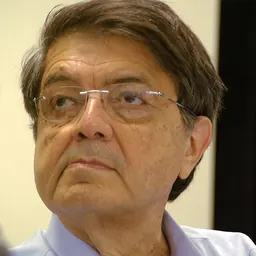
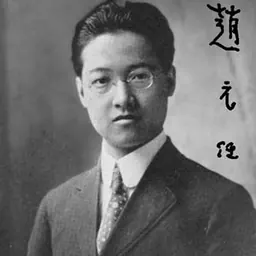
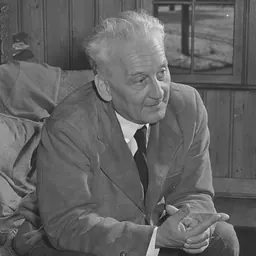
Related people
Same field, nearest in time

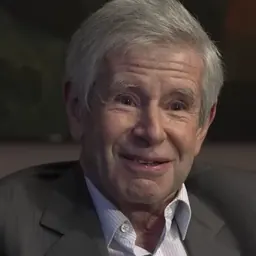
Contemporaries
People whose lives overlapped Elena Poniatowska's


Frequently asked questions
Who is Elena Poniatowska?
French-born Mexican journalist and author
When was Elena Poniatowska born?
Elena Poniatowska was born on 19 May 1932 in 16th arrondissement of Paris, Paris.
What is Elena Poniatowska's occupation?
Elena Poniatowska is a journalist, writer, novelist, poet, short story writer and literary scholar.
What nationality is Elena Poniatowska?
Elena Poniatowska is Mexican and French.
Sources & further reading
· Wikipedia: Elena Poniatowska
Cite this page
APA: Biography.guide. (2026). Elena Poniatowska. https://biography.guide/elena-poniatowska/
MLA: "Elena Poniatowska." Biography.guide, https://biography.guide/elena-poniatowska/.
Chicago: "Elena Poniatowska." Biography.guide. https://biography.guide/elena-poniatowska/.
Data last updated: 2026-09-20 · Spot an error? Report a correction.
Portrait: Wikimedia Commons · author & licence
Page generated 2026-09-27 04:58 UTC