
About Elena Cornaro Piscopia
Lived 1646 – 1684 (aged 38). Elena Cornaro Piscopia was an Italian mathematician, philosopher, theologian, university teacher, medic and writer.
Elena Lucrezia Cornaro Piscopia (, ; 5 June 1646 – 26 July 1684) or Elena Lucrezia Corner (, ), also known in English as Helen Cornaro, was an Italian philosopher of noble descent in the Republic of Venice who in 1678 became one of the first women to receive an academic degree from a university and the first appointed a Doctor of Philosophy.
Early life Elena Cornaro Piscopia was born in the Palazzo Loredan, in Venice, Republic of Venice, on 5 June 1646. She was the third child of Gianbattista Cornaro-Piscopia, a member of the Cornaro family; and his mistress Zanetta Boni. Her mother was a commoner and her parents were not married at the time of her birth.
In 1664, Elena’s father was chosen to become Over-Procurator of Saint Mark, the treasurer of St Mark's Basilica, a coveted position among Venetian nobility. That made Gianbattista second only to the Doge of Venice in terms of precedence. Because of this connection, Elena was prominent in the Marriage of the Sea ceremony held in the Republic of Venice on the Feast of the Ascension, even though she was born illegitimate. Her father tried to arrange betrothals for her several times, but she rebuffed each man's advances. Early biographers' suggestion that she took a vow of chastity at age 11 is disputed by Francesco Ludovico Maschietto.
In 1665 she took the religious habit of an oblate of the Benedictines, but did not become a nun.
Thompson Memorial Library's window depicting Cornaro's conferral. On the recommendation of Carlo Rinaldini, her tutor in philosophy, Felice Rotondi petitioned the University of Padua to grant Cornaro the laurea in theology. When Cardinal Gregorio Barbarigo, the bishop of Padua, learned that she was pursuing a degree in theology, he refused on the grounds that she was a woman. thus becoming one of the first women to receive an academic degree from a university .
The last seven years of her life were devoted to study and charity. She died in Padua in 1684 of tuberculosis and was buried in the church of Santa Giustina.
Legacy A few months after Elena's conferral, Charles Patin, lecturer in medicine at Padua, applied for his daughter Gabrielle-Charlotte [Carla Gabriella] Patin to begin a degree. The university, supported by Gianbattista Cornaro-Piscopia, changed its statutes to prohibit women from graduating. The next female doctorate was granted by the University of Bologna in 1732 to Laura Bassi.
Cornaro's death was marked by memorial services in Venice, Padua, Siena and Rome. The published two memorial volumes of tributes by members: one to mark her degree, and the other her death. Padua's Accademia dei Ricovrati also produced a volume at her death.
In 1895 Abbess Mathilda Pynsent of the English Benedictine Nuns in Rome had Cornaro's tomb opened, the remains placed in a new casket, and a suitable tablet inscribed to her memory. Her graduation ceremony is depicted in the Cornaro Window, installed in 1906 in the West Wing of the Thompson Memorial Library at Vassar College. At the suggestion of Ruth Crawford Mitchell, Cornaro is depicted in Giovanni Romagnoli's 1949 mural in the Italian Nationality Room at the University of Pittsburgh.
Earlier biographies of Elena Cornaro include Massimiliano Dezza's Vita di Helena Lucretia Cornara Piscopia (Venice: Bosio, 1686) and Antonio Lupis' L'eroina veneta (Venice: Curti, 1689). Her collected works, with a biography, were published four years after her death by Benedetto Bacchini.
In 2022, the Italian authorities refused to add her statue to the 78 statues of famous male scientists in Prato della Valle in Padua, arguing that a statue of the scientist already exists elsewhere on the university campus. In 2024, the Padua municipality organized a poll for a new female statue, which was won by Elena Cornaro Piscopia with 47.98% of the votes. The statue will be placed in a very central spot in the city.
In 2026, the Municipality of Padua issued a call for tenders for the creation of the statue. The location is the historic centre of the city. The fee established for the creation of the work is €65,000.
The Piscopia Initiative, named after Cornaro, was founded in Edinburgh in 2019 to tackle the participation crisis of women and non-binary people in mathematics research in the United Kingdom. The Piscopia Initiative encourages women and non-binary students to pursue a PhD in mathematics. As of 2023, it has local committees at 19 UK universities and 250 members ranking from undergraduates to Professors.
Don’t just read it —
keep it.
Full-length biographies made to live with: read them, listen on the way to work, watch them tonight.
- E-book
- Audio
- Video
Instant download · yours to keep · every purchase keeps this site free
Important facts
People in Elena Cornaro Piscopia's life
Named in this biography and alive at the same time
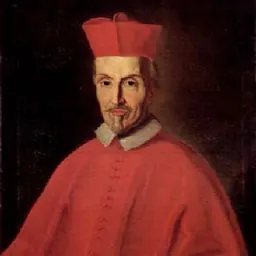
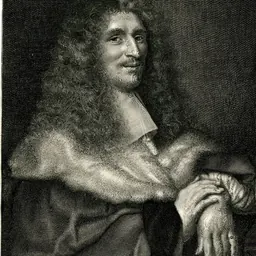


Related people
Same field, nearest in time
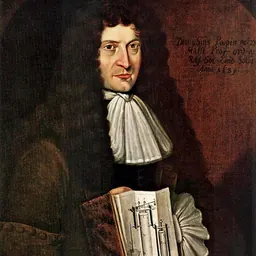

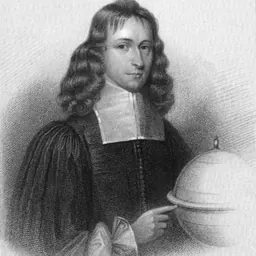

Contemporaries
People whose lives overlapped Elena Cornaro Piscopia's




Frequently asked questions
Who was Elena Cornaro Piscopia?
Venetian philosopher (1646–1684)
When was Elena Cornaro Piscopia born?
Elena Cornaro Piscopia was born on 5 June 1646 in Venice.
When did Elena Cornaro Piscopia die?
Elena Cornaro Piscopia died on 26 July 1684 in Padua.
What was Elena Cornaro Piscopia's occupation?
Elena Cornaro Piscopia was a mathematician, philosopher, theologian, university teacher, medic and writer.
What nationality was Elena Cornaro Piscopia?
Elena Cornaro Piscopia was Italian.
Sources & further reading
· Wikipedia: Elena Cornaro Piscopia
· DBpedia: Elena Cornaro Piscopia
Cite this page
APA: Biography.guide. (2026). Elena Cornaro Piscopia. https://biography.guide/elena-cornaro-piscopia/
MLA: "Elena Cornaro Piscopia." Biography.guide, https://biography.guide/elena-cornaro-piscopia/.
Chicago: "Elena Cornaro Piscopia." Biography.guide. https://biography.guide/elena-cornaro-piscopia/.
Data last updated: 2026-09-20 · Spot an error? Report a correction.
Page generated 2026-09-27 05:34 UTC