
Eleanor Coade
British businesswoman known for manufacturing Neoclassical statues, architectural decorations and garden ornaments
About Eleanor Coade
Lived 1733 – 1821 (aged 88). Eleanor Coade was a British businessperson, sculptor, inventor and entrepreneur.
Belmont House in Lyme Regis, Dorset, with Coade stone decoration.
Eleanor Coade (3 or 24 June 1733 – 18 November 1821) was a British businesswoman known for manufacturing Neoclassical statues, architectural decorations and garden ornaments made of Lithodipyra (Coade stone) for over 50 years from 1769 until her death. She should not be confused or conflated with her mother, also named Eleanor.
Lithodipyra ("stone fired twice") was a high-quality, durable moulded weather-resistant, stoneware; statues and decorative features from this still look almost new today. Coade did not invent 'artificial stone', as various inferior quality precursors had been both patented and manufactured over the previous forty years, but she probably perfected both the formulation and the firing process.
She combined high-quality manufacturing and artistic taste, together with entrepreneurial, business and marketing skills, and became a successful businesswoman. She produced stoneware for St George's Chapel, Windsor; The Royal Pavilion, Brighton; Carlton House, London and the Royal Naval College, Greenwich. Shortly after her death, her company produced a large quantity of stoneware used in the refurbishment of Buckingham Palace.
Personal life
Early life Eleanor Coade was born on 3 June 1733 in Exeter, the elder daughter of the Nonconformist (devout Baptist and his wife Eleanor (Elinore, née Enchmarch) (c.1708–1796 ) was the daughter of Thomas and Sarah Enchmarch (d.1735), merchants and textile manufacturers of Tiverton, Devon. Eleanor's younger sister Elizabeth was born 1738 in Exeter. By the mid-1760s, daughter Eleanor Coade was running her own business as a linen draper in the City of London. As was customary for unmarried women in business at the time, she used Mrs as a courtesy title.
In early 1769 the family were living at St Thomas Apostles Street It was a simple two-storey Georgian seaside villa known as Bunter's Castle but renamed Belmont House by the Coade family. Author John Fowles lived there from 1968 to 2005 and it is now owned by the Landmark Trust.
By 1811 Coade was living in Great Surrey Street (later Blackfriars Road), Southwark. however, whilst she was listed by the society as a sculptor, Caroline Stanford has suggested that whether the sculptures "were works modelled by herself or produced in her name is still unclear – the documentary evidence implies the latter".
Eleanor Coade was a devout Baptist. She never married and died on 18 November 1821 in Camberwell Grove, Camberwell, London.
In her will and testament, Coade left much of her fortune to charity schools and clergymen, plus her family. A proponent of women's rights, she also left money to a few married women friends, stating that their husbands were to have no control over the funds.
Her body is buried in an unmarked grave at Bunhill Fields cemetery in the London Borough of Islington, which was used by many Nonconformists.
She is commemorated by the Coade Stone, placed under Westminster Bridge alongside the footpath to Royal Festival Hall, which now occupies the site of her factory at "Narrow Wall". The Coade Stone is the bottom stone of a horse-mill used in her factory, a wheel-shaped millstone with a prominent internal axle lip. It is placed on a 30-degree slope beside the under-bridge footpath.
Artificial stone business An allegory of agriculture: Ceres reclining amidst a collection of farm implements, she holds a sheaf of wheat and a scythe. Engraving by W. Bromley, 1789, after a sculptural panel by Mrs E. Coade. In late 1769, at the age of 36, Eleanor Coade bought Daniel Pincot's struggling artificial stone business at Kings Arms Stairs, Narrow Wall, Lambeth, a site now occupied by the Royal Festival Hall. She took charge and developed this business as "Coade's Artificial Stone Manufactory". Within two years (1771), she sacked Pincot for "representing himself as the chief proprietor". The ceramic stoneware product was marketed as "Coade's Lithodipyra", for the next 50 years.
Pincot's business may have been related to that run nearby by Richard Holt, who had taken out two patents in 1722: one for a kind of liquid metal or stone, and another for making china without the use of clay. There were many start-up 'artificial stone' businesses in the early 18th century, of which only Mrs Coade's succeeded. She manufactured products from ceramic in a process to look like stone, and it proved highly durable.
John Bacon, a talented sculptor, had worked for Mrs Coade since 1769. In 1771 she appointed him as works supervisor; he directed both model-making and design until his death in 1799. His neo-classical models won awards from the Society for the Encouragement of Arts and royal patronage. Their joint success meant that the Coade Artificial Stone Manufactory gained the business of all the eminent Georgian architects, including Robert Adam, James Wyatt, Samuel Wyatt, Sir William Chambers, John Nash, and John Soane. ), John Charles Felix Rossi, J. G. Bubb, Thomas Dubbin, Benjamin West (later a successful painter), and Joseph Panzetta (1789–1830). The latter worked for Coade for more than 26 years; his most prominent work was Lord Hill's Column in Shrewsbury. Croggon worked as manager until Coade's death.
At that time, he bought the firm from her estate for circa £4,000, although he had hoped to inherit it. From 1814 onwards, Croggon paid rates for the factory. The business continued to be successful long after Coade's death, but Croggon went bankrupt in 1833 because of both changing tastes and the failure of the Duke of York to pay his debts.
Business methods Coade's success as a businesswoman was very rare in the Georgian era. She was a hard-working individual who concentrated on methodical procedures to produce consistently high quality products. She was the first and only person to succeed in the artificial stone business, thanks to a combination of managerial skills, entrepreneurial flair, and a talent for marketing and public relations.
Coade stone business
The South Bank Lion, on Westminster Bridge. Modelled by William F. Woodington and Grade II* listed by English Heritage The factory produced large ceramic statues and all manner of decorative architectural features, which proved to be extremely durable. This material resisted corrosion by London's polluted air, made damaging by coal exhausts, formation of acid rain, and byproducts.
Coade stone works included the frontispiece of the original Twinings shop (tea merchants) on the Strand; private ornaments in the rear of Buckingham Palace; the lion on Westminster Bridge; the Nelson Pediment at the Royal Naval College at Greenwich (the mural above the terrace's main entrance was reckoned by the Coade workers as the finest of all their work); the statue of George III on the seafront at Weymouth, Dorset; the stone awning and statues at Schomberg House, Pall Mall, London; and the crest on the Imperial War Museum. The plaques at Hammerwood Park near East Grinstead were also made of Coade stone.
Don’t just read it —
keep it.
Full-length biographies made to live with: read them, listen on the way to work, watch them tonight.
- E-book
- Audio
- Video
Instant download · yours to keep · every purchase keeps this site free
Important facts
People in Eleanor Coade's life
Named in this biography and alive at the same time

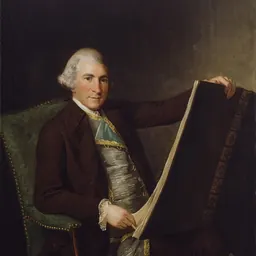
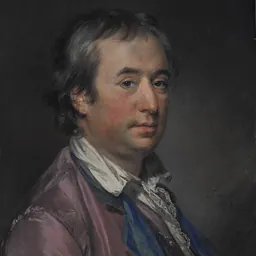
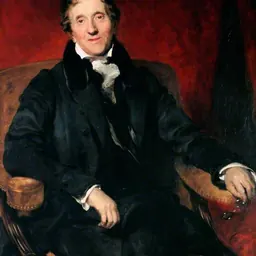

Related people
Same field, nearest in time
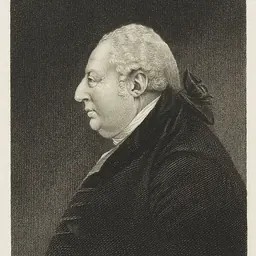

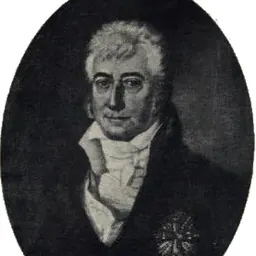

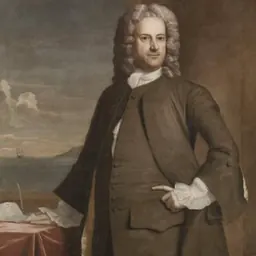
Contemporaries
People whose lives overlapped Eleanor Coade's


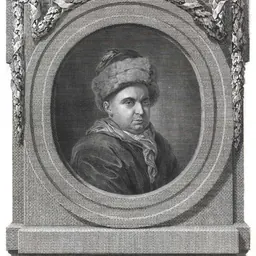



Frequently asked questions
Who was Eleanor Coade?
British businesswoman known for manufacturing Neoclassical statues, architectural decorations and garden ornaments (1733–1821)
When was Eleanor Coade born?
Eleanor Coade was born on 3 June 1733 in Exeter.
When did Eleanor Coade die?
Eleanor Coade died on 16 November 1821 in Camberwell.
What was Eleanor Coade's occupation?
Eleanor Coade was a businessperson, sculptor, inventor and entrepreneur.
What nationality was Eleanor Coade?
Eleanor Coade was British.
Sources & further reading
Cite this page
APA: Biography.guide. (2026). Eleanor Coade. https://biography.guide/eleanor-coade/
MLA: "Eleanor Coade." Biography.guide, https://biography.guide/eleanor-coade/.
Chicago: "Eleanor Coade." Biography.guide. https://biography.guide/eleanor-coade/.
Data last updated: 2026-09-22 · Spot an error? Report a correction.
Page generated 2026-09-27 05:02 UTC