
About Eleanor Albert Bliss
Lived 1899 – 1987 (aged 87). Eleanor Albert Bliss was an American bacteriologist and immunologist.
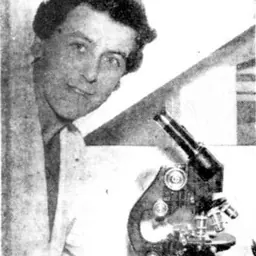
Eleanor Albert Bliss (December 16, 1899 – June 27, 1987) was an immunologist who made significant advancements to the field of immunological research. She was also a dean and professor of biology at Bryn Mawr College.
Life and education Eleanor Albert Bliss was born on December 16, 1899, in Jamestown, Rhode Island. Her family lived in Baltimore where her father, William J. Bliss (1867-1940) was a professor at Johns Hopkins University. Her mother's name was Edith Grantham Bliss (1870-1967) who was originally from Pennsylvania. The Bliss family lived in Baltimore for their children's entire childhood.
Eleanor Bliss left Baltimore and received her undergraduate degree from Bryn Mawr College in 1921. While attending Bryn Mawr, she was a member of the swim team and water polo team. After graduating, she traveled throughout Europe for a year visiting England, France, Italy, Germany, Switzerland, Belgium, Holland, and Austria. This was connected to work being done by Rebecca Lancefield at the Rockefeller Institute for Medical Research, that classified 13 different streptococci groups and significantly advanced knowledge on streptococcal diseases.
Sulfa drugs Perhaps her more well-known scientific legacy is the work Bliss did investigating sulfa drugs. These were drugs that were being developed in the 1930s and earlier to treat bacterial infections. In July 1936, Bliss and her colleague Perrin H. Long attended the Second International Congress of Microbiology where they obtained samples of the new drug Prontosil. Not a year later, they had successfully used Prontosil to treat a child for erysipelas. This success propelled their research forward to treat more streptococcal diseases including streptococcal meningitis. Their work was used to treat the then president's son, Franklin Delano Roosevelt Jr.
Following this incidence, Bliss and Long published their book The Clinical and Experimental Use of Sulfanilamide, Sulfapyridine, and Allied Compounds (1939). The book went through the history of sulfanilamide, chemotherapy of experimental bacterial infections, the toxicity and comparative pharmacology of sulfanilamide, the mode of action of sulfanilamide, the clinical use of sulfanilamide (and others), the clinical use of Prontosil and Neoprontosil, as well as the clinical and toxic manifestations of sulfanilamide. The last section of the book served to lessen the fear associated with using these drugs based on fact. Bliss and Long discuss the ways that physicians have come to fear sulfanilamide and its derivatives, and go through the ways in which those fears are unfounded. They say “we think that a realization of the possible toxic effects, based on intelligence rather than fear, is demanded of physicians if a rational therapeutic use is to be made of sulfanilamide and its derivatives. It must be remembered that while the side effects of these drugs are many, relatively few fatalities have been attributed to their use" (266). They go on to say that when used properly, these side effects rarely encounter a fatal outcome.
Selected publications Bliss, E. A., (1943). Physicians Need to Know How the Viruses Grow. The Science News-Letter, 43(11), 167-167. Bliss, E. A., & Long, P. H. (1939). The Clinical and Experimental Use of Sulfanilamide, Sulfapyridine and Allied Compounds. Macmillan. Long, P., & Bliss, E. (1938). Studies upon Minute Hemolytic Streptococci: IV. Further Observations upon the Distribution of Ordinary and Minute Beta Hemolytic Streptococci in Normal and Diseased Human Beings. The Journal of Infectious Diseases, 62(1), 52–57. Long, P., & Bliss, E. (1937). A Simple and Rapid Method of Preparing Antigenic Streptolysin. The Journal of Infectious Diseases, 61(1), 96–99. Long, P., & Bliss, E. (1937). Studies upon the Pertussis Bacillus: The Effects of the Introduction of Pertussis Antigen into the Nasal Passages. The Journal of Infectious Diseases, 61(1), 100–102. Rich, A., Long, P., Brown, J., Bliss, E., & Holt, L. (1932). Experiments upon the Cause of Whooping Cough. Science, 76(1971), 330–331.
Don’t just read it —
keep it.
Full-length biographies made to live with: read them, listen on the way to work, watch them tonight.
- E-book
- Audio
- Video
Instant download · yours to keep · every purchase keeps this site free
Important facts
People in Eleanor Albert Bliss's life
Named in this biography and alive at the same time


Related people
Same field, nearest in time




Contemporaries
People whose lives overlapped Eleanor Albert Bliss's


Frequently asked questions
Who was Eleanor Albert Bliss?
American bacteriologist
When was Eleanor Albert Bliss born?
Eleanor Albert Bliss was born on 16 December 1899 in Jamestown.
When did Eleanor Albert Bliss die?
Eleanor Albert Bliss died on 27 June 1987 in Bryn Mawr.
What was Eleanor Albert Bliss's occupation?
Eleanor Albert Bliss was a bacteriologist and immunologist.
What nationality was Eleanor Albert Bliss?
Eleanor Albert Bliss was American.
Sources & further reading
· Wikipedia: Eleanor Albert Bliss
· DBpedia: Eleanor Albert Bliss
Cite this page
APA: Biography.guide. (2026). Eleanor Albert Bliss. https://biography.guide/eleanor-albert-bliss/
MLA: "Eleanor Albert Bliss." Biography.guide, https://biography.guide/eleanor-albert-bliss/.
Chicago: "Eleanor Albert Bliss." Biography.guide. https://biography.guide/eleanor-albert-bliss/.
Data last updated: 2026-09-20 · Spot an error? Report a correction.
Page generated 2026-09-27 05:13 UTC