
About Elaine de Kooning
Lived 1918 – 1989 (aged 70). Elaine de Kooning was an American painter, illustrator, sculptor, architectural drafter, printmaker and artist.
Early life and education
Elaine de Kooning was born Elaine Marie Catherine Fried on March 12, 1918, in Flatbush, Brooklyn, New York City. Her father Charles was a plant manager for the Bond Bread Company.
Elaine was the eldest of four children; Marjorie (Luyckx), Conrad, and Peter were her siblings. Her mother, despite being recalled as less loving and attentive than some parents by Elaine's younger sister, supported Elaine's artistic endeavors.
Elaine's mother started taking Elaine to museums at the age of five and taught her to draw what she saw. Elaine's childhood room was decorated with painting reproductions. He even destroyed many of her drawings, but this "impelled Elaine to strive for both precision and grace in her work". Ben Nicholson and Barbara Hepworth, and Jean Arp and Sophie Taeuber-Arp, Elaine said, "It seemed like a good idea at the time, but later I came to think that it was a bit of a put-down of the women. There was something about the show that sort of attached women-wives- to the real artists".
In April 1954, Elaine presented her first solo exhibition at the Stable Gallery. For that reason, she chose to sign her artworks with her initials rather than her full name, to avoid her paintings' being labeled as feminine in a traditionally masculine movement, and to not be confused with her husband.
Elaine de Kooning was an important writer and teacher of art. She began working at the magazine ARTnews in 1948, and wrote articles about major figures in the art world. She wrote about one hundred articles for Art News magazine. Elaine de Kooning was the first American artist in the 1950s to take on the role of artists' critic. the University of Georgia; and the New York Studio School in Paris. The purpose of this show was to highlight the unique talents and perspectives of female artists who, as was previously noted, were often dismissed or overshadowed by their male counterparts. The show later traveled to the Mint Museum and the Palm Springs Art Museum.
"For Elaine, everything was always new, never resolved, always being unmade and made, as if it had never been made before. She did not accumulate experience and learn what to expect ... Life was a constant surprise."
Early works Elaine and Willem de Kooning spent the summer of 1948 at Black Mountain College in North Carolina. Elaine studied under Bauhaus artist Josef Albers, architect Buckminster Fuller, and choreographer Merce Cunningham. A regular participant in theatrical performances, Elaine was very involved in the college's social life.
Portraits
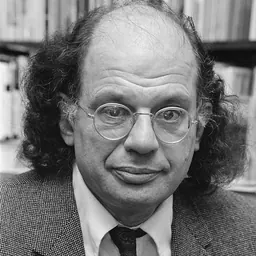
A large portion of Elaine de Kooning's work was in portraiture. In addition to painting many self-portraits throughout the course of her life, her subjects were often fellow artists—usually men—including poets Frank O'Hara, John Ashbery, and Allen Ginsberg; writer Donald Barthelme; art critic Harold Rosenberg; Thomas B. Hess, managing editor of ARTnews; Merce Cunningham; art dealer Leo Castelli; jazz musician Ornette Coleman; Brazilian soccer player Pelé; and painters Joop Sanders, Fairfield Porter, Alex Katz and her husband, Willem de Kooning. Although she worked in a gestural Abstract Expressionist mode, she never abandoned working with the figure ensuring the person's likeness.
In 1944, Elaine met Dutch artist Joop Sanders at a Virgil Thomson concert. They agreed to pose for each other, beginning a lengthy collaboration that produced dozens of portraits. Elaine called hers the "Joop Paintings". After spending a day drawing Sanders, she would work for a week turning the drawings into a painting. In the process, Elaine said she became "hooked" on portraits, through which she melded those aspects she found most intriguing in her subject with elements of herself, according to Mary Gabriel's "Ninth Street Women" (page 138)
According to Brandon Brame Fortune, "She achieves a sense of distinguishing facial features and captures each subject's presence with sharp, jagged strokes of paint... A drawing of [her brother] Conrad from 1951 presents [his] head and shoulders against a dark background, with a combination of careful lines and darker strokes defining a contemplative figure with great subtlety.” A great example of this is the series of studies and finished portraits of President John F. Kennedy, which was the most important commission in her career. De Kooning also did a series of men with children, and a series of women after she resumed painting a year after John F. Kennedy's death.
New Mexico Starting in the fall of 1958, and ending in the late spring of 1959, Elaine got a teaching appointment as visiting professor at the University of New Mexico. This gave her the opportunity to immerse herself in the characteristic color and space of the Southwestern landscape. She visited Juarez, Mexico where she attended many bullfights. She created a series of painting inspired by the theme with bold and bright colors. She wrote that "the cottonwood trees and aspens had turned an overwhelming gold" and that "New England mountains are so well planted, but the New Mexico mountains seems to move toward you."
Later works In 1983, Elaine visited the Paleolithic cave paintings of Lascaux in France and Altamira in Spain and produced a series of paintings titled Cave Walls. In Paleolithic art she perceived the roots of Abstract Expressionism.
De Kooning's work has been featured in numerous solo exhibitions as well as in a multitude of group shows in commercial art galleries as well as in major art museums and institutions. The artist's work has received increasing critical acclaim posthumously, resulting in exhibitions such as the major museum show "Elaine De Kooning: Portraits" hosted by the National Portrait Gallery in 2015 in Washington, DC.
Public collections
Works by this artist are in the permanent collections of: The Museum of Modern Art, New York, NY The Solomon R. Guggenheim Museum, New York, NY The Metropolitan Museum of Art, New York, NY The Denver Art Museum, Denver, CO The National Museum of Women in the Arts, Washington, D.C. The Los Angeles County Museum of Art (LACMA), Los Angeles, CA The Smithsonian American Art Museum The National Portrait Gallery, Washington, D.C. - The Smithsonian Institution's National Portrait Gallery reportedly holds the largest museum collection of portraits by De Kooning. Albuquerque Museum, Albuquerque, NM
Death De Kooning died on February 1, 1989, in Southampton, New York,
In 2015, the Pollock-Krasner House and Study Center hosted "Elaine de Kooning Portrayed," an exhibition dedicated to portraits, likenesses, and reflections on de Kooning by other artists, including her husband Willem as well as Arshile Gorky, Fairfield Porter, Hedda Sterne, Alex Katz, Robert De Niro, Sr., Ray Johnson, Joop Sanders, Paul Harris, and Edvins Strautman.
In 2016, de Kooning was included in the exhibition Women of Abstract Expressionism at the Denver Art Museum.
In 2017, de Kooning was one of the subjects of the book Ninth Street Women: Lee Krasner, Elaine de Kooning, Grace Hartigan, Joan Mitchell, and Helen Frankenthaler: Five Painters and the Movement That Changed Modern Art by Mary Gabriel.
De Kooning's work was included in the 2021 exhibition Women in Abstraction at the Centre Pompidou.
In 2023, her work was included in the exhibition Action, Gesture, Paint: Women Artists and Global Abstraction 1940-1970 at the Whitechapel Gallery in London.
One of the few residences owned by Elaine de Kooning during her lifetime was a studio at Alewive Brook Road in East Hampton. The current owners are reportedly developing an artists' residency/alternative exhibition space referred to as "the Elaine de Kooning house."
Don’t just read it —
keep it.
Full-length biographies made to live with: read them, listen on the way to work, watch them tonight.
- E-book
- Audio
- Video
Instant download · yours to keep · every purchase keeps this site free
Important facts
more
Elaine DeKooning, Elaine Marie Catherine Fried de KooningFamily & relationships
People in Elaine de Kooning's life
Named in this biography and alive at the same time




Related people
Same field, nearest in time
Contemporaries
People whose lives overlapped Elaine de Kooning's




Frequently asked questions
Who was Elaine de Kooning?
American painter (1918-1989)
When was Elaine de Kooning born?
Elaine de Kooning was born on 12 March 1918 in Brooklyn.
When did Elaine de Kooning die?
Elaine de Kooning died on 1 February 1989 in Southampton.
What was Elaine de Kooning's occupation?
Elaine de Kooning was a painter, illustrator, sculptor, architectural drafter, printmaker and artist.
What nationality was Elaine de Kooning?
Elaine de Kooning was American.
Sources & further reading
· Wikipedia: Elaine de Kooning
Cite this page
APA: Biography.guide. (2026). Elaine de Kooning. https://biography.guide/elaine-de-kooning/
MLA: "Elaine de Kooning." Biography.guide, https://biography.guide/elaine-de-kooning/.
Chicago: "Elaine de Kooning." Biography.guide. https://biography.guide/elaine-de-kooning/.
Data last updated: 2026-09-20 · Spot an error? Report a correction.
Page generated 2026-09-27 05:32 UTC