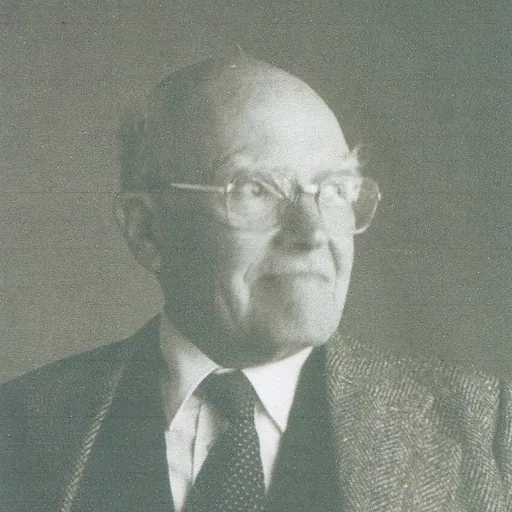
About Eladio Dieste
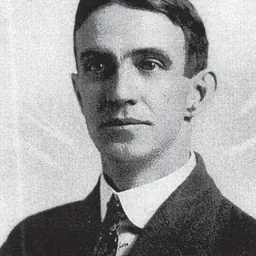
Lived 1917 – 2000 (aged 82). Eladio Dieste was an Uruguayan architect, civil engineer and university teacher.
Eladio Dieste (December 1, 1917 – July 29, 2000) was a Uruguayan civil engineer and inventor of the construction technique of reinforced brick masonry. He made his reputation by building a range of structures from grain silos, factory sheds, markets and churches, most of them in Uruguay.
Biography Early life and education Dieste was born in Artigas, a town on Uruguay's northern border, the second of three sons of Eladio Dieste Muriel, a history teacher, and Elisa Saint-Martin Lamarque. His uncle was the Spanish Galician poet and playwright Rafael Dieste. He was schooled in Salto and moved to Montevideo in 1936 to study at the Facultad de Ingeniería of the Universidad de la República, lodging in the house of the jurist Antonio Grompone, who became his intellectual mentor. He graduated as a civil engineer in 1943.
Reinforced ceramics and the Gaussian vault
Dieste's structural system places steel reinforcement in the joints between courses of locally made hollow brick, bonded with sand-cement mortar, so that the brick membrane behaves analogously to reinforced concrete but at a fraction of the cost and weight. The shells were laid over reusable, moveable formwork and frequently prestressed — techniques ahead of contemporary practice in the industrialised world.
Metal-reinforced masonry had precedents — Paul Cottancin's 1889 patent, Rafael Guastavino's 1910 reinforced tile shells, and Eduardo Torroja's 1920s experiments with cerámica armada — but Dieste, initially unaware of these developments, carried the idea further than anyone, at the very moment rising formwork and labour costs were making thin concrete shells uneconomical.
Career After graduating, Dieste worked as a bridge engineer for the roads directorate of Uruguay's Ministry of Public Works (1944–1947), as an engineer for the Danish contractor Christiani & Nielsen (1945–1948), and as head of the technical office of the ministry's architecture directorate; from 1949 to 1958 he directed the foundations and piling firm Viermond S.A. In 1956 he founded, with fellow engineer Eugenio R. Montañez (1916–2001), the design-and-construction firm Dieste y Montañez S.A., through which nearly all of his subsequent work was built and which remains in operation.
There were several architects and engineers in South and Latin America who were working in the modernist language, such as Guillermo Gonzalez Zuleta in Colombia, Carlos Raúl Villanueva in Venezuela and Félix Candela in Mexico, who brought architecture and structural engineering into close proximity, especially when undertaking humble commissions. His buildings were mostly roofed with thin shell vaults constructed of brick and ceramic tiles. These forms were cheaper than reinforced concrete, and didn't require ribs and beams. In developing this approach, even in comparison with modernists the world over, he was an innovator.
Dieste is quoted about his use of materials and structure:
There are deep moral/practical reasons for our search which give form to our work: with the form we create we can adjust to the laws of matter with all reverence, forming a dialogue with reality and its mysteries in essential communion... For architecture to be truly constructed, the materials must be used with profound respect for their essence and possibilities; only thus can 'cosmic economy' be achieved... in agreement with the profound order of the world; only then can have that authority that so astounds us in the great works of the past.
With regard to structure Dieste stated:
The resistant virtues of the structure that we make depend on their form; it is through their form that they are stable and not because of an awkward accumulation of materials. There is nothing more noble and elegant from an intellectual viewpoint than this; resistance through form.
Many of the techniques that he developed to achieve these forms, such as pre-stressing of brickwork and moveable formworks, were in advance of contemporary techniques in the developed world.
He died, aged 82, in Montevideo.
Selected works St. Peter Church in Durazno Christ the Worker Church in Estación Atlántida Church of Our Lady of Lourdes in Malvín St. John of Avila Church in Alcalá de Henares Teatro de Verano Ramón Collazo in Montevideo Montevideo Shopping (structure of the first stage, 1985; architect: Guillermo Gómez Platero) Church of St. Charles Borromeo (structural calculation, 1956; architect: Juan Pablo Terra)
Don’t just read it —
keep it.
Full-length biographies made to live with: read them, listen on the way to work, watch them tonight.
- E-book
- Audio
- Video
Instant download · yours to keep · every purchase keeps this site free
Important facts
People in Eladio Dieste's life
Named in this biography and alive at the same time





Related people
Same field, nearest in time

Contemporaries
People whose lives overlapped Eladio Dieste's

Frequently asked questions
Who was Eladio Dieste?
Uruguayan architect (1917-2000)
When was Eladio Dieste born?
Eladio Dieste was born on 1 December 1917 in Artigas, Artigas Department.
When did Eladio Dieste die?
Eladio Dieste died on 19 July 2000 in Montevideo.
What was Eladio Dieste's occupation?
Eladio Dieste was an architect, civil engineer and university teacher.
What nationality was Eladio Dieste?
Eladio Dieste was Uruguayan.
Sources & further reading
Cite this page
APA: Biography.guide. (2026). Eladio Dieste. https://biography.guide/eladio-dieste/
MLA: "Eladio Dieste." Biography.guide, https://biography.guide/eladio-dieste/.
Chicago: "Eladio Dieste." Biography.guide. https://biography.guide/eladio-dieste/.
Data last updated: 2026-09-21 · Spot an error? Report a correction.
Portrait: Wikimedia Commons · author & licence
Page generated 2026-09-27 04:59 UTC