
About Eiko Yamazawa
Lived 1899 – 1995 (aged 96). Eiko Yamazawa was a Japanese photographer.
was a renowned Japanese photographer. She is considered one of Japan's earliest women photographers and is among the few women photographers in Japan who were active both before and after World War II. First trained in Nihonga, she later studied photography in the U.S. under the mentorship of Consuelo Kanaga, and also exposed to the work of Kanaga's contemporaries such as Paul Strand and Edward Weston.
After coming back to Japan in 1929, she established herself as a professional photographer. In 1931 she opened a portrait studio in Osaka, and in 1950 she established the Yamazawa Institute of Photography also in Osaka.
Early life and education Yamazawa was born in Osaka as the third daughter to the owner of the Matsutari and Sada ironworks factory. As a child Yamazawa enjoyed being creative, having described her childhood with fond memories of growing up in factories and playing with building materials. She knew from a young age that she wanted to be an artist; she took painting lessons with the nihonga artist Rogetsu Mori and experimented with box cameras. Yamazawa's father died soon after she arrived and as a result, Yamazawa was forced to seek out part-time work to pay for school tuition and living expenses. Through a serendipitous introduction by a local camera shop owner, Yamazawa began working as an apprentice to Consuelo Kanaga who was then primarily a portrait photographer in San Francisco. In 1927, Kanaga closed her studio to tour Europe and Yamazawa took on work as a photography assistant to an unidentified amateur photographer. After completing her studies at California SFA in December 1927, Yamazawa travelled to Europe in the spring of 1928. Yamazawa's embracement of photography was in part motivated by a need to financially support her mother after the death of her father as well as her growing view of photography as an art form, informed by her experiences in the US. n 1931, Yamazawa opened her own photography studio at the Dojima Building in Osaka's business district where she shot mostly portraits. Yamazawa initial portraits were of members of the social club Seikosha, which included Osaka's financial community. She was then invited to move to the Osaka Sogo Department in Shinsaibaishi and relocation in 1935. She become known as a shokugyo-fujin “professional woman” and penned essays in the journal Kagayaku published by Shigure Hasegawa as well as Fujin Gahou. As Yamazawa's reputation grew, she began photographing the artistic community, including playwright Shigure Hasegawa and actress Yasue Yamamoto. Yamazawa often visited workshops Yamamoto participated in as part of the Shin-Tsukiji Theatre Company as well as the workshops Yamamoto held in her Sendagaya home. At the time, Yamazawa borrowed an unused tofu mill and repurposed it into a studio, waiting until nightfall to use the running cold water for developing and fix images on the dirt floor.
Artistic career Yamazawa's move towards abstraction within her artistic career is marked by her second visit to the US in January 1955, when Kanaga invited Yamazawa to see her photographs shown in the exhibition Family of Man. There Yamazawa was introduced to numerous painters and photographers active in New York and visited Imogen Cunningham on her way back to Japan.
As Yamazawa was increasingly pursuing her non-commercial work as a photographer in the mid 1950s, she eventually closed her studio in 1960. By 1962, Yamazawa published her seminal book Far and Near as declaration for dedicating her life to creative work as an artist. Far and Near consisted of 77 images of New York, still life shots, and early examples of abstraction, such as close-up images of tree rings and found objects, taken between 1943 and 1962. In Far and Near, the opening title translates to “Eye After Six Months in New York" in which Yamazawa spoke on her ability to create her own artistic work again after having been occupied with working in commercial studios. Yamazawa didn't make the conscious decision to focus on abstraction until the 1960s, evidenced by her first use of the word "abstract" in the title of her 1963 exhibition. By the 1970s, Yamazawa was fully committed to this style of photography, writing in her book Abstract Photographs (1976) that she “left photorealistic expression completely behind in the past.”
Yamazawa's view of photography has often been theorized to be an extension of or equivalent to painting. Regarding the 1956 essay "Forty Years as a Woman Photographer" penned by Yamazawa, Tsukasa Ikegami, curator of Otani Memorial Art Museum, pointed out a discrepancy between Yamazawa's self-proclaimed 40 years working as a photography with the fact that Yamazawa's photography career began after she returned to Japan and exhibited her work in 1929, which would have made her career only 27 years by the time the essay was written. Ikegami suggested that this discrepancy was because Yamazawa potentially viewed photography and painting as artistic equivalents, which Ikegami further substantiated by Yamazawa's frequent mixing up of the words "photograph" and "painting" in the interview featured in the film High Heels and Ground Glass made by Barbara Kasten and Deborah Irmas. Kobe City Cultural Prize (1980); Iue Culture Award (1986); Soroptimist Award (1986); and Japan Inter-Design Forum Award (1987).
Selected solo exhibitions Yamazawa was one of the few photographers at the time who held exhibitions and sold prints of their own work, though the majority of her exhibitions were held after her move to abstraction.
1929: Osaka YMCA 1932: Portraits of Creative Minds, Osaka Asahi Hall 1949: Yasue Yamamoto Costume Photographs, Osaka Asahi Hall Parlor 1956: In New York, Osaka Sogo; Ginza Matsuzakawa Tokyo 1963: Abstraction and Still Lifes, Osaka Sogo; Nihonbashi Mitsukoshi, Tokyo 1965: Figures and Still Lifes, Takashimaya New York 1979: What I Am Doing, Masago Gallery, Osaka 1982: What I Am Doing 2, Line House, Kobe 1983: Eiko Yamazawa: Abstract Photographs, Osaka Contemporary Art Center 1986: What I Am Doing 3, Asahi Gallery, Tokyo; Tamako Okazaki Gallery, Tokyo; ABC Gallery, Osaka 1994: Eiko Yamazawa Exhibition, Itami City Museum of Art 2012: Eiko Yamazawa Poster Exhibition, Dawn Center, Osaka 2019: Eiko Yamazawa: What I Am Doing, Otani Memorial Art Museum, Nishinomiya City; Tokyo Photographic Art Museum
Selected publications
Eiko Gashū (= Collected Paintings of Eiko). Osaka: Hoshi Publishing, 1921. Tankyū (= Quest). Osaka: Yamazawa Commercial Photography Studio, 1953. Far and Near. Tokyo: Miraishia, 1962. Abstract Photographs. Kobe: Yamazawa Photography Laboratory, 1976. Watashi wa Joryū Shashinka (= I am a Women Photographer). Osaka: Brain Center, 1983. Abstract Photographs. Tokyo: Tamako Okazaki Gallery, 1986. Yamazawa Eiko Ten (= Eiko Yamazawa Exhibition). Itami: Itami City Museum of Art, 1994.
Cited references
Eiko Yamazawa: What I Am Doing. Kyoto: Akaaka Art Publishing, Inc., 2019. Tsukasa Ikegami “Eiko Yamazawa’s Path” (194-198) Yoshiko Suzuki “ Eiko Yamazawa and American Modern Photography” (199-202) Fuku, Noriko. An Incomplete History: Women Photographers from Japan 1864–1997. Rochester: Visual Studies Workshop, 1998. Japanese Women Artists before and after World War II, 1930’s-1950’s. Tochigi: Tochigi Prefectural Museum of Fine Arts, 2001.
Don’t just read it —
keep it.
Full-length biographies made to live with: read them, listen on the way to work, watch them tonight.
- E-book
- Audio
- Video
Instant download · yours to keep · every purchase keeps this site free
Important facts
People in Eiko Yamazawa's life
Named in this biography and alive at the same time



Related people
Same field, nearest in time
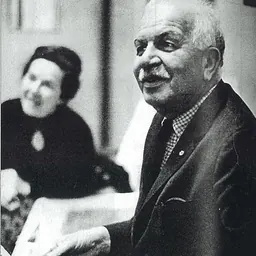


Contemporaries
People whose lives overlapped Eiko Yamazawa's
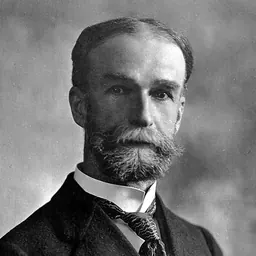
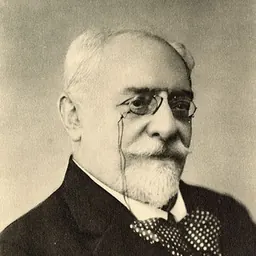
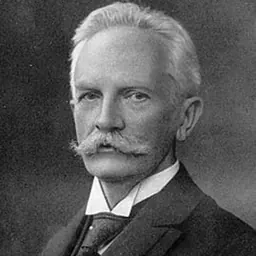


Frequently asked questions
Who was Eiko Yamazawa?
Japanese photographer (1899–1995)
When was Eiko Yamazawa born?
Eiko Yamazawa was born on 19 February 1899 in Osaka.
When did Eiko Yamazawa die?
Eiko Yamazawa died on 16 July 1995.
What was Eiko Yamazawa's occupation?
Eiko Yamazawa was a photographer.
What nationality was Eiko Yamazawa?
Eiko Yamazawa was Japanese.
Sources & further reading
Cite this page
APA: Biography.guide. (2026). Eiko Yamazawa. https://biography.guide/eiko-yamazawa/
MLA: "Eiko Yamazawa." Biography.guide, https://biography.guide/eiko-yamazawa/.
Chicago: "Eiko Yamazawa." Biography.guide. https://biography.guide/eiko-yamazawa/.
Data last updated: 2026-09-24 · Spot an error? Report a correction.
Page generated 2026-09-27 05:01 UTC