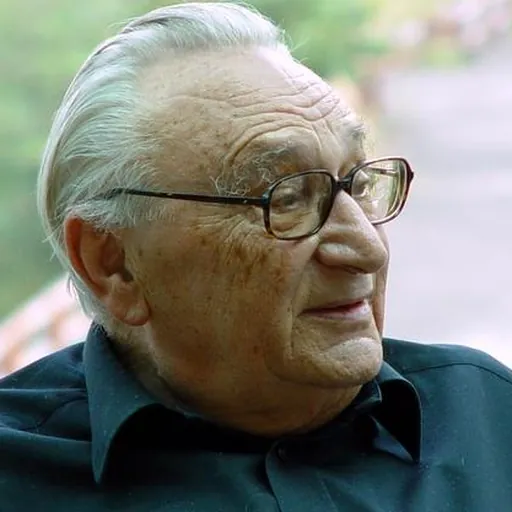
About Egon Bahr
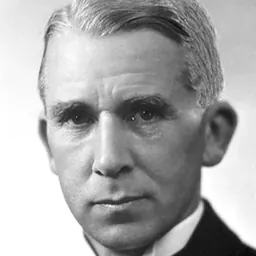
Lived 1922 – 2015 (aged 93). Egon Bahr was a German journalist, politician, writer, industrial management assistant, television presenter and designer.
Egon Karl-Heinz Bahr (; 18 March 1922 – 19 August 2015) was a German SPD politician.
The former journalist was the creator of the Ostpolitik promoted by West German Chancellor Willy Brandt, for whom he served as Secretary of State in the German Chancellery from 1969 until 1972. Between 1972 and 1990 he was an MP in the Bundestag of the Federal Republic of Germany and from 1972 until 1976 was also a Minister of the Federal Government.
Bahr was a key figure in multiple negotiation sessions between not only East and West Germany, but also West Germany and the Soviet Union. In addition to his instrumental role in Ostpolitik, Bahr was also an influential voice in negotiating the Treaty of Moscow, the Treaty of Warsaw, the Transit Treaty of 1971, and the Basic Treaty of 1972.
Life and career Bahr was born in Treffurt, in the Prussian Province of Saxony, the son of Hedwig and Karl Bahr, a high school teacher. After completing his secondary education in 1940, Bahr continued his education as an industrial specialist at the Rheinmetall-Borsig armament corporation in Berlin. During World War II, Bahr served as a soldier in the Wehrmacht from 1942 until 1944, ultimately in the capacity of “Fahnenjunker” (cadet) in the Luftkriegsschule VI in Kitzingen. He was, however, demoted after being accused of being non-Aryan (on account of his Jewish grandmother) and, thus, having "sneaked into the Wehrmacht”. Thereafter, he received a posting as an armaments worker at Rheinmetall-Borsig.
After the war, Bahr worked as a journalist at the Berliner Zeitung, one of West Berlin's prominent daily newspapers. He later worked at two other West Berliner periodicals, the Allgemeine Zeitung (West Berlin) and Der Tagesspiegel (West Berlin). From 1950 to 1960, he served as chief commentator of the Bonn bureau of RIAS, (“ Rundfunk im amerikanischen Sektor”, or "Broadcasting in the American Sector"). In 1959, he received his posting as press attaché to the West German Embassy in Ghana. From 1984 to 1994, Bahr served as the Director of the Institute for Peace Research and Security Policy at the University of Hamburg, from which he received an honorary professorship in 1984. Bahr was married and had three children. On 19 August 2015 Bahr died at the age of 93.
With respect to Ostpolitik, Bahr's field of work was mostly behind the curtains to prepare treaties. This secrecy was broken once, however. Bahr was in Moscow holding talks with Andrei Gromyko, and materials from these talks found their way, via an unknown leak, to the tabloid newspaper Bild. On 1 July 1970, they appeared in two issues. This unauthorized publication became known as the "Bahr Paper".
Following Willy Brandt's resignation of the Chancellery, Bahr also relinquished his position in the cabinet. He was, however, reappointed by Brandt's successor, Helmut Schmidt (SPD), to the Ministry for Economic Cooperation and Development. On 14 December 1976, following the federal elections that had taken place two months earlier, Bahr left his position in the Federal Government permanently.
Bahr served from 1972 until 1990 as a member of the German Bundestag. He was directly elected in 1976 and 1980 as the representative of the Schleswig-Flensburg electoral district; in the remaining elections, he was elected from the SPD's party list. Bahr also served as chairman of the Sub-Committee for Disarmament and Arms Control. In 1980, Bahr became a member of the Independent Commission for Disarmament and Security under the chairmanship of Swedish politician Olof Palme. The Commission published its findings in a 1982 report titled "Common Security". Among the report's recommendations was the concept of a nuclear-free corridor in Central Europe.
From 1976 until 1981, he served as the executive director (Bundesgeschäftsführer) of the SPD. During his tenure in that position, Bahr drew attention amid the uproar surrounding the expulsion of Klaus Uwe Benneter, who at that time had been serving as the Federal Chairman of Jusos (JungsozialistInnen in der SPD, or “Young Socialists in the SPD". Benneter had piqued much political ire by expressing the view that the German Communist Party could be a potential coalition partner for the SPD, a statement that put the status of the youth organization into jeopardy.
On 27 November 1988 he described the demands for German reunification as "Sunday talk, (...) lies, hypocrisy that poisoned us and others, political pollution." On 1 November 1989, in an interview in the Vorwärts, Bahr said: "For heaven’s sake, let’s stop dreaming and blathering about German unity"; the Berlin Wall fell only eight days later on 9 November 1989. Five days after the fall of the Berlin Wall, he called it a "delusion to talk about reunification."
Bahr went on to publish various writings about the future of German foreign policy following the end of the Cold War (see "Publications" below). He advocated among other things for Europe and Germany to exercise greater influence in the world as a "Civilian power" (“Zivilmacht"). In 1991, Bahr promoted discussion of the creation of a potential German peace corps.
In an interview with the Frankfurter Allgemeine Zeitung in 2005, Bahr confessed that, as a teenager, he had felt a "certain pride" that Poland, France, Denmark, and Norway had been conquered so quickly by the German Wehrmacht.
Quotes "I have only ever been interested in ‘'Deutschlandpolitik'’. I didn’t become a Social Democrat in order to socialize banks. No, I became a Social Democrat because I was of the opinion that Adenauer did not really mean it [that Germany should be reunited], and that Schumacher really did mean it. I was always certain that Reunification would finally be achieved. I never lost that conviction." In January 2010, he received the Order of Merit of North Rhine-Westphalia. In 2013, he received the Kaiser Otto Prize.
Published works Zu meiner Zeit. Blessing, Munich 1996, (Bahr's autobiography) Willy Brandts europäische Außenpolitik (Schriftenreihe der Bundeskanzler-Willy-Brandt-Stiftung, Heft 3). Berlin 1999, Deutsche Interessen: Streitschrift zu Macht, Sicherheit und Außenpolitik. Goldmann, Munich 2000, Der deutsche Weg: Selbstverständlich und normal. Blessing, Munich 2003, "Plädoyer für eine transatlantische Arbeitsteilung". In: Jäger, Thomas / Höse, Alexander / Oppermann, Kai (eds.) 2005: Transatlantische Beziehungen: Sicherheit – Wirtschaft – Öffentlichkeit, VS Verlag für Sozialwissenschaften, Wiesbaden pp. 489–495, Ostwärts und nichts vergessen! Kooperation statt Konfrontation. VSA-Verlag, Hamburg 2012. „Das musst du erzählen“ – Erinnerungen an Willy Brandt. Propyläen, Berlin 2013. Das Prinzip Apfelbaum: 11 Persönlichkeiten zur Frage „Was bleibt?“ herausgegeben von der Initiative „Mein Erbe Tut Gutes. Das Prinzip Apfelbaum“. Fotografien von Bettina Flitner. Vergangenheitsverlag, Berlin 2014.
Literature Andreas Vogtmeier: Egon Bahr und die deutsche Frage. Zur Entwicklung der sozialdemokratischen Ost- und Deutschlandpolitik vom Kriegsende bis zur Vereinigung. (Reihe Politik- und Gesellschaftsgeschichte, Band 44), Bonn 1996. Daniel Friedrich Sturm: '"Metternich" in Moskau. Egon Bahrs Wandel durch Annäherung". In: Deutschland Archiv, Jg. 42, Nr. 5, 2009, pp. 841–846.
Don’t just read it —
keep it.
Full-length biographies made to live with: read them, listen on the way to work, watch them tonight.
- E-book
- Audio
- Video
Instant download · yours to keep · every purchase keeps this site free
Important facts
People in Egon Bahr's life
Named in this biography and alive at the same time




Related people
Same field, nearest in time

Contemporaries
People whose lives overlapped Egon Bahr's

Frequently asked questions
Who was Egon Bahr?
German politician (SPD) (1922-2015)
When was Egon Bahr born?
Egon Bahr was born on 18 March 1922 in Treffurt.
When did Egon Bahr die?
Egon Bahr died on 19 August 2015 in Berlin.
What was Egon Bahr's occupation?
Egon Bahr was a journalist, politician, writer, industrial management assistant, television presenter and designer.
What nationality was Egon Bahr?
Egon Bahr was German.
Sources & further reading
Cite this page
APA: Biography.guide. (2026). Egon Bahr. https://biography.guide/egon-bahr/
MLA: "Egon Bahr." Biography.guide, https://biography.guide/egon-bahr/.
Chicago: "Egon Bahr." Biography.guide. https://biography.guide/egon-bahr/.
Data last updated: 2026-09-23 · Spot an error? Report a correction.
Portrait: Wikimedia Commons · author & licence
Page generated 2026-09-27 05:05 UTC