
About Edwin P. Morrow
Lived 1877 – 1935 (aged 57). Edwin P. Morrow was an American lawyer and politician.
Edwin Porch Morrow (November 28, 1877 – June 15, 1935) was an American politician, who served as the 40th governor of Kentucky from 1919 to 1923. He was the only Republican elected to this office between 1907 and 1927. He championed the typical Republican causes of his day, namely equal rights for African-Americans and the use of force to quell violence. Morrow had been schooled in his party's principles by his father, Thomas Z. Morrow, who was its candidate for governor in 1883, and his uncle, William O. Bradley, who was elected governor in 1895. Both men were founding members of the Republican Party in Kentucky.
After rendering non-combat service in the Spanish–American War, Morrow graduated from the University of Cincinnati Law School in 1902 and opened his practice in Lexington, Kentucky. He made a name for himself almost immediately by securing the acquittal of a black man charged with murder based on an extorted confession and perjured testimony. He was appointed U.S. District Attorney for the Eastern District of Kentucky by President William Howard Taft in 1910 and served until he was removed from office in 1913 by President Woodrow Wilson. In 1915, he ran for governor against his good friend, Augustus O. Stanley. Stanley won the election by 471 votes, making the 1915 contest the closest gubernatorial race in the state's history.
Morrow ran for governor again in 1919. His opponent, James D. Black, had ascended to the governorship earlier that year when Stanley resigned to take a seat in the U.S. Senate. Morrow encouraged voters to "Right the Wrong of 1915" and ran on a progressive platform that included women's suffrage and quelling racial violence. He charged the Democratic administration with corruption, citing specific examples, and won the general election in a landslide. With a friendly legislature in 1920, he passed much of his agenda into law, including an anti-lynching law and reorganizing state government. He won national acclaim for preventing the lynching of a black prisoner in 1920. He was not hesitant to remove local officials who did not deter or quell mob violence. By 1922, Democrats regained control of the General Assembly, and Morrow could not accomplish much in the second half of his term. Following his term as governor, he served on the United States Railroad Labor Board and the Railway Mediation Board but never again held elected office. He died of a heart attack on June 15, 1935, while living with a cousin in Frankfort.
Early life
Edwin Morrow was of Scottish descent and was born to Thomas Zanzinger and Virginia Catherine (Bradley) Morrow in Somerset, Kentucky, on November 28, 1877. He and his twin brother, Charles, were the youngest of eight children. His father was one of the founders of the Republican Party in Kentucky and an unsuccessful candidate for governor in 1883. His mother was a sister to William O'Connell Bradley, who was elected the first Republican governor of Kentucky in 1895. Morrow's great-grandfather Thomas Morrow emigrated to America from Scotland before the Revolutionary War.
Morrow's early education was in the public schools of Somerset. He continued there throughout 1891 and 1892.
On June 24, 1898, Morrow enlisted as a private in the 4th Kentucky Infantry Regiment for service in the Spanish–American War. He was first stationed at Lexington, Kentucky, and later trained at Anniston, Alabama. Due to a bout with typhoid fever, he never saw active duty and mustered out as a second lieutenant on February 12, 1899. In 1900, he matriculated for the fall semester at the University of Cincinnati Law School. Unable to find a defense lawyer for Moseby, the judge in the case turned to Morrow, who, as a young lawyer, was eager for work. Morrow further showed that other testimony against his client was false. The couple had two children, Edwina Haskell in July 1904 and Charles Robert in November 1908.
Political career In 1904, Morrow was appointed city attorney for Somerset, serving until 1908. Despite the encouragement of friends, Morrow declined to run for governor in 1911. Paynter had decided not to seek re-election, and the Democrats nominated Ollie M. James of Crittenden County. His Democratic opponent was his close friend, Augustus O. Stanley. Both men ran on progressive platforms, and the election went in Stanley's favor by only 471 votes.
Governor of Kentucky Morrow served as a delegate to the Republican National Convention in 1916, 1920, and 1928. He again ran on a progressive platform, advocating an amendment to the state constitution to grant women's suffrage. Tie votes in the Senate were broken by Republican lieutenant governor S. Thruston Ballard. He oversaw improvements to the education system, including better textbook selection and a tax on racetracks to support a minimum salary for teachers. This was a considerable decrease from the number granted by his immediate predecessors. During their first years in office, J. C. W. Beckham granted 350 pardons, James B. McCreary (during his second stint as governor) granted 139, and Augustus O. Stanley granted 257.
A mob gathered outside the courthouse during the trial of Will Lockett in 1920. On February 9, 1920, Morrow dispatched the Kentucky National Guard to Lexington to protect Will Lockett, a black World War I veteran on trial for murder. Morrow told the state adjutant general "Do as much as you have to do to keep that negro in the hands of the law. If he falls into the hands of the mob I do not expect to see you alive." Lockett had already confessed, without the benefit of a lawyer, to the murder. The rest of the crowd mistakenly believed they were storming the courthouse and rushed forward. The National Guard opened fire, killing six people and wounding approximately fifty. Martial law was declared, and no further violence was perpetrated. Citizens of Versailles were more outraged that the jailer had been removed from office than that the prisoner had been lynched. The locals refused to aid in the investigation, and the lynchers were never arrested or charged. Local officials appointed the jailer's wife to finish his term in an attempt to skirt the removal.
In August 1922, a traveling salesman named Jack Eaton was arrested for allegedly assaulting several young girls.
In his address to the 1922 legislature, Morrow asked for for improvements to the state highway system and the repeal of all laws denying equal rights to women. By this time, however, the Republicans had surrendered their majority in the state House, and practically all of Morrow's proposals were voted down.
Although Morrow gained national praise for his handling of the Lockett trial, historian James C. Klotter opined that he "left behind a solid, and rather typical, record for a Kentucky governor." He cited Morrow's fiscal conservatism and inability to control the legislature in 1922 as reasons for his lackluster assessment. However, he praised Morrow's advancement of racial equality in the state. The state constitution prohibited Morrow from seeking a second consecutive term, and the achievements of his administration were not significant enough to ensure the election of Charles I. Dawson, his would-be Republican successor in the gubernatorial election of 1923.
Later career and death Following his term as governor, Morrow retired to Somerset, where he became active in the Watchmen of the Republic, an organization devoted to eradicating prejudice and promoting tolerance. He served on the United States Railroad Labor Board from 1923 to 1926 and its successor, the Railway Mediation Board, from 1926 to 1934. He resigned to run for a seat in the U.S. House of Representatives representing the Ninth District, but lost his party's nomination to John M. Robsion.
Following his defeat in the congressional primary, Morrow planned to return to Lexington to resume his law practice. On June 15, 1935, he died unexpectedly of a heart attack while temporarily living with a cousin in Frankfort. He is buried in Frankfort Cemetery.
Don’t just read it —
keep it.
Full-length biographies made to live with: read them, listen on the way to work, watch them tonight.
- E-book
- Audio
- Video
Instant download · yours to keep · every purchase keeps this site free
Important facts
People in Edwin P. Morrow's life
Named in this biography and alive at the same time




Related people
Same field, nearest in time
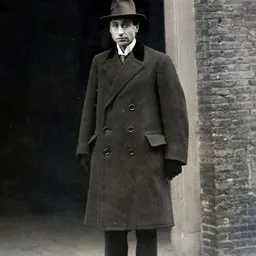
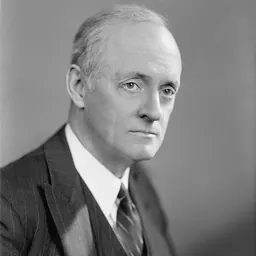

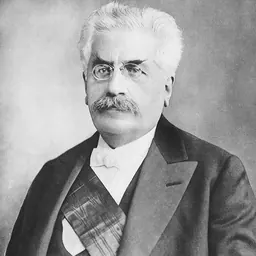
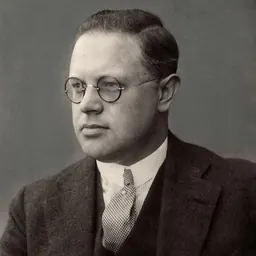
Contemporaries
People whose lives overlapped Edwin P. Morrow's




Frequently asked questions
Who was Edwin P. Morrow?
American politician (1877–1935)
When was Edwin P. Morrow born?
Edwin P. Morrow was born on 28 November 1877 in Somerset.
When did Edwin P. Morrow die?
Edwin P. Morrow died on 15 June 1935 in Frankfort.
What was Edwin P. Morrow's occupation?
Edwin P. Morrow was a lawyer and politician.
What nationality was Edwin P. Morrow?
Edwin P. Morrow was American.
Sources & further reading
Cite this page
APA: Biography.guide. (2026). Edwin P. Morrow. https://biography.guide/edwin-p-morrow/
MLA: "Edwin P. Morrow." Biography.guide, https://biography.guide/edwin-p-morrow/.
Chicago: "Edwin P. Morrow." Biography.guide. https://biography.guide/edwin-p-morrow/.
Data last updated: 2026-09-26 · Spot an error? Report a correction.
Page generated 2026-09-27 05:14 UTC