
About Edwin Friedman
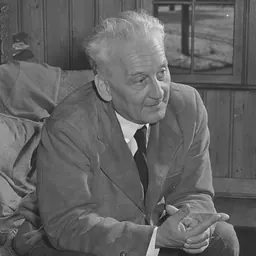
Lived 1932 – 1996 (aged 63–64). Edwin Friedman was a rabbi and psychotherapist.
Edwin Howard Friedman (May 17, 1932 – October 31, 1996 ) was an ordained rabbi, family therapist, and leadership consultant. He was born in New York City and worked for more than 35 years in the Washington, D.C., area, where he founded the Bethesda Jewish Congregation. His primary areas of work were in family therapy, congregational leadership (both Christian and Jewish), and leadership more generally.
Approach Friedman's approach was primarily shaped by an understanding of family systems theory. His seminal work Generation to Generation, written for the leaders of religious congregations, focused on leaders developing three main areas of themselves: Being self differentiated Being non-anxious Being present with those one is leading His contribution to intercultural communication and understanding in family therapy appears in a key essay, "The Myth of the Shiksa" (original 1982, collected 2008), using the concept of "cultural costume and camouflage" to describe the ways that people express their ethnic or cultural identity. This was elaborated in greater detail in the model of cultural family therapy in "Chapter 3: The Presenting Culture" of A Stranger in the Family by family therapist and transcultural psychiatrist Vincenzo Di Nicola. Echoing cultural anthropologist Clifford Geertz's notion that humans exist through the mediating variable of culture, this model of cultural family therapy uses cultural costume and camouflage as a conceptual tool that Di Nicola calls Masks: "Each family, Friedman observed, draws its cultural camouflage from the available reportoire of their culture."
Self-differentiation Building on his work, Generation to Generation, Friedman's family and friends published A Failure of Nerve--leadership in the age of the quick fix finishing Friedman's work on his understanding of leaders as "self-differentiated or well-differentiated."
Friedman illustrates good “self-differentiated” leadership to that present in the great Renaissance explorers, where leaders had: the capacity to separate oneself from surrounding emotional processes the capacity to obtain clarity about one’s principles and vision the willingness to be exposed and be vulnerable the persistence to face inertial resistance the self-regulation of emotions in the face of reactive sabotage.
Two concepts are critical in Friedman’s model: self-knowledge and self-control. Friedman attacks what he calls the failure of nerve in leaders who are “highly anxious risk-avoiders,” more concerned with good feelings than with progress–one whose life revolves around the axis of consensus. By self-differentiation, the leader maintains his/her integrity (a non-anxious self as opposed to an anxious non-self) and thus promotes “the integrity or prevents the dis-integration of the system he or she is leading."
In other places, Friedman argues that the well-differentiated leader:
Don’t just read it —
keep it.
Full-length biographies made to live with: read them, listen on the way to work, watch them tonight.
- E-book
- Audio
- Video
Instant download · yours to keep · every purchase keeps this site free
Important facts
People in Edwin Friedman's life
Named in this biography and alive at the same time




Related people
Same field, nearest in time



Contemporaries
People whose lives overlapped Edwin Friedman's


Frequently asked questions
Who was Edwin Friedman?
American rabbi
When was Edwin Friedman born?
Edwin Friedman was born in 1932 in New York City.
When did Edwin Friedman die?
Edwin Friedman died in 1996.
What was Edwin Friedman's occupation?
Edwin Friedman was a rabbi and psychotherapist.
Sources & further reading
Cite this page
APA: Biography.guide. (2026). Edwin Friedman. https://biography.guide/edwin-friedman/
MLA: "Edwin Friedman." Biography.guide, https://biography.guide/edwin-friedman/.
Chicago: "Edwin Friedman." Biography.guide. https://biography.guide/edwin-friedman/.
Data last updated: 2026-09-20 · Spot an error? Report a correction.
Page generated 2026-09-27 05:08 UTC