
Edwin Bernbaum
American scholar of comparative religion and mythology, mountaineer, author, public speaker, and leadership coach
About Edwin Bernbaum
Born 1945. Edwin Bernbaum is a writer, ethnologist, consultant, research fellow, mathematician and orientalist.
Edwin Bernbaum (born 26 August 1945), also known as Ed Bernbaum, is an American scholar of comparative religion and mythology, mountaineer, author, public speaker, and leadership instructor. His writings and public engagement of several decades with international organisations such as the IUCN and The Mountain Institute have been considered foundational in bringing attention to the present-day cultural significance and conservation potential of sacred mountains and sacred natural sites all across the world. Alongside, his book The Way to Shambhala is considered a seminal text on the mystical kingdom of Shambhala in the fields of Tibetology and Buddhist eschatology.
Personal life Edwin Bernbaum was born to Maurice M. Bernbaum and Betty Hahn Bernbaum. His father was a career diplomat in the American Foreign Service.
Edwin is married to Diane Bernbaum, former director of the Midrasha at Berkeley. Edwin and Diane have an elder son, David. Their younger son Jonathan Bernbaum died in December 2016 at the age of 34, in a warehouse fire in Oakland that destroyed the Ghost Ship artists' collective.
Education Bernbaum obtained an AB in mathematics from Harvard College and a PhD in Asian Studies from the University of California, Berkeley, with a focus on comparative religion and mythology. He also did additional graduate work in social college and anthropology at the Harvard University.
Career
Mountaineering Bernbaum began climbing as a teenager in the Ecuadorean Andes, where his father was in the foreign service. In the Andes, some of his summits include Cotopaxi, Iliniza Sur, and the first ascent of South Antizana. In 1965, he was part of the expedition that made the first ascent of the northwest ridge of Mt St Elias, the second highest mountain in Alaska. In 1968, as a Peace Corps volunteer in Nepal, he attempted Annapurna South, during which he got caught in an avalanche with another climber and got swept down 1,000 feet. He was featured in "Beyond the Mountaintops: Extraordinary Mountaineers, Extraordinary People," an exhibition at the American Mountaineering Museum on eight climbers (including Hillary and Norgay, among others) who pioneered advances in climbing and humankind.
In the Himalayas, Bernbaum worked on a project at the major Hindu pilgrimage shrine of Badrinath, wherein priests and scientists worked together to encourage pilgrims to replant trees for reasons coming out of their own religious and cultural traditions. Later, he also worked with ICIMOD on developing a roadmap to nominate the Kailash Sacred Landscape (a transboundary region at the western tri-junction of India, Nepal, and China) as a UNESCO World Heritage Site.
Since 2012, Bernbaum has been co-chair of the IUCN group on the 'Cultural and Spiritual Values of Protected Areas' (CSVPA).
Leadership teaching At the Wharton School, with Mark Useem, Bernbaum created, led, and instructed in a leadership development programme for executive MBAs and alumni that took them on treks through the Himalayas (to the foot of Mt Everest) and the Alps.
Reception of books by Bernbaum Bernbaum's first book The Way to Shambhala (1980) is a study of Tibetan myths and legends about hidden sanctuaries resembling Shangri La of the James Hilton novel Lost Horizon. Robert Thurman commends the book as a 'groundbreaking account' that brings 'considerable clarity to the much obscured issue of Shambhala and Buddhist escatology', which are vivid themes in various segments of Asian Buddhist folklore and religion. Ana Lopes calls this book 'the most complete study of Shambhala published in the West.'
Bernbaum's second book Sacred Mountains of the World (1990) explores the key role of mountains such as Sinai, Olympus, and Fuji in the mythologies, religions, history, and art of cultures around the world. About the 1997 edition of this book, Danny Yee notes that it covers sacred mountains in the Himalayas, China, Central Asia, Japan, South and Southeast Asia, the Middle East, Europe, Europe, Africa, North America, Latin America, and Oceania. However, Bernbaum manages to always attend to the individuality of mountains, and argues against reducing their understanding to a general theory about sacred mountains, even while identifying some common themes and recurrent patterns among them. Besides, the production of the book in large format, glossy paper, and with lots of colour photographs helps bring the subject to life. In 2022, the Cambridge University Press brought out a substantially revised and updated second edition of Sacred Mountains.
The first edition of Sacred Mountains of the World (1990) won the Commonwealth Club of California's gold medal for the best work of non-fiction, and the Guiseppe Mazzotti Special Jury Award in Italy for literature on mountains, exploration, and ecology. It was also the basis of an exhibition of Bernbaum's photographs at the Smithsonian Institution.
Don’t just read it —
keep it.
Full-length biographies made to live with: read them, listen on the way to work, watch them tonight.
- E-book
- Audio
- Video
Instant download · yours to keep · every purchase keeps this site free
Important facts
People in Edwin Bernbaum's life
Named in this biography and alive at the same time




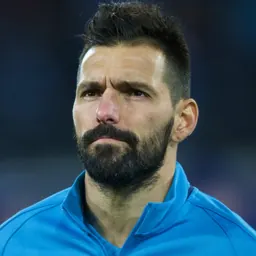
Related people
Same field, nearest in time


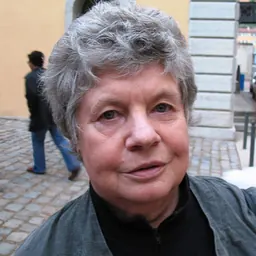
Contemporaries
People whose lives overlapped Edwin Bernbaum's


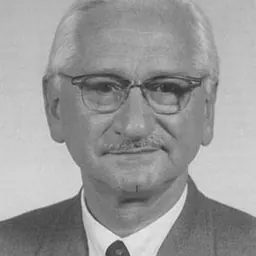
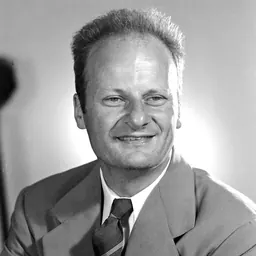
Frequently asked questions
Who is Edwin Bernbaum?
American scholar of comparative religion and mythology, mountaineer, author, public speaker, and leadership coach
When was Edwin Bernbaum born?
Edwin Bernbaum was born on 27 August 1945.
What is Edwin Bernbaum's occupation?
Edwin Bernbaum is a writer, ethnologist, consultant, research fellow, mathematician and orientalist.
Sources & further reading
Cite this page
APA: Biography.guide. (2026). Edwin Bernbaum. https://biography.guide/edwin-bernbaum/
MLA: "Edwin Bernbaum." Biography.guide, https://biography.guide/edwin-bernbaum/.
Chicago: "Edwin Bernbaum." Biography.guide. https://biography.guide/edwin-bernbaum/.
Data last updated: 2026-09-27 · Spot an error? Report a correction.
Page generated 2026-09-27 05:16 UTC