
About Edwin Austin Abbey
Lived 1852 – 1911 (aged 59). Edwin Austin Abbey was an American painter, illustrator, architect and artist.
Edwin Austin Abbey (April 1, 1852 – August 1, 1911) was an American muralist, illustrator, and painter. He flourished at the beginning of what is now referred to as the "golden age" of illustration, and is best known for his drawings and paintings of Shakespearean and Victorian subjects, as well as for his painting of Edward VII's coronation. His most famous set of murals, The Quest and Achievement of the Holy Grail, adorns the Boston Central Library.
Early life and education
Abbey was born in Philadelphia, on April 1, 1852, to commercial broker William Maxwell Abbey and Margery Ann Kiple. He studied art at the Pennsylvania Academy of the Fine Arts in Philadelphia
Career
Abbey began as an illustrator, producing numerous illustrations and sketches magazines, including Harper's Weekly (1871–1874) and Scribner's Magazine. His illustrations began appearing in Harper's Weekly before Abbey was twenty years old. He moved to New York City in 1871. His illustrations were strongly influenced by French and German black and white art: Adolph Menzel and Daniel Vierge; and by English artists. published in 1882, and he settled permanently there in 1883.
In 1883, he was elected to the Royal Institute of Painters in Water-Colours.
He also created illustrations for Goldsmith's She Stoops to Conquer (1887), for a volume of Old Songs (1889), and for the comedies (and a few of the tragedies) of Shakespeare. Among his water-colours are "The Evil Eye" (1877), "The Rose in October" (1879), "An Old Song" (1886), "The Visitors" (1890), and "The Jongleur" (1892). Possibly his best known pastels are "Beatrice", "Phyllis", and "Two Noble Kinsmen".
In 1904 he painted a mural for the Royal Exchange, London Reconciliation of the Skinners & Merchant Taylors' Companies by Lord Mayor Billesden, 1484.
Pennsylvania State Capitol Lunette and medallion murals (1908–11) at the Pennsylvania State Capitol Rotunda. Left to right: The Spirit of Vulcan, Science, The Spirit of Religious Liberty, Art, The Spirit of Light. In 1908–09, Abbey began an ambitious program of murals and other artworks for the newly completed Pennsylvania State Capitol in Harrisburg, Pennsylvania. These included allegorical medallion murals representing Science, Art, Justice, and Religion for the dome of the Rotunda, four large lunette murals beneath the dome, and multiple works for the House and Senate Chambers. For the Senate chamber he finished only one painting, Von Steuben Training the American Soldiers at Valley Forge, and he was working on the Reading of the Declaration of Independence mural in early 1911, when his health began to fail. He was diagnosed with cancer. Studio assistant William Simmonds continued work on the mural with little supervision from Abbey, and with small contributions by John Singer Sargent.
Death On August 1st, 1911, Abbey died in London. William Simmonds travelled from England to install the completed murals with Abbey's widow Gertrude. The remaining two rooms, which Abbey had been unable to finish, were given to Violet Oakley, who completed the commission using her own designs.
Legacy Abbey was elected to the National Academy of Design, in 1902, The scholarships were established to enable British and American painters to pursue their practice. Recipients of Abbey funding – Scholars and, more recently, Fellows – devote their scholarship to working in the studios at the BSR, where there has, ever since, been at least one Abbey-funded artist in residence. Previous award holders include Stephen Farthing, Chantal Joffe and Spartacus Chetwynd. The Abbey Fellowships (formerly 'Awards') were established in their present form in 1990, and the Abbey studios also host the BSR's other Fine Art residencies, such as the Derek Hill Foundation Scholarship and the Sainsbury Scholarship in Painting and Drawing. A bust of Edwin Abbey, by Sir Thomas Brock, stands in the courtyard of the BSR.
Edwin also left works to the Metropolitan Museum of Art in New York, to the Museum of Fine Arts, Boston and to the National Gallery in London.
Family In 1890, Edwin married (Mary) Gertrude Mead, the daughter of Frederick Mead, a New York merchant. She encouraged her husband to secure more ambitious commissions. The marriage remained childless. She was a sponsor of the Survey of London.
Works by Abbey
Don’t just read it —
keep it.
Full-length biographies made to live with: read them, listen on the way to work, watch them tonight.
- E-book
- Audio
- Video
Instant download · yours to keep · every purchase keeps this site free
Important facts
People in Edwin Austin Abbey's life
Named in this biography and alive at the same time



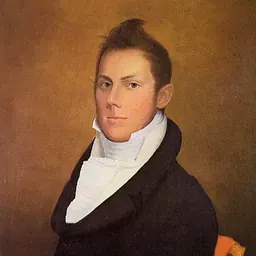



Related people
Same field, nearest in time
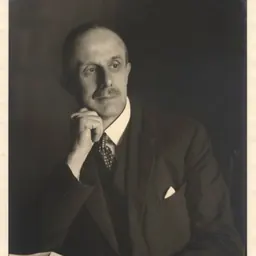
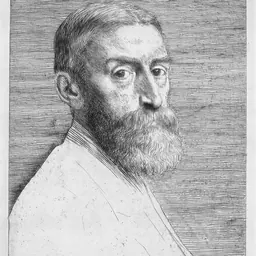
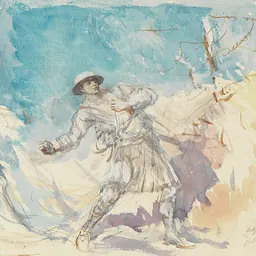
Contemporaries
People whose lives overlapped Edwin Austin Abbey's

Frequently asked questions
Who was Edwin Austin Abbey?
American illustrator and painter (1852-1911)
When was Edwin Austin Abbey born?
Edwin Austin Abbey was born on 1 April 1852 in Philadelphia.
When did Edwin Austin Abbey die?
Edwin Austin Abbey died on 1 August 1911 in London.
What was Edwin Austin Abbey's occupation?
Edwin Austin Abbey was a painter, illustrator, architect and artist.
What nationality was Edwin Austin Abbey?
Edwin Austin Abbey was American.
Sources & further reading
· Wikipedia: Edwin Austin Abbey
Cite this page
APA: Biography.guide. (2026). Edwin Austin Abbey. https://biography.guide/edwin-austin-abbey/
MLA: "Edwin Austin Abbey." Biography.guide, https://biography.guide/edwin-austin-abbey/.
Chicago: "Edwin Austin Abbey." Biography.guide. https://biography.guide/edwin-austin-abbey/.
Data last updated: 2026-09-20 · Spot an error? Report a correction.
Page generated 2026-09-27 05:24 UTC