
About Edward Woyniłłowicz
Lived 1847 – 1928 (aged 80). Edward Woyniłłowicz was a Polish and Russian politician and patron of the arts, known for Church of Saints Simon and Helena.
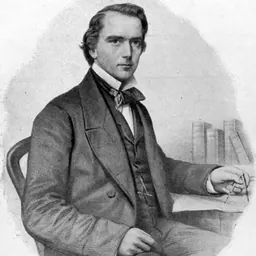
Edward Antoni Leonard Woyniłłowicz (, 13 October 1847 - 16 June 1928) was a Polish-Belarusian landowner, entrepreneur, philanthropist, public figure and the funder of the landmark "Red Church" of St. Simon and St. Helena on Independence Square in Minsk.
Early years
Woyniłłowicz was born into a noble family in the village of Vialikaja Sliapianka near Minsk (now located within the boundaries of Minsk) in the estate of his maternal grandparents. He later worked as an engineer at the Putilov factory in St. Petersburg. left
Business activities and state service
In 1872, Woyniłłowicz returned to the Savičy estate and engaged in agricultural production. He employed progressive economic methods and is credited with "a first-class system of land management". He devoted a lot of time to work in the Minsk Society of Agriculture, of which he was a member since 1878, and organised agricultural exhibitions.
Woyniłłowicz also joined public and state service. He was an honorary justice of the peace of Slucak district and a Slucak representative at the Minsk Nobility Deputies' Assembly. After the 1905 Russian Revolution he was elected several times to the State Duma of the Russian Empire. In 1906, he became a member of the financial commission of the Imperial State Council where he lobbied agrarian issues.
Philanthropy
In addition to business activities and public service, Woyniłłowicz was actively involved in philanthropy: He became a member of a Slucak district charitable society and financed a number of schools, churches and poverty relief organisations.
After the untimely death of his children, he funded the construction of the Red Church in Minsk dedicated in their memory. The church, which cost Woyniłłowicz 300,000 rubles, was consecrated on 21 November 1910 and remains one of Minsk's landmarks.
Woyniłłowicz sympathised with the Belarusian independence movement and supported it financially, although he had reservations about its socialist ideas and opposed any kind of revolution.
Later years
During World War 1, Woyniłłowicz chaired a mobilisation commission in Slucak district and provided assistance to refugees.
In 1917 he advocated the restoration of the Grand Duchy of Lithuania and supported the idea of an independent Belarus in confederation with Poland. He participated in meetings of the Council of the Belarusian Democratic Republic.
In 1918 the Savičy estate was looted and its windmills, library with 5,000 rare books and a large picture gallery were burned down. The archive of the Woyniłłowicz family, which contained documents dating back over 300 years, was completely destroyed. When the looters were apprehended by the German military authorities and condemned to death, Woyniłłowicz successfully petitioned to commute their sentence.
In July 1920, Woyniłłowicz went into exile with his family and settled in Bydgoszcz (the Second Polish Republic), where he funded a large home for orphans.
The Belarusian congress of Slucak district, which started the Slucak uprising, was held on 14–15 November 1920, in Woyniłłowicz's house in Slucak.
Death and memory
Woyniłłowicz died on 16 June 1928 in Bydgoszcz.
In 2006, his remains were transported to Minsk and buried near the entrance to the Red Church which he funded. The Catholic Church in Belarus started preparing documents for Woyniłłowicz's beatification.
On 6 September 2007, the Minsk local council decided to rename a small street next to the Red Church from the communist leader Berson to Woyniłłowicz. However, the decision was revoked on 30 November that year after protests by local communist activists.
Don’t just read it —
keep it.
Full-length biographies made to live with: read them, listen on the way to work, watch them tonight.
- E-book
- Audio
- Video
Instant download · yours to keep · every purchase keeps this site free
Important facts
Related people
Same field, nearest in time





Contemporaries
People whose lives overlapped Edward Woyniłłowicz's






Frequently asked questions
Who was Edward Woyniłłowicz?
Polish politician (1847–1928)
When was Edward Woyniłłowicz born?
Edward Woyniłłowicz was born on 13 October 1847 in Vialikaja Sliapianka.
When did Edward Woyniłłowicz die?
Edward Woyniłłowicz died on 16 June 1928 in Bydgoszcz.
What was Edward Woyniłłowicz's occupation?
Edward Woyniłłowicz was a politician and patron of the arts.
What was Edward Woyniłłowicz known for?
Edward Woyniłłowicz was known for Church of Saints Simon and Helena.
What nationality was Edward Woyniłłowicz?
Edward Woyniłłowicz was Polish and Russian.
Sources & further reading
· Wikipedia: Edward Woyniłłowicz
· DBpedia: Edward Woyniłłowicz
Cite this page
APA: Biography.guide. (2026). Edward Woyniłłowicz. https://biography.guide/edward-woynillowicz/
MLA: "Edward Woyniłłowicz." Biography.guide, https://biography.guide/edward-woynillowicz/.
Chicago: "Edward Woyniłłowicz." Biography.guide. https://biography.guide/edward-woynillowicz/.
Data last updated: 2026-09-20 · Spot an error? Report a correction.
Page generated 2026-09-27 05:21 UTC