
About Edward Stuyvesant Bragg
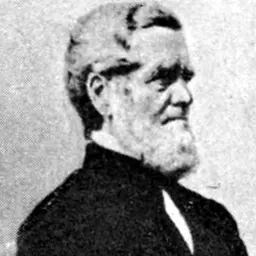
Lived 1827 – 1912 (aged 85). Edward Stuyvesant Bragg was an American politician, military officer, lawyer and diplomat.
Edward Stuyvesant Bragg (February 20, 1827 – June 20, 1912) was an American lawyer, diplomat, and Democratic politician from Fond du Lac, Wisconsin. He served four terms in the U.S. House of Representatives, representing eastern Wisconsin from 1877 to 1883, and from 1885 to 1887, and was one of the leading Democrats in Wisconsin in the latter half of the 19th century. He also had a distinguished military career as a Union Army officer in the American Civil War, leading the 6th Wisconsin Infantry Regiment and later the famous Iron Brigade of the Army of the Potomac, rising to the rank of brigadier general by the end of the war.
Bragg found a new calling as a diplomat after he was appointed United States minister to Mexico by president Grover Cleveland in 1888. In the 1890s, Bragg fell out with the Democratic Party over the populist policies of William Jennings Bryan, and later served as consul-general to the Republic of Cuba and British Hong Kong under President Theodore Roosevelt.
Early life and career Bragg was born in Unadilla, New York, the son of Margarette (Kohl) and Joel B. Bragg. Bragg attended district schools as a child. He then attended the local academy and Geneva College, today Hobart College, in Geneva, New York, They were ordered to proceed to Washington, D.C., for service in the eastern theater of the war. Once at Washington, they were organized into the Brigade of General Rufus King. They were soon joined by the 2nd Wisconsin, 7th Wisconsin, and 19th Indiana regiments in what would become known as the Iron Brigade of the Army of the Potomac.
Washington (Fall 1861Spring 1862) The 6th Wisconsin spent the Fall of 1861 and Spring of 1862 on picket duty near Washington, building fortifications and drilling in preparation for combat.
Northern Virginia (Summer 1862) In April 1862, the Iron Brigade marched south and camped at Falmouth, Virginia, on the Rappahannock River, across from Fredericksburg, Virginia, where they remained through most of the Peninsula campaign. In June, they were briefly put on alert to prepare to reinforce General George B. McClellan, but ultimately did not participate.
Before Antietam, Bragg received solicitations from Wisconsin to run for Congress as a War Democrat on the National Union Party ticket. Bragg had replied, "I shall not decline a nomination on the platform, the Government must be sustained, but my services can not be taken from the field. I command the regiment, and can not leave in times like these."
Overland Campaign (Summer 1864) In March 1864, General Ulysses S. Grant was appointed the commander of the Union Army in the Virginia theatre, replacing General George Meade, who had been in command since the Gettysburg Campaign. That same month, the Iron Brigade veterans returned to camp and engaged in drilling and reorganization under the new commander. For the next phase of the war, they would be the 1st Brigade, 4th Division, in Gouverneur K. Warren's V Corps.
Stone was relieved of command after his horse fell on top of him as his lines broke again during the May 6 attack.
On the night of May 7, V Corps was ordered to proceed southeast toward Spotsylvania Court House, as Grant attempted to maneuver his army in between Lee and the Confederate capitol, Richmond. Arriving at Laurel Hill, northwest of Spotsylvania Court House, on the morning of May 8, they found a Confederate force had already reached the site and occupied strong defensive positions. Colonel Bragg's account of the actions of the Pennsylvanian brigade during the Overland campaign can be found in the Official War Records, Series 1, Volume 36, Part 1, Item 141. Johnson subsequently nominated Bragg to be Assessor of Internal Revenue for the 4th district of Wisconsin, which the United States Senate also defeated.
Democratic minority Later in 1867, General Bragg won election to the Wisconsin State Senate from the 20th senatorial district, serving in the 21st and 22nd Wisconsin Legislatures (1868 & 1869). He did not run for re-election in 1869, but remained extremely active in Democratic politics, campaigning for the Democratic tickets and running for office several times. He was mostly unsuccessful for the next several years, as Republican politics remained dominant in Wisconsin.
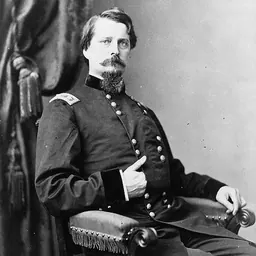
In 1868, Bragg was a member of the executive committee for the National Convention of "Conservative Soldiers and Sailors"—part of the 1868 Democratic National Convention in New York City. The Soldiers and Sailors convention favored the nomination of Major General Winfield Scott Hancock for president, but were ultimately unsuccessful, as the convention nominated former New York Governor Horatio Seymour. Bragg campaigned vigorously for the Democratic ticket in the fall, though papers commented that he didn't seem to share the candidate's views on African American suffrage. He was a delegate to the 1872 Democratic National Convention, which nominated Horace Greeley.
He was the Democratic nominee for Attorney General of Wisconsin in 1871, but was defeated along with the entire Democratic ticket.
In the hotly contested 1875 United States senate election in the Wisconsin Legislature, Bragg was the choice of the Democratic caucus, believed to be a potential compromise candidate for the fourteen Republicans who had pledged to prevent the re-election of Matthew H. Carpenter. After no candidate was able to obtain a majority through several ballots, a new compromise candidate emerged in Angus Cameron. Cameron was ultimately elected on the 12th ballot.
In more local affairs, Bragg engaged in a years-long feud with Congressman Charles A. Eldredge, who had defeated him running on an anti-war platform in the 1862 congressional election. In 1874, Bragg was successful in defeating Eldredge in local primaries and taking a slate of delegates to the district convention, preventing Eldredge's renomination. The nomination ultimately went to Samuel D. Burchard. Bragg came back two years later, and this time defeated Burchard in his attempt for renomination.
Congress
In November 1876, Bragg was elected to represent Wisconsin's 5th congressional district in the 45th United States Congress. Bragg would go on to win re-election in 1878 and 1880, but, after redistricting in 1881, he was unable to win renomination in 1882.
During these six years in Congress, Bragg was chairman of the Committee on Expenditures in the Department of Justice from 1877 to 1879 and of the Committee on War Claims from 1879 to 1881. He was again a delegate to the Democratic National Convention in 1880, which nominated General Winfield Scott Hancock.
After the 1880 census, redistricting was carried out and Bragg's county, Fond du Lac, was moved from the 5th congressional district to the 2nd district. Bragg now found himself in an intense contest for renomination against Arthur Delaney of Dodge County. In the days before attended the convention in September, Bragg was arrested and accused of a financial fraud deriving from a transaction with the Tremont House institution in Chicago. Though the charges were eventually dropped, the controversy likely harmed his chances of renomination.
At the convention, the vote deadlocked for hundreds of ballots with delegates for the two candidates unwilling to compromise. The matter was resolved when Bragg had to leave the convention to attend his daughter's wedding—a former ally, Daniel H. Sumner, convinced a group of delegates to pick him as a compromise candidate on the 1,601st ballot. Bragg initially considered an independent bid, but decided against it, stating that he was retiring from politics.
While in Congress, Bragg had been one of only 3 Democrats to vote against the Chinese Exclusion Act of 1882.
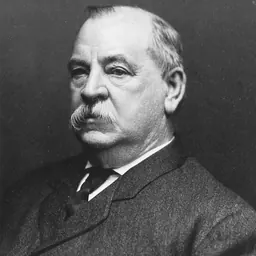
We love him for the enemies he made. In Harper's Weekly, 1884. General Bragg remained involved in state politics. In 1884, he was again a delegate to the Democratic National Convention. At that convention, he seconded the nomination of Grover Cleveland for the presidency saying "We love him for the enemies he made."—referring to Cleveland's conflicts with the corrupt Tammany Hall organization. The phrase became a slogan for the Cleveland campaign, and Cleveland was elected the 22nd President of the United States that November.
That same fall, Bragg again pursued the Democratic nomination for Congress at the district convention, held at Beaver Dam, Wisconsin, in September. Daniel Sumner was seeking renomination, Arthur Delaney was again a chief rival, with Judge Hiram W. Sawyer of Washington County also in the race. The balloting again deadlocked with no candidate able to secure the majority. Before the 150th ballot, Sawyer and Sumner withdrew from the contest, allowing Bragg to win the nomination in a 15–13 vote over Delaney.
Bragg won the November general election with 55% over Republican Samuel S. Barney. During the 49th United States Congress (1885–1887) Bragg was chairman of the Committee on Military Affairs.
In 1886, Bragg again faced a contested convention when seeking renomination. Delaney was his chief rival, again. Once again, a bitter and lengthy convention fight ensued. On the 216th ballot, Delaney was able to secure the nomination from Bragg. Delaney went on to defeat in the general election.
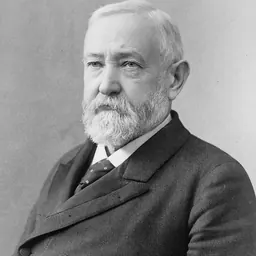
Split with Democrats Bragg resumed his law practice in Fond du Lac, Wisconsin, but returned to public office in January 1888, when he was appointed United States Minister (Ambassador) to Mexico by President Grover Cleveland. He served in the role until his successor was appointed and confirmed, in May 1889, under the administration of President Benjamin Harrison. Despite strong backing from the Wisconsin congressional delegation in 1893—and when the seat became open again in 1895—Cleveland did not reappoint General Bragg, in what was taken as a snub.
After returning from Mexico in 1889, Bragg again returned to his legal career and state politics. In 1890 he was organizing for another attempt at election to the United States Senate, but ultimately made a deal with William Freeman Vilas, whereby Bragg would support Vilas in 1891 and would have the support of Vilas in the 1893 senate election, assuming Democrats still held a majority in the Wisconsin Legislature at that time. This consideration likely influenced his decision to become involved in the famous Cunningham gerrymandering cases of 1892, in which he litigated on behalf of the Democrats' 1891 redistricting law (1891 Wis. Act 482) before the Wisconsin Supreme Court. The Court, in a bipartisan opinion, sided with the challengers and the district map was struck down as an unconstitutional partisan gerrymander.
Despite the court loss, Democrats won massive majorities in the Wisconsin Legislature in the 1892 elections, but Bragg did not ultimately benefit from it in the senatorial election. The Democratic caucus deadlocked in a three-way race between Bragg, John H. Knight of Ashland, and John L. Mitchell of Milwaukee. On the 31st ballot, the Knight delegation broke in favor of Mitchell. Bragg's supporters saw it as a betrayal by Vilas, who was seen as a supporter of Mitchell. Subsequently, at the 1894 Democratic state convention, Bragg was favored for the nomination for Governor, but refused nomination.
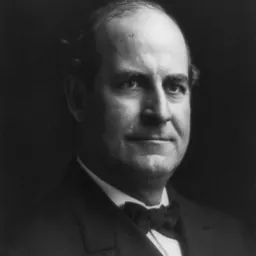
In 1896, Bragg was once again one of the leaders of the Wisconsin delegation to that year's Democratic National Convention in Chicago. Bragg was deeply bothered by the nomination of William Jennings Bryan and the ascendance of the "populist fanatics." Bragg threatened to vote for the Republican, William McKinley. He became one of the leaders of a Democratic schism, called the National Democratic Party, and was a candidate for president at its convention in Indianapolis in September. McKinley went on to win the election, carrying Wisconsin by roughly the exact margin Bragg had predicted—100,000 votes. Their youngest daughter, Bertha, married George Percival Scriven, who would go on to become the first chairman of the National Advisory Committee for Aeronautics, the forerunner of NASA.
Bragg was a cousin of Frederick William Benteen, a senior captain (brevet brigadier-general) of the U.S. 7th Cavalry under George Armstrong Custer. Benteen was a major figure in the ill-fated Battle of the Little Bighorn and was singled out by Major Marcus Reno for his leadership during the two days of fighting endured by the survivors. Benteen mentioned his relationship to Bragg in a letter to Theodore Goldin dated February 10, 1896 (Benteen-Goldin Letters, Carroll, 1974).
He was also a cousin of Confederate Army General Braxton Bragg. Though the two Braggs were both major participants in the prosecution of the Civil War, they never met in battle.
General Bragg suffered a paralytic stroke on June 19, 1912, and died the next day at his home in , Wisconsin.
Wisconsin State Senate (1867)
Wisconsin Attorney General (1871)
U.S. House of Representatives (1876, 1878, 1880)
U.S. House of Representatives (1884)
Don’t just read it —
keep it.
Full-length biographies made to live with: read them, listen on the way to work, watch them tonight.
- E-book
- Audio
- Video
Instant download · yours to keep · every purchase keeps this site free
Important facts
Family & relationships
People in Edward Stuyvesant Bragg's life
Named in this biography and alive at the same time



Related people
Same field, nearest in time





Contemporaries
People whose lives overlapped Edward Stuyvesant Bragg's





Frequently asked questions
Who was Edward Stuyvesant Bragg?
Union Army General (1827-1912)
When was Edward Stuyvesant Bragg born?
Edward Stuyvesant Bragg was born on 20 February 1827 in Unadilla.
When did Edward Stuyvesant Bragg die?
Edward Stuyvesant Bragg died on 20 June 1912 in Fond du Lac.
What was Edward Stuyvesant Bragg's occupation?
Edward Stuyvesant Bragg was a politician, military officer, lawyer and diplomat.
What nationality was Edward Stuyvesant Bragg?
Edward Stuyvesant Bragg was American.
Sources & further reading
· Wikipedia: Edward Stuyvesant Bragg
Cite this page
APA: Biography.guide. (2026). Edward Stuyvesant Bragg. https://biography.guide/edward-stuyvesant-bragg/
MLA: "Edward Stuyvesant Bragg." Biography.guide, https://biography.guide/edward-stuyvesant-bragg/.
Chicago: "Edward Stuyvesant Bragg." Biography.guide. https://biography.guide/edward-stuyvesant-bragg/.
Data last updated: 2026-09-25 · Spot an error? Report a correction.
Page generated 2026-09-27 05:12 UTC