
About Edward Sargent
Lived 1842 – 1914 (aged 71–72). Edward Sargent was an American architect.
Edward A. Sargent (November 1, 1842 – February 25, 1914) was an English-born American architect, known for his work on New York City schools, churches, office buildings, clubs, armory and country homes.
Life and career Sargent was born Ebenezer Alfred Sargent on November 1, 1842, in Hastings, England. He later changed his first name to Edward. Emigrating to New York City in 1867, he attended Cooper Union College.
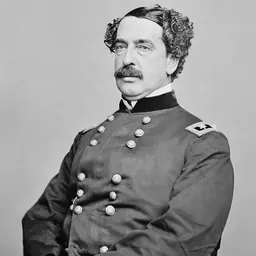
Sargent married Mary Augusta Doubleday (daughter of Thomas D. Doubleday and niece of Abner Doubleday); together they had four daughters and one son. One daughter, Alice Sargent Johnson, became an illustrator. His brother was Daniel Wycliffe Sargent, an explorer in Africa.
His first work was as a watercolor artist. He worked as a delineator (illustrator) for Frederick Law Olmsted in the designs for Central Park and again as delineator worked on the Corn Exchange Building and the Protestant Welfare Building on Park Avenue. He made the plans for the 9th Regiment Armory, constructed the country home Lindenhurst for John Wanamaker at Cheltenham, Pennsylvania. In addition, he was the architect of public schools and private houses, including over 300 homes on Staten Island.
Sargent also worked for George Post (who built the first building to have an elevator).
Works Sargent designed the stone masonry pillars and wing walls of the entryways to the planned community of Rochelle Park in New Rochelle, New York in 1885. He designed large and medium-sized residences in the metropolitan New York area, notably in the St. George/New Brighton historic district of Staten Island.
Sargent has been credited with designing the Vanderzee-Harper House (circa 1887) at Westervelt Avenue (St. George/New Brighton historic district), although documentation for this attribution is lacking.
In 1892, the firm of E. A. Sargent & Co. were the architects of the original American Yacht Club clubhouse on Milton Point (destroyed by fire in 1951).
He designed the Cuyler Presbyterian Church (1892) in Brooklyn. In 1894, the firm of W.E. Cable and E.A. Sargent won a competition from among nineteen bids to design and build the 9th Regiment Armory on 14th Street Manhattan. Completed in 1896, the armory was razed in 1969. Sargent also designed the Romanesque-style Mother A.M.E. Zion Church (1903-1904) at 127 West 89th Street, Manhattan (razed in 1934).
Don’t just read it —
keep it.
Full-length biographies made to live with: read them, listen on the way to work, watch them tonight.
- E-book
- Audio
- Video
Instant download · yours to keep · every purchase keeps this site free
Important facts
People in Edward Sargent's life
Named in this biography and alive at the same time




Related people
Same field, nearest in time

Contemporaries
People whose lives overlapped Edward Sargent's

Frequently asked questions
Who was Edward Sargent?
American architect
When was Edward Sargent born?
Edward Sargent was born on 1 November 1842.
When did Edward Sargent die?
Edward Sargent died in 1914.
What was Edward Sargent's occupation?
Edward Sargent was an architect.
What nationality was Edward Sargent?
Edward Sargent was American.
Sources & further reading
· DBpedia: Edward Sargent (architect)
Cite this page
APA: Biography.guide. (2026). Edward Sargent. https://biography.guide/edward-sargent/
MLA: "Edward Sargent." Biography.guide, https://biography.guide/edward-sargent/.
Chicago: "Edward Sargent." Biography.guide. https://biography.guide/edward-sargent/.
Data last updated: 2026-09-20 · Spot an error? Report a correction.
Page generated 2026-09-27 05:33 UTC