
About Edward Mathew
Lived 1729 – 1805 (aged 75–76). Edward Mathew was a British military personnel.
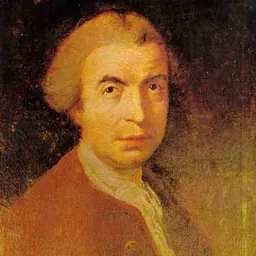
General Edward Mathew (1729 – 25 December 1805) was a British Army officer. By the time of the American War of Independence he had risen to the rank of colonel. Promoted to brigadier general, he was assigned to command the elite Brigade of Guards in the American campaign. In 1776 he led the Guards at Long Island, Kip's Bay, and Fort Washington where he spearheaded one of the assault forces. In the Philadelphia campaign, he commanded his brigade at Brandywine, Germantown, White Marsh, and Monmouth.
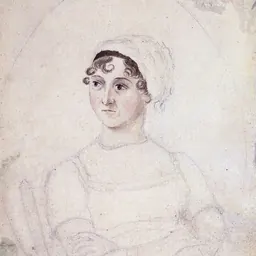
As a major general, he took part in the highly successful Chesapeake raid on Virginia ports in 1779. He led one of the columns in action at Battle of Springfield in 1780. He commanded in the West Indies in 1782 and became a full general in 1797. His beloved daughter Anna predeceased him in 1795. Mathew is likely to have been the model for a character in one of Jane Austen's novels.
Early career Born in 1729, Mathew became an ensign in the Regiment of Coldstream Guards (2nd Foot Guards) in 1746. In 1760 he married Lady Jane Bertie (d. 21 August 1793), daughter of Peregrine Bertie, 2nd Duke of Ancaster and Kesteven. By the year 1775 he was a colonel and aide de camp to King George III. He was appointed commander of the brigade of Guards in America with the rank of brigadier general.
American War of Independence The British Army formed the 1,000-strong Brigade of Guards by selecting the men by lottery from the 1st, 2nd, and 3rd Foot Guards Regiments. The brigade was split into two battalions of about 500 troops each. Other regiments of foot assigned their light and grenadier companies to converged elite battalions, leaving only the eight line companies to fight with the parent unit. The Guards Brigade, however, retained its two flank companies. The grenadier company and the line companies of Hyde, Wrottesley, Cox, and Garth became the 1st Guards Battalion, while the light company and the line companies of Stephen, Murray, O'Hara, and Martin were assigned to the 2nd Guards Battalion. A detailed organization down to the company level can be found in the Brandywine order of battle. Lieutenant Colonel Sir George Osborn, 4th Baronet commanded the grenadier company while Captain Thomas Twistleton led the light company.
The Guards Brigade landed on Long Island on 22 August 1776 and was present in the Battle of Long Island five days later. On 15 September the Guards Brigade took part in the Battle of Kip's Bay, landing in the first wave. After the American victory at Trenton, the 1st Guards Battalion was assigned to Cornwallis for the Princeton campaign in early January 1777. However, Mathew stayed behind with the 2nd Battalion in New Brunswick, New Jersey. The Guards were involved in several skirmishes during the Forage War. On the 29th, the British Army abruptly abandoned New Jersey. Sir William Howe sailed with his army from New York on 23 July. At the end of August, the British troops landed at Head of Elk, Maryland at the north end of Chesapeake Bay. Among the Guards officers present during the subsequent Philadelphia campaign were Captain-lieutenant Richard FitzPatrick of the 1st Foot Guards, Colonel Charles O'Hara of the 2nd Foot Guards,
On 11 September 1777 at the Battle of Brandywine, Mathew's brigade joined the flanking column under Howe and Cornwallis. This body of troops reached a position behind the American right flank before it was discovered. The Guards Brigade deployed on the right of the first line around 4:00 PM. Osborn commanded both the grenadier company on the right and the light company which deployed as skirmishers in front. The Guards faced two Maryland brigades under the command of Major General John Sullivan. Because Sullivan was also the American right-wing commander, he left the Marylanders in charge of the senior officer, Brigadier General Philippe Hubert Preudhomme de Borre. Attempting to shift the troops to the right, de Borre bungled his assignment, throwing his lines into disarray. The attack of the Guards brushed aside their confused opponents. The brigade reported only one killed, five wounded, and two missing, including one casualty from the grenadiers and three from the light company.
The evening before the Battle of Germantown on 4 October 1777, Howe alerted Osborn of a possible attack and ordered the Guard Brigade's grenadier and light companies to support the Queen's Rangers on the right flank. In the morning they were attacked by a force of Maryland and New Jersey militia. The militia effort quickly collapsed, allowing the British to wheel to their left to outflank a brigade of Connecticut continentals. At some point in the action, Mathew led forward the line companies of the Guards Brigade to reinforce Osborn's flank companies. During the Battle of White Marsh in December 1777, the Guards light company under Captain Twistleton fought with the army's vanguard at Edge Hill. In early 1778 Mathew was promoted to the "local rank" of major general. Trelawny was wounded and about 40 casualties were inflicted when some of Anthony Wayne's troops under Lieutenant Colonels Walter Stewart and Nathaniel Ramsey fired on the Guards while concealed in a wood. Joined by the 1st Grenadier Battalion, the Guards quickly flushed the Americans out of the trees.
General Henry Clinton fitted out a joint navy and army expedition in the spring of 1779. Under Commodore Sir George Collier and Mathew, the force sailed from New York City on 5 May and reached Hampton Roads four days later. When the expedition approached Fort Nelson near Norfolk, Virginia, its 100-man American garrison under Major Thomas Matthews immediately decamped and retreated toward the Great Dismal Swamp. On 11 May, the British force occupied Norfolk, Suffolk, Portsmouth, and the Gosport Shipyard. The Americans burned a 28-gun frigate and two French merchantmen to prevent their capture. Besides seizing enormous amounts of tobacco, naval cannons, and marine supplies, the British burned or captured 137 ships. The damage inflicted on the state of Virginia in the Chesapeake raid was estimated at £2,000,000. Mathew and Collier returned to New York in triumph, having suffered no loss of life. Mathew left North America for England later in 1780. Mathew was promoted to general in 1797. Mathew died on 25 December 1805.
Don’t just read it —
keep it.
Full-length biographies made to live with: read them, listen on the way to work, watch them tonight.
- E-book
- Audio
- Video
Instant download · yours to keep · every purchase keeps this site free
Important facts
People in Edward Mathew's life
Named in this biography and alive at the same time



Related people
Same field, nearest in time



Contemporaries
People whose lives overlapped Edward Mathew's




Frequently asked questions
Who was Edward Mathew?
British Army general
When was Edward Mathew born?
Edward Mathew was born in 1729.
When did Edward Mathew die?
Edward Mathew died on 25 December 1805.
What was Edward Mathew's occupation?
Edward Mathew was a military personnel.
What nationality was Edward Mathew?
Edward Mathew was British.
Sources & further reading
Cite this page
APA: Biography.guide. (2026). Edward Mathew. https://biography.guide/edward-mathew/
MLA: "Edward Mathew." Biography.guide, https://biography.guide/edward-mathew/.
Chicago: "Edward Mathew." Biography.guide. https://biography.guide/edward-mathew/.
Data last updated: 2026-09-20 · Spot an error? Report a correction.
Page generated 2026-09-27 05:08 UTC