
About Edward Martyn
Lived 1859 – 1923 (aged 64). Edward Martyn was an Irish and British politician, writer and playwright.
Edward Martyn (30 January 1859 – 5 December 1923) was an Irish playwright, arts patron and nationalist politician. He served as the first president of Sinn Féin from 1905 to 1908, and was a co-founder of the Irish Literary Theatre, the Feis Ceoil and the stained-glass studio An Túr Gloine. Though his own dramatic output was modest, his financial generosity and cultural activism shaped many of the defining institutions of the Irish Literary Revival.
Early life Martyn was born on 30 January 1859 at his mother's family home at Masonbrook, Loughrea, County Galway, the elder of two sons of Anne Martyn (née Smith; d. 1898) and John Martyn (d. 1860), of Tulira Castle, Ardrahan, County Galway. His father died when Martyn was a small boy, and he was raised entirely by his mother. He installed an organ in the main hall, on which he regularly played Palestrina. As a young landlord, Martyn took his place on the Grand Jury and served as a local magistrate and Deputy Lieutenant of County Galway. His land agent was shot at on the high road from Gort, and for a time Martyn himself was under police protection. In a critical essay published in 1895, Martyn had argued that Palestrina could be considered the real predecessor of Wagner in the reform of church music, a conviction that underpinned his later endowment of the choir. funding and direction of St. Brendan's Cathedral, Loughrea co-founder and endowing of the Feis Ceoil in 1897 His ambition was for the Feis Ceoil to become the Irish equivalent of the Welsh Eisteddfod; sponsored and guided An Túr Gloine, Ireland's first stained-glass workshop sponsored the Irish Theatre, Thomas MacDonagh's theatre (1914–1916) presenting European and Irish-language work in Countess Plunkett's hall in Hardwicke Street
He also donated several significant paintings to the National Gallery of Ireland, including works by Degas, Monet, Corot and Utamaro, as well as works by William Leech and Jack B. Yeats.
The Irish Literary Theatre In August 1896, William Butler Yeats paid his first visit to Tulira Castle, where he met Lady Gregory for the first time in Ireland (they had met briefly once in London). Lady Gregory subsequently invited him to Coole Park, where their artistic collaboration began. Mischievously, he left the rights to The Heather Field and A Tale of a Town to George Moore, with whom relations had remained tempestuous to the last.
His papers he bequeathed to the Carmelites of Clarendon Street in Dublin, who subsequently misplaced and lost them. Portraits of Martyn exist by, among others, John Butler Yeats and Sarah Purser, with a further portrait by Norman French McLachlan held at the National Gallery of Ireland. On his death, the senior line of the Martyn family died out. His property passed to a cousin, Robert Smith, and Tulira was subsequently sold.
Extracts from Lady Gregory's Journals Sunday 25 September 1921 (pp. 294–95) – And in the afternoon we drove to Tillyra, and Edward sent them [Anne and Catherine, Lady Gregory's granddaughters] into the Castle with Owen, and let them play the organ in the hall and gave us tea and was very pleasant, thought Catherine very like Velasquez Prince on horseback; approves of my keeping on Coole but thinks I have great courage. He is not very hopeful of a settlement, but he is never hopeful, but he praises the leaders, De V. and McNeill and Barton especially. And indeed one feels more pride in being represented by them in England than by the British Cabinet in Europe! He says George Moore is really angry about Miss Mitchell's life of him, and told him "Boyd is to do the official life"; but Edward says "that will make no difference, Miss Mitchell's will always be the real one accepted, she took the only possible way of dealing with you, treating you as Mon ami Moore. Edward is sorry he didn't build a Theatre twenty years ago, and "put the key in his pocket." ... He is anxious about money, has fears of his investment in the English railways, and is very crippled with rheumatism. 14 January 1922 (pp. 323–324) – On the way to the Abbey Theatre, over the Bridge, there was a great crowd, I asked what was going on and a young man said "It's the Tans ... – on their departure! ... I had been to see Edward Martyn in the afternoon in his warm little flat; very crippled, but more cheerful than I had seen him for a long time at the exit of the Tans. He is all for the Treaty and blames De Valera's doings here as much as he had admired them in America. He will listen to no excuse, says "he is jealous of Griffith. I met him in Gort at the time of his Clare election. I was doing my marketing and he and another had come to hold a meeting there, and I talked to them in their motor and I said 'You will get on all right as long as you hold to Griffith and keep him with you' and I saw a shadow pass across their faces." ... He says M. Collins made an inspection of the Volunteers all through Ireland before he went on the London mission, and came to the conclusion that we were not in a position to fight. When they brought the signed Treaty back (and this I had heard from others) no one in the Cabinet made an objection. But suddenly some days later De V. sent his protest to the Press. September 1923 (p. 475) – Edward Martyn had been ill for sometime and on 8 September I wrote to A.W. "On the way back from Galway we got to Tillyra about 6.30. The chauffeur had never been there before and instead of stopping at the hall door drove a little past it, and there, in the bow window of the library I saw Edward sitting. I thought he would turn or look round at the noise but he stayed quite immovable, like a stuffed figure, it was quite uncanny. I rang the bell and Dolan the butler appears, said he was "only pretty well", but showed me into the drawing room, and came back to say Edward would like to see me. I went in; he did not turn his head, gazed before him. I touched his hands (one could not shake them – all crippled, Dolan says he has to be fed) and spoke to him. He slowly turned his eyes but apparently without recognition. I went on talking without response till I asked if he had any pain and he whispered "No – thank God". I didn't know if he knew me, but talked a little, and presently he whispered "How is Robert?" I said "He is well, as all are in god's hands. He has gone before me and before you". then I said "My little grandson Richard is well", and he said with difficulty and in a whisper "I am very glad of that". Then I came away, there was no use staying ... It was a very sad visit. That was the last time I saw Edward Martyn, and I grieve for him. 7 December 1923 (p. 494) – Yesterday I took the children to a party at Ballyturnin, very merry for them. But I heard of Edward Martyn's death, it had taken place that morning. The Doctor told Mr. Bagot a tumour had been taken from his head on Saturday, Dr. McGuinness had come from Dublin for the operation and he [Martyn] lost a good deal of blood. Father O'Kelly said he had after the operation recognised Father Carr, which he had not done for some time. I asked about the funeral. He said Father Carr told him also he had bequeathed his body to the Dublin doctors "in the interests of science" so it may probably be in Dublin. ... I feel a loneliness now he is gone. He was from the beginning of my life here at Coole a good neighbour; he was always grateful for my husband's interest in him. He had gone to see Edward at Oxford to advise him not to build that large addition to his old castle, until at least his own taste and opinion were formed; and though the forces were too strong, his mother and her surroundings, he often regretted that he had not the strength of mind to take that advice. He was very kind to Robert, giving him his first real gun and letting him and his friends shoot [at] Tillyra in the holidays. And then, when Yeats' summers, and the theatre project began, he was constantly here, walking over and staying to dine. It was George Moore who broke that work together, putting his own name on the "Bending of the Bough", rewritten by him and Yeats but on Edward's foundation. And Edward had been weak about The Countess Cathleen, and took a wrong turning I think in withdrawing his support from our Theatre. Of late I was told he felt his support of Sinn Féin in its beginning had been wrong, it was on his conscience. And yet he hated, with a real hatred, England. I always felt there were two natures in him, the old blood of the Martyns and the blood of the Smiths. 11 December 1923 – Poor Edward. His body has been taken to Dublin to be dissected, by direction of his will. He directed the Dr. should visit it each day till removal to make sure he really was dead. But if he meant by giving it to the School of Medicine to perhaps save some other sufferer from what he has gone through (no doctor seeming to know what was wrong or able to help him) it was a fine thing to do. There is a nice notice of him in "The Times", better than he would have gained by following his family's wishes and settling down to marry and entertain the County.
Don’t just read it —
keep it.
Full-length biographies made to live with: read them, listen on the way to work, watch them tonight.
- E-book
- Audio
- Video
Instant download · yours to keep · every purchase keeps this site free
Important facts
People in Edward Martyn's life
Named in this biography and alive at the same time




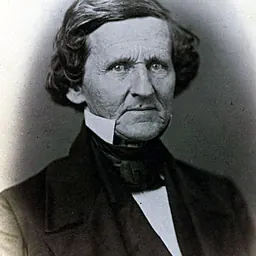

Related people
Same field, nearest in time





Contemporaries
People whose lives overlapped Edward Martyn's

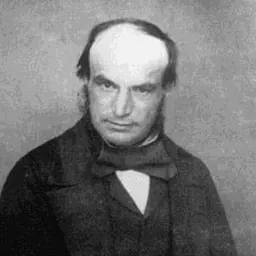
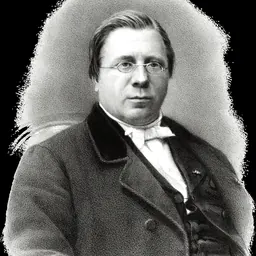
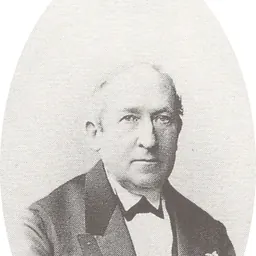

Frequently asked questions
Who was Edward Martyn?
Irish nationalist and cultural activist (1859-1923)
When was Edward Martyn born?
Edward Martyn was born on 30 January 1859 in County Galway.
When did Edward Martyn die?
Edward Martyn died on 5 December 1923 in County Galway.
What was Edward Martyn's occupation?
Edward Martyn was a politician, writer and playwright.
What nationality was Edward Martyn?
Edward Martyn was Irish and British.
Sources & further reading
Cite this page
APA: Biography.guide. (2026). Edward Martyn. https://biography.guide/edward-martyn/
MLA: "Edward Martyn." Biography.guide, https://biography.guide/edward-martyn/.
Chicago: "Edward Martyn." Biography.guide. https://biography.guide/edward-martyn/.
Data last updated: 2026-09-20 · Spot an error? Report a correction.
Page generated 2026-09-27 05:30 UTC