
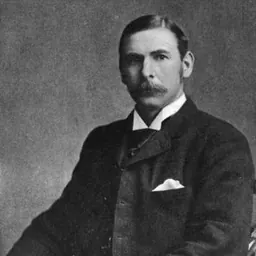
Edward L. Hoffman
American aviation pioneer
About Edward L. Hoffman
Lived 1884 – 1970 (aged 85). Edward L. Hoffman was an American, known for Parachute.
Early life Born to American Civil War veteran William Hoffman and his wife Mary E Aearn on 17 December 1884 at Fort Slocum, Davids Island, New Rochelle, New York. Edward L. Hoffman after enlisting in the infantry 21 July 1909, commissioned as an officer on 9 October 1911. In 1917 he transferred to the Aviation Section, Signal Corps with assignment as Engineering Division Chief at McCook Field. As Chief, Hoffman's division worked on all aspects of aviation including parachutes, bombsights, and aerial refueling.
Parachute testing In September 1918, General Billy Mitchell directed that a team evaluate available parachutes and identify the best chute. Mitchell picked Glenn Martin test pilot and former flying circus daredevil Floyd Smith. Smith added motor mechanic Guy M. Ball to his two-man team. After the WWI Armistice, Smith's team came under command of Major Hoffman who formed the Parachute Board adding several other civilians including: Floyd Smith, Guy Ball, show-jumper Harry Eibe, Army parachutist Sgt Ralph Bottreil, engineers James M. Russell and James J. Higgins. The newly reorganized team tested 17 parachute designs including: static line designs of Broadwick, Stevens, Ors, Kiefer Kline, Otto Heinecke, Leslie Irvin, Omaha Tent Company, and Floyd Smith. Irvin became the first American to jump from an airplane and manually open a parachute in midair. The new chute performed flawlessly, though Irvin broke his ankle on landing. Floyd Smith filed the Type A patent No. 1,462,456 on the same day.
After Irvin's successful first jump, the team lined up to jump the Type A starting with Floyd Smith, then in order Russell, Higgins, and Bottreil. With over 500 static line jumps, Sgt Ralph Bottreil became the first US serviceman to free-fall jump with the Type A chute and was awarded the Distinguished Flying Cross.
The Parachute Board determined the backpack chute was crowding the cockpit, a redesign moved the parachute down the pilots back becoming the "seat style" chute. Hoffman's team tested the Type A parachute with over 1000 jumps. These successful tests resulted in the Army requiring parachute use on all Air Service flights. Hoffman developed the US Army specifications and drawings for this parachute, which the Army Air Service placed an order for 300 parachutes from the lowest bidder: Irvin's Irving Air Chute Company. After losing a patient dispute to Floyd Smith with zero compensation due to US Government parachute orders, the US Government compensated Smith with $3500 to transfer his patient to Irvin's company. of the Irving Air Chute Company credits William O'Connor 24 August 1920 at McCook Field as the first person to be saved by an Irving parachute, yet this was unrecognized. On 20 October 1922, Lieutenant Harold R. Harris, chief of the McCook Field Flying Station, jumped from a disabled Loening PW-2A high wing monoplane fighter. Harris' lifesaving chute was mounted on the wall of McCook's parachute lab where the Dayton Herald's aviation editor Maurice Hutton and photographer Verne Timmerman, predicting more jumps in future, suggested that a club should be formed. Two years later, Irvin's company instituted the Caterpillar Club, awarding a gold pin to pilots who successfully bailed out of disabled aircraft using an Irving parachute. The Switlik Parachute Company of Trenton, New Jersey issued both gold and silver caterpillar pins.
Triangle parachute Out-growing McCook Field, in 1927 Hoffman's Parachute Board was moved to Wright Field. Renamed the Parachute and Clothing Branch, Hoffman developed the airborne steerable "Triangle Parachute." Hoffman's branch developed large parachutes utilized to slow bombs and even recover or slow aircraft. Eventually this large parachute work was used in space capsule recovery. On 8 June 1936, following discussion the year before on the House floor, Hoffman received a reprimand from the United States Secretary of War George Dern for concealing connections to the Safe Aircraft Inc. and the Triangle Parachute Company in Cincinnati.
On 1 June 1937, retiring as a Lieutenant Colonel, he moved his family to San Diego entering into the parachute manufacturing business with Jimmy Russell forming Hoffman & Russell in 1938. Their new venture developed very large parachutes able to return entire disabled aircraft safely to earth. Together they were awarded a patient to reduce parachute oscillations and they successfully tested a 60-foot diameter parachutes with designs for a 225-foot chute. Ahead of their time, Russell left the partnership to work at Standard Parachute Corporation.
Edward L. Hoffman lived with his wife Ruth in San Diego, California where he died on 6 October 1970.
Don’t just read it —
keep it.
Full-length biographies made to live with: read them, listen on the way to work, watch them tonight.
- E-book
- Audio
- Video
Instant download · yours to keep · every purchase keeps this site free
Important facts
Family & relationships
People in Edward L. Hoffman's life
Named in this biography and alive at the same time



Contemporaries
People whose lives overlapped Edward L. Hoffman's
Frequently asked questions
Who was Edward L. Hoffman?
American aviation pioneer
When was Edward L. Hoffman born?
Edward L. Hoffman was born on 17 December 1884 in Davids Island.
When did Edward L. Hoffman die?
Edward L. Hoffman died on 6 October 1970 in San Diego, California.
What was Edward L. Hoffman known for?
Edward L. Hoffman was known for Parachute.
What nationality was Edward L. Hoffman?
Edward L. Hoffman was American.
Sources & further reading
· Wikipedia: Edward L. Hoffman
Cite this page
APA: Biography.guide. (2026). Edward L. Hoffman. https://biography.guide/edward-l-hoffman/
MLA: "Edward L. Hoffman." Biography.guide, https://biography.guide/edward-l-hoffman/.
Chicago: "Edward L. Hoffman." Biography.guide. https://biography.guide/edward-l-hoffman/.
Data last updated: 2026-09-22 · Spot an error? Report a correction.
Page generated 2026-09-27 05:04 UTC