
About Edward Holdsworth
Lived 1684 – 1746 (aged 61–62). Edward Holdsworth was a British classical scholar and philologist.
Edward Holdsworth (1684–1746) was an English classical scholar, known as a Neo-Latin poet.
Early life The son of Thomas Holdsworth, rector of North Stoneham, Hampshire, he was born there on 6 August 1684, and baptised on 3 September. He was educated at Winchester College, and in 1694 was elected a scholar at the age of nine. On 14 December 1704 he matriculated at Corpus Christi College, Oxford, but in July of the following year migrated to Magdalen College on his election as a demy, graduating B.A. on 22 June 1708, and M.A. on 18 April 1711. For some years he remained at Oxford as tutor of his college, but in 1715, when his turn came to be chosen fellow, he resigned his post and left the university, because he wasn't prepared to take the oath of allegiance after the Hanoverian succession.
Private tutor and scholar For the rest of his life Holdsworth was tutor in households of those who shared his political opinions, or travelled abroad with their children. Alexander Pope wrote to him (December 1737), asking him to support Walter Harte's candidature for the poetry professorship at Oxford. Joseph Spence met Holdsworth in Florence in 1732, and in his Polymetis praised him for his understanding of Virgil. It appeared first without his consent, and without a printer's name. It was then republished in a corrected form by its author, with a dedication to Robert Lloyd, a fellow-commoner of Magdalen College; and also was immediately reproduced by Edmund Curll, all three editions being dated 1709. Thomas Richards of Jesus College, Oxford retaliated against this ridicule of his Welsh fellow-countrymen, and issued the same year Χοιροχωρογραφία, sive Hoglandiæ descriptio, a satire on Hampshire, Holdsworth's native county. Muscipula was then often reprinted and translated.
The other writings of Holdsworth dealt with Virgil. There appeared in his lifetime a volume entitled Pharsalia and Philippi. After his death came out Dissertations upon eight verses in the Second Book of Virgil's Georgics [i.e. lines 65–72]. To which is added a New Edition of the Muscipula, together with a New Translation, 1749.
Memorial and legacy Charles Jennens of Gopsall in Leicestershire, to whom Holdsworth left his notes on Virgil, placed a plain black marble stone above his grave. In 1764 a monument to his memory, with a long Latin inscription, and with a figure of Religion by Louis-François Roubiliac, was erected in an Ionic temple built by Jennens in the wood at Gopsall known by the name of the Racecourse. The temple fell down in 1835, when the cenotaph was removed into the gardens on the east side of the mansion.
Holdsworth's plan of rebuilding Magdalen College in the Palladian style was approved of, and began in 1733, but only one block, called the New Buildings, was executed. He left money to the building fund.
Don’t just read it —
keep it.
Full-length biographies made to live with: read them, listen on the way to work, watch them tonight.
- E-book
- Audio
- Video
Instant download · yours to keep · every purchase keeps this site free
Important facts
People in Edward Holdsworth's life
Named in this biography and alive at the same time

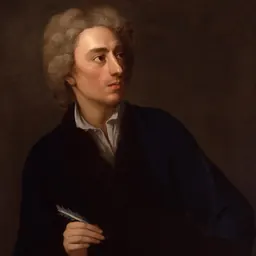
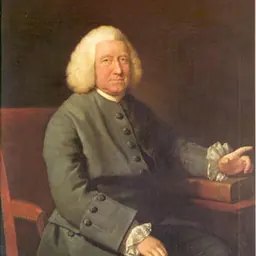
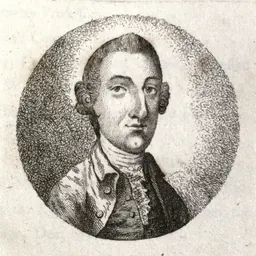




Related people
Same field, nearest in time



Contemporaries
People whose lives overlapped Edward Holdsworth's
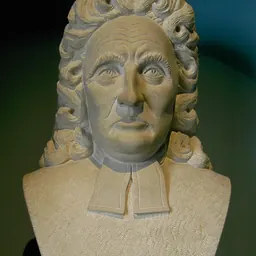

Frequently asked questions
Who was Edward Holdsworth?
British classical scholar
When was Edward Holdsworth born?
Edward Holdsworth was born in 1684.
When did Edward Holdsworth die?
Edward Holdsworth died in 1746.
What was Edward Holdsworth's occupation?
Edward Holdsworth was a classical scholar and philologist.
What nationality was Edward Holdsworth?
Edward Holdsworth was British.
Sources & further reading
· Wikipedia: Edward Holdsworth
Cite this page
APA: Biography.guide. (2026). Edward Holdsworth. https://biography.guide/edward-holdsworth/
MLA: "Edward Holdsworth." Biography.guide, https://biography.guide/edward-holdsworth/.
Chicago: "Edward Holdsworth." Biography.guide. https://biography.guide/edward-holdsworth/.
Data last updated: 2026-09-20 · Spot an error? Report a correction.
Page generated 2026-09-27 05:34 UTC