
About Edward H. Plumb
Lived 1907 – 1958 (aged 50). Edward H. Plumb was an American composer, film score composer, music arranger and musician.
Edward Holcomb Plumb (June 6, 1907– April 18, 1958) was an American film composer and orchestrator best known for his work at Walt Disney Studios. He served as musical director of Fantasia and orchestrated and co-composed the score for Bambi, and orchestrated and expanded the film's main composer Frank Churchill's menacing but simple three-note Man theme.
Early life Plumb was born on June 6, 1907 in Streator, Illinois. His grandfather, Colonel Ralph Plumb founded the city of Streator in 1866. He had attended Dartmouth College even alongside Theodor Geisel, otherwise known as Dr. Seuss, the two of them remained friends for decades afterward. Upon graduation in 1929, Plumb received a fellowship to have his musical education at the University of Vienna and had private compositional lessons with Joseph Marx.
He came to Hollywood during the 1930’s freelancing for band leaders such as Paul Whiteman, Vincent Lopez, Johnny Green, Andre Kostelanetz. and Rudy Vallee.
Plumb was hired by Disney on March 15, 1937.
Career In the 1930s, Plumb moved to California and began work as a composer and orchestrator in the film industry. In addition to his work for Disney, Plumb frequently worked on titles for other studios, including Republic, Paramount and 20th Century Fox. In 1953, he wrote the music for MGM's Tom and Jerry short called The Missing Mouse because Scott Bradley was on vacation. Back at Disney, Plumb orchestrated the music for Snow White and the Seven Dwarfs, the Whale Chase sequence in Pinocchio, Dumbo, Make Mine Music, Song of the South, Beanero in Fun and Fancy Free, So Dear to My Heart, some subsidiary cues for Cinderella, Peter Pan, and Lady and the Tramp. He also orchestrated a number of television programs for Walt Disney Presents, a number of Davy Crockett films and on Westward Ho, the Wagons!, starring Fess Parker. His final film project was Johnny Tremain for Disney in 1957.
He received Oscar nominations for Bambi, Victory Through Air Power, Saludos Amigos and The Three Caballeros.
In the Tom and Jerry cartoon "The Missing Mouse" he is credited as "Edward Plumb" without the H. initial.
Death Plumb died on April 18, 1958 in Los Angeles, California. He was 50.
Disney credits 1937 Snow White and the Seven Dwarfs - orchestration - uncredited 1938 Mother Goose Goes Hollywood - score 1940 Pinocchio - additional music - uncredited 1940 Fantasia - musical director 1941 The Reluctant Dragon - orchestration - uncredited 1941 Dumbo - orchestration 1942 Bambi - music by 1942 Saludos Amigos - score 1943 Victory Through Air Power - score 1944 The Three Caballeros - associate music director 1945 Donald's Crime - score 1946 Make Mine Music - associate music director 1946 Song of the South - orchestration 1947 Fun and Fancy Free - orchestration - uncredited 1949 So Dear to My Heart - orchestration as Ed Plumb 1950 Cinderella - orchestration - uncredited 1950 In Beaver Valley - orchestration - uncredited 1951 Nature's Half Acre - orchestration - uncredited 1952 The Olympic Elk - orchestration - uncredited 1952 Water Birds - orchestration 1953 Peter Pan - orchestration 1953 Bear Country - orchestration - uncredited 1953 The Alaskan Eskimo - orchestration - uncredited 1953 The New Neighbor - score 1953 The Living Desert - orchestration 1953 How to Sleep - score 1954 Donald's Diary - score 1954 The Vanishing Prairie - orchestration 1955 Davy Crockett: King of the Wild Frontier - orchestration 1955 Lady and the Tramp - orchestration 1956 Davy Crockett and the River Pirates - orchestration 1956 Secrets of Life - orchestration 1956 Westward Ho the Wagons! - orchestration 1957 Johnny Tremain - orchestration (final film)
Works outside of the Disney Studio
1942 Iceland - orchestrator 1942 Careful, Soft Shoulders - orchestrator 1942 Girl Trouble - orchestrator 1942 You Were Never Lovelier - orchestrator 1944 Ever Since Venus 1944 Something for the Boys - orchestration 1945 The Phantom Speaks - score 1945 The Woman Who Came Back - score 1945 Doll Face - orchestrator 1946 Murder in the Music Hall - additional music - uncredited 1946 Valley of the Zombies 1946 Centennial Summer 1946 Monsieur Beaucaire 1946 Wake Up and Dream 1947 Calcutta - orchestrator 1947 Variety Girl - composer "Puppetoon" sequence 1948 The Sainted Sisters - orchestrator 1949 The Accused - orchestrator 1949 The Great Lover - orchestrator 1950 The Happy Years - orchestrator 1950 Fancy Pants - orchestrator 1950 Father Is a Bachelor 1951 Quebec 1951 The Painted Hills - orchestrator 1951 That's My Boy - orchestrator 1951 Angels in the Outfield - orchestrator 1953 The Missing Mouse
Don’t just read it —
keep it.
Full-length biographies made to live with: read them, listen on the way to work, watch them tonight.
- E-book
- Audio
- Video
Instant download · yours to keep · every purchase keeps this site free
Important facts
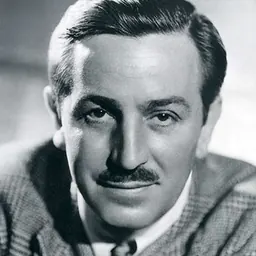
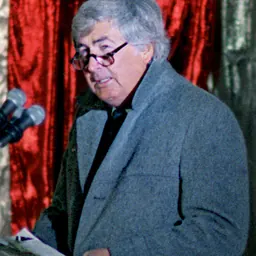
People in Edward H. Plumb's life
Named in this biography and alive at the same time




Related people
Same field, nearest in time




Contemporaries
People whose lives overlapped Edward H. Plumb's


Frequently asked questions
Who was Edward H. Plumb?
film score composer (1907–1958)
When was Edward H. Plumb born?
Edward H. Plumb was born on 6 June 1907 in Streator.
When did Edward H. Plumb die?
Edward H. Plumb died on 18 April 1958 in Los Angeles.
What was Edward H. Plumb's occupation?
Edward H. Plumb was a composer, film score composer, music arranger and musician.
What nationality was Edward H. Plumb?
Edward H. Plumb was American.
Sources & further reading
Cite this page
APA: Biography.guide. (2026). Edward H. Plumb. https://biography.guide/edward-h-plumb/
MLA: "Edward H. Plumb." Biography.guide, https://biography.guide/edward-h-plumb/.
Chicago: "Edward H. Plumb." Biography.guide. https://biography.guide/edward-h-plumb/.
Data last updated: 2026-09-20 · Spot an error? Report a correction.
Page generated 2026-09-27 05:07 UTC