
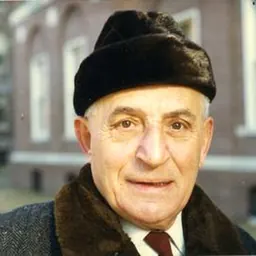
Edward H. Clarke
American Senior Economist with the Office of Management and Budget
About Edward H. Clarke
Lived 1939 – 2013 (aged 73).
Edward Hedrick Clarke (December 23, 1939 - October 10, 2013) was an American Senior Economist with the Office of Management and Budget (Office of Information and Regulatory Affairs), which was involved in transportation regulatory affairs.
Education Born in Richmond, Virginia, Clarke was a graduate of Princeton University in 1962 and the University of Chicago, where he received an MBA in 1965. He wrote a doctoral dissertation at the same time, in which he invented the first method for preference revelation, but he failed his doctoral defense because Paul Samuelson and his doctoral advisor George Stigler believed his results to be impossible. Ten years later, in 1978, the University of Chicago economics faculty admitted their mistake and gave him a Ph.D. for his earlier work.
Career Clarke worked in public policy at the city/regional (Chicago), State, Federal and international levels. He worked for the Federal government as an economist for more than 35 years. With expertise in transportation economics and policy, he served as an urban economic analyst with the Real Estate Research Corporation of Chicago and the State of Illinois Bureau of the Budget (as economic advisor to the Director). In both of these jobs he was involved in various aspects of transportation finance and planning. He served as special assistant to the Secretary of the Treasury (George P. Shultz) and chief economist at A. I. D's Bureau of Planning and Policy Coordination. During the mid-1970s, he was heavily involved in airline and trucking deregulation and most recently in oversight of Federal regulatory activities affecting transportation.
Recognition Clarke's preference revelation work, which he had applied to public project selection, was noted in the Nobel Committee's award of the 1996 Nobel Prize in Economics to William Vickrey. Clarke's 1994 TRB paper (with Wayne Brough and Nicolaus Tideman), entitled "Airport Congestion and Noise, Interplay of Allocation and Distribution" illustrates the potential applicability of the Vickrey–Clarke–Groves mechanism to problems of transportation congestion. This method was the subject of Nobel Prizes awarded in 2007.
Selected publications
Don’t just read it —
keep it.
Full-length biographies made to live with: read them, listen on the way to work, watch them tonight.
- E-book
- Audio
- Video
Instant download · yours to keep · every purchase keeps this site free
Important facts
People in Edward H. Clarke's life
Named in this biography and alive at the same time




Contemporaries
People whose lives overlapped Edward H. Clarke's




Frequently asked questions
Who was Edward H. Clarke?
American Senior Economist with the Office of Management and Budget
When was Edward H. Clarke born?
Edward H. Clarke was born on 23 December 1939.
When did Edward H. Clarke die?
Edward H. Clarke died on 10 October 2013.
Sources & further reading
Cite this page
APA: Biography.guide. (2026). Edward H. Clarke. https://biography.guide/edward-h-clarke/
MLA: "Edward H. Clarke." Biography.guide, https://biography.guide/edward-h-clarke/.
Chicago: "Edward H. Clarke." Biography.guide. https://biography.guide/edward-h-clarke/.
Data last updated: 2026-09-20 · Spot an error? Report a correction.
Page generated 2026-09-27 05:01 UTC