
About Edward G. Loring
Lived 1802 – 1890 (aged 87–88). Edward G. Loring was an American lawyer and judge.
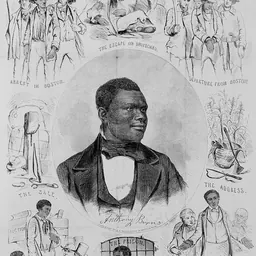
Edward Greely Loring (January 28, 1802 – June 18, 1890) was a Judge of Probate in Massachusetts, a United States Commissioner of the United States District Court for the District of Massachusetts and a judge of the Court of Claims. He was reviled in Massachusetts and much of the North for his ordering the return of fugitive slaves Thomas Sims and Anthony Burns to slavery in compliance with the Fugitive Slave Law of 1850. His action would result in his being removed as Judge of Probate.
Education and career
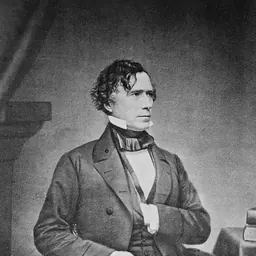
Born on January 28, 1802, in Boston, Massachusetts, Loring received an Artium Baccalaureus degree in 1821 from Harvard University and read law with Charles Greely Loring in Boston in 1824. Widespread protests marked the trial and its aftermath. President Franklin Pierce felt obliged to send United States troops to ensure that the ruling be carried out.
Following the Burns decision, abolitionists led by William Lloyd Garrison and Wendell Phillips agitated for Loring to be removed from his office as probate judge. Forming a vigilance committee to monitor judges' activities under the law, they circulated petitions and lobbied against Loring with the Massachusetts legislature. Though he had assisted Burns in his court case, attorney Richard Henry Dana Jr. defended Loring before the legislature. Under pressure from an increasingly antislavery public, the legislature made two unsuccessful attempts to remove Loring from office by passing a Bill of Address in 1855 and 1856. Governor Henry J. Gardner, elected as a candidate of the Know-Nothing Party, declined to remove him.
In 1857, after Nathaniel Prentice Banks, a Republican, was elected Governor of Massachusetts, the legislature passed another Bill of Address against Loring. The new governor complied and removed Loring from office.
Federal judicial service
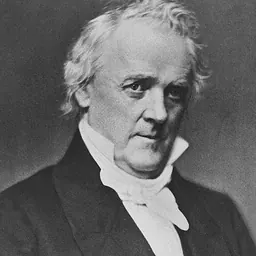
Loring was nominated by President James Buchanan on May 3, 1858, to a seat on the Court of Claims (later the United States Court of Claims) vacated by Judge John Gilchrist. and received his commission the same day.
Loring died on June 19, 1890, in Winthrop, Massachusetts.
Don’t just read it —
keep it.
Full-length biographies made to live with: read them, listen on the way to work, watch them tonight.
- E-book
- Audio
- Video
Instant download · yours to keep · every purchase keeps this site free
Important facts
People in Edward G. Loring's life
Named in this biography and alive at the same time




Related people
Same field, nearest in time




Contemporaries
People whose lives overlapped Edward G. Loring's





Frequently asked questions
Who was Edward G. Loring?
American judge
When was Edward G. Loring born?
Edward G. Loring was born on 28 January 1802 in Boston.
When did Edward G. Loring die?
Edward G. Loring died in 1890 in Winthrop.
What was Edward G. Loring's occupation?
Edward G. Loring was a lawyer and judge.
What nationality was Edward G. Loring?
Edward G. Loring was American.
Sources & further reading
Cite this page
APA: Biography.guide. (2026). Edward G. Loring. https://biography.guide/edward-g-loring/
MLA: "Edward G. Loring." Biography.guide, https://biography.guide/edward-g-loring/.
Chicago: "Edward G. Loring." Biography.guide. https://biography.guide/edward-g-loring/.
Data last updated: 2026-09-20 · Spot an error? Report a correction.
Page generated 2026-09-27 05:32 UTC