
About Edward Frankland Armstrong
Lived 1878 – 1945 (aged 67). Edward Frankland Armstrong was a British chemist.
Edward Frankland Armstrong (5 September 1878 – 14 December 1945) was an English organic chemist who researched carbohydrates, catalysis, and industrial applications.
Armstrong was the eldest son of chemistry professor H. E. Armstrong and Frances Louisa (1843/4–1935), daughter of pharmacist Thomas Howard Lavers and was born in Lewisham, London. He was named after his father's favourite teacher Edward Frankland. Armstrong became interested in chemistry at an early age thanks to his father and studied organic chemistry in Kiel under L. Claisen in 1898. He spent two years in Berlin under J. van't Hoff and after obtaining a PhD in 1901, he became an assistant of Emil Fischer in Berlin taking an interest the chemistry of carbohydrates. He returned to England and in 1905 received a DSc for work on carbohydrates. He worked as a chemist to the biscuit manufacturing company Huntley and Palmer, Reading while also pursuing research on glycosides with his father and Frederick Keeble. In 1914 he worked with the soap and chemical company Joseph Crosfield & Sons, working on problems of catalysis and was involved in supplying chemicals needed during the war including acetic acid and acetone. He was elected to the Royal Society in 1920. He became a director at the British Dyestuffs Corporation in 1925 which was acquired by Imperial Chemical Industries. From 1928 he served as a consultant chemist for many industries. He presided over the Association of British Chemical Manufacturers in 1935. He advised the government on air-raid measures during World War II. Charles Stanley Gibson and
Armstrong married Ethel Mary Turpin of Woolwich in 1907 and they had three sons and a daughter. His second son Kenneth Frankland (1909–1935) also became a chemist but died young, killed in an avalanche while skiing. Armstrong died from complications following an appendicitis surgery. He was considered a poor speaker but wrote several books The Simple Carbohydrates and Glucosides (1910), Chemistry in the Twentieth Century (1924), The Sea as a Storehouse (1944), Raw Materials from the Sea (1945), and coauthored The Glycosides (1931).
Don’t just read it —
keep it.
Full-length biographies made to live with: read them, listen on the way to work, watch them tonight.
- E-book
- Audio
- Video
Instant download · yours to keep · every purchase keeps this site free
Important facts
People in Edward Frankland Armstrong's life
Named in this biography and alive at the same time
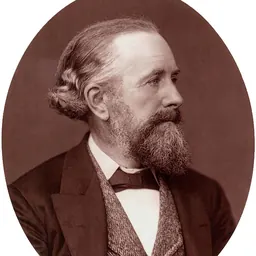




Related people
Same field, nearest in time



Contemporaries
People whose lives overlapped Edward Frankland Armstrong's



Frequently asked questions
Who was Edward Frankland Armstrong?
British chemist
When was Edward Frankland Armstrong born?
Edward Frankland Armstrong was born on 5 September 1878 in Lewisham.
When did Edward Frankland Armstrong die?
Edward Frankland Armstrong died on 14 December 1945.
What was Edward Frankland Armstrong's occupation?
Edward Frankland Armstrong was a chemist.
What nationality was Edward Frankland Armstrong?
Edward Frankland Armstrong was British.
Sources & further reading
· Wikipedia: Edward Frankland Armstrong
· DBpedia: Edward Frankland Armstrong
Cite this page
APA: Biography.guide. (2026). Edward Frankland Armstrong. https://biography.guide/edward-frankland-armstrong/
MLA: "Edward Frankland Armstrong." Biography.guide, https://biography.guide/edward-frankland-armstrong/.
Chicago: "Edward Frankland Armstrong." Biography.guide. https://biography.guide/edward-frankland-armstrong/.
Data last updated: 2026-09-20 · Spot an error? Report a correction.
Page generated 2026-09-27 05:00 UTC