
Edward Doubleday
English entomologist and ornithologist
About Edward Doubleday
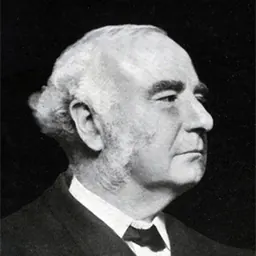
Lived 1810 – 1849 (aged 39). Edward Doubleday was a British ornithologist, lepidopterist, entomologist and scientific collector.
Edward Doubleday (9 October 1810 – 14 December 1849) was an English entomologist primarily interested in Lepidoptera. He is best known for The Genera of Diurnal Lepidoptera: Comprising Their Generic Characters, a Notice of Their Habits and Transformations, and a Catalogue of the Species of Each Genus, co-written with John O. Westwood, and illustrated by William Chapman Hewitson ; and List of the Specimens of Lepidopterous Insects in the Collection of the British Museum .
Doubleday was born on 9 October 1810 in Epping, Essex, the second son of Benjamin and Mary Doubleday. His older brother was Henry Doubleday who also grew up to become a notable entomologist. They were both interested in natural history and spent their childhood collecting specimens in the nearby Epping Forest. The boys grew up in a Quaker family and Edward received a good classical education at the local Quaker school.
In 1835, he joined a fellow Quaker named Robert Foster on a trip to the United States, and while there wrote a series of letters that appeared in the Entomological Magazine in London under the running title of "Communications on the Natural History of North America". He spent much time in upstate New York where he and Foster collected numerous insects, including half a dozen stoneflies new to science that Edward Newman, yet another Quaker, described and named in a paper in the Entomological Magazine. Doubleday also collected in other parts of the country including Kentucky where he was struck by the verdant beauty of the landscape. He spent about two years in the United States and amassed a significant collection of insects, much of which he shipped to the British Museum and other scientific institutions in England.
Upon his return to England, Doubleday tried for an appointment to the ill-fated Niger expedition of 1841. When he was turned down he accepted a position with the British Museum where he built one of the most comprehensive butterfly collections at that time. He remained at the museum until he died on 14 December 1849. As Robert Mays, author of the book Henry Doubleday: The Epping Naturalist wrote: "Had Edward lived longer his name would undoubtedly have found a place beside those of the eminent 19th century entomologists".
Don’t just read it —
keep it.
Full-length biographies made to live with: read them, listen on the way to work, watch them tonight.
- E-book
- Audio
- Video
Instant download · yours to keep · every purchase keeps this site free
Important facts
People in Edward Doubleday's life
Named in this biography and alive at the same time

Related people
Same field, nearest in time
Contemporaries
People whose lives overlapped Edward Doubleday's






Frequently asked questions
Who was Edward Doubleday?
English entomologist and ornithologist (1810 -1849)
When was Edward Doubleday born?
Edward Doubleday was born on 9 October 1810 in Epping.
When did Edward Doubleday die?
Edward Doubleday died on 14 December 1849.
What was Edward Doubleday's occupation?
Edward Doubleday was an ornithologist, lepidopterist, entomologist and scientific collector.
What nationality was Edward Doubleday?
Edward Doubleday was British.
Sources & further reading
Cite this page
APA: Biography.guide. (2026). Edward Doubleday. https://biography.guide/edward-doubleday/
MLA: "Edward Doubleday." Biography.guide, https://biography.guide/edward-doubleday/.
Chicago: "Edward Doubleday." Biography.guide. https://biography.guide/edward-doubleday/.
Data last updated: 2026-09-20 · Spot an error? Report a correction.
Page generated 2026-09-27 05:33 UTC