
About Edward Davenport
Born 1966. Edward Davenport is a British businessperson.
Edward Ormus Sharrington Davenport socialite, and property developer.
The self-styled "Lord", nicknamed "Fast Eddie", came to prominence in the late 1980s as the organiser of the controversial Gatecrasher Balls for wealthy teenagers. After being convicted for tax offences in 1990, he began a second career as a property developer. He claimed to have acquired a substantial fortune,
From 2005 to 2009 he was the "ringmaster" of a series of advance-fee fraud schemes that defrauded dozens of individuals out of millions of pounds. He was arrested and charged in December 2009 and was convicted in September 2011 along with five other defendants, receiving a jail sentence of seven years and eight months. Ormus Neville Talbot Davenport, a Magdalen College, Oxford-educated director and general manager of pharmaceutical products company Benefax, and his second wife, Jean (née Gorrie). His father's first wife was Elizabeth Aurora, daughter of the soldier Sir Hugh Tudor. The Davenport family claimed descent from 'Ormus de Davenport', alleged to have lived at the time of the Norman Conquest; mainly vicars and soldiers, they were subsequently listed in Burke's Landed Gentry.
Gatecrasher Balls At age 15, Davenport began selling clothes on Portobello Road. While still a teenage boarder at Frensham Heights school, he started organising parties, first at his home and then in nightclubs. The company organised parties for teenagers at country houses such as Longleat and Weston Park, which were attended by up to 10,000 party-goers at any one time and at the height of their success were generating £1,000,000 a year. The idea behind the balls was to enable wealthy teenagers at single-sex boarding schools to meet the opposite sex and drink large amounts of alcohol. As one reveller put it, "I'm here to get drunk and get laid". The balls gained a reputation for debauchery, with one newspaper calling them the scene of "Unbridled lust among upper-class Lolitas and public school Lotharios."
The balls ceased to be held after an HM Customs & Excise audit found that Davenport had substantially underpaid his Value Added Tax bill. Convicted for tax evasion, he was sentenced in November 1990 to nine months in jail. Asked by Tatler magazine how he coped with two weeks in prison, Davenport said in 2006: "Boring. There aren't many parties there." though he is not a member of the peerage. controlled through a Monaco-based company called the Davenport Trust, as well as property in Monaco and Thailand.
According to Davenport, his business method is "buying leases on loss-making properties, returning them to a profit and then selling them."
In 1998, Davenport and two other men were charged after running up an £18,000 bill at the luxury Gleneagles Hotel in Scotland during a five-day New Year party. The three were said to have posed as aristocrats. They denied the charges, which were later dropped, but Davenport failed to turn up in court and claimed that he had suffered kidney failure and could not travel because he was receiving dialysis.
In 1996, Davenport was introduced to Professor Cyril Foray, the former Foreign Minister and High Commissioner of Sierra Leone, during that country's civil war. Davenport entered into negotiations with the Sierra Leone government in order to refurbish the London embassy, then valued at £5 million. He acquired a lease on the building for £50,000 but eventually claimed the property as his private residence. The government of Sierra Leone took legal action against Davenport in London in 1999, but the case was eventually settled with no clear victor. The British government offered to purchase a new building for the Sierra Leonean High Commission, leaving Davenport with the remainder of the lease. acquired the freehold of the building for £3.75 million. A UK company, with an identical name, Portland Place (Historic House) Ltd, is registered at 33 Portland Place with assets and turnover listed as nil.
The property was regularly hired out for tango and pole-dancing lessons and parties, leading to many complaints from neighbours.
Davenport has also hired out the building for high-profile events, including exhibitions, films and photography shoots for figures such as Kate Moss, Johnny Depp and Helena Bonham Carter. and singer Amy Winehouse used it to shoot the video for her hit song Rehab. In April 2010, the house doubled as Lionel Logue's clinic in Oscar-winning film The King's Speech starring Colin Firth. A number of porn films were also reportedly shot there. Later that month Westminster City Council brought an action at the High Court charging that Davenport's use of the property breached planning permission. The council reported that Davenport had filled a small pool with 1,000 litres of cognac. Davenport was found to have breached the 2006 enforcement notice and a High Court judge issued a permanent ban on the use of the house for non-residential purposes. In April 2011 Davenport lost an appeal against the injunction.
Patrick Cox
In 2008, Davenport purchased the fashion label of celebrity shoe designer Patrick Cox for £2.6 million. Following the sale of his business, Cox remained on the board. At 7 A.M. on Sunday, 23 February 2025, three men were arrested there following the stabbing of three men during a fight at a 'sex party'. Four men were taken to hospital, their injuries "not believed to be life-threatening" per the Metropolitan Police.
Advance fee fraud In late 2005 Davenport acquired an existing shelf company and renamed it as Gresham Ltd – a name similar to, but wholly unconnected with, the well-known wealth management company Gresham Financial – which he used as a vehicle for advance fee frauds. Gresham was falsely presented as a long-established, wealthy and prestigious firm with a prospectus claiming that it had been involved in the commercial loans market since 1958. The company promoted itself through glossy brochures and advertisements in the Financial Times. The value of the fraud was said by prosecutors to be at least £12 million. Victims included Elizabeth Emanuel, who lost her savings after being promised a £1 million loan.
In October 2009 Gresham was liquidated after companies secretly controlled by Davenport petitioned to have it wound up. He continued the advance fee fraud through another newly acquired shelf company, Cutting and Company (Investments) Ltd, which had been established in 1930 and had been dormant since about 2000. Cutting was portrayed to the public as a restructuring expert. Davenport was charged with conspiracy to obtain money by deception, conspiracy to commit fraud by false representation and money laundering. He was also accused of carrying out a "price ramping" fraud on a £2.4 million property in central London to artificially increase its price at auction. The property, an office building at 80 Paul Street in the City of London, was said to have been sold for £700,000 more than its market value due to a false claim made about a lease supposedly guaranteed by Gresham Ltd. The SFO also said that it was investigating allegations of a rent fraud involving Gresham.
Also accused were David McHugh, an accountant; David Horsfall, Davenport's solicitor, Peter Riley, a Gresham director; Richard Kirkup (also known as Richard Stephens), who had been convicted in 2004 of a previous advance fee fraud;
Davenport was found to be the "ringmaster and guiding mind" behind the fraud, McHugh was revealed to have been convicted of 40 offences since 2000. He had falsely claimed to be a lawyer and accountant and also produced false company accounts for Gresham, while Kirkup posed as a surveyor to carry out expensive assessment visits to the sites of planned building projects. However, SFO investigators are reported to have found that Davenport has few assets in his name and went to great lengths to distance himself from the fraud; Judge Testar commented, "He did not leave very many footprints in the snow himself." Davenport was subsequently released from prison on compassionate grounds, due to serious illness.
Following his conviction, Davenport issued a statement expressing his "shock and dismay" at the verdict. He said: "This is a matter that I have denied throughout and have already lodged an appeal against this conviction at the Royal Courts of Justice (ref 201103357D3); detailed grounds of appeal have been drafted and filed by my legal team... I will continue to make every effort to prove my innocence and I look forward to my case being considered by the Court of Appeal and being able to clear my name."
Following his release from prison in 2014, Davenport successfully appealed against a Confiscation Order he was forced to pay after being convicted of fraud in 2011. After his release, Davenport reportedly became involved in property deals with a Chinese business partner and started looking to buy a film studio.
Confiscation proceedings
Confiscation proceedings against Davenport began on 19 June 2013. According to prosecutors, he had made £34.5 million through his fraud schemes, though Davenport has argued that he should only repay £8 million. Alleged largest single element was the purchase of 33 Portland Place building, which the prosecution has said was obtained through fraud.
In October 2015 Davenport returned to the Court of Appeal, claiming he had been the victim of “double counting” by the SFO in its Confiscation and Compensation Order.
The SFO said it had recovered more than £13 million from Davenport to satisfy the orders, but Davenport's solicitor Karen Todner argued that he had already paid too much in confiscation and compensation. Todner told the Court of Appeal that although Davenport might have benefited from £12 million fraud, he had been made to repay nearly £14 million. SFO lawyers disagreed with the sentiment and said Davenport's appeals should be dismissed however Court of Appeal subsequently accepted Todner's appeal lodged on Davenport's behalf and the Order was set aside.
Don’t just read it —
keep it.
Full-length biographies made to live with: read them, listen on the way to work, watch them tonight.
- E-book
- Audio
- Video
Instant download · yours to keep · every purchase keeps this site free
Important facts
People in Edward Davenport's life
Named in this biography and alive at the same time



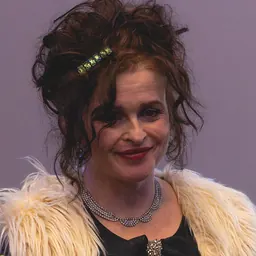
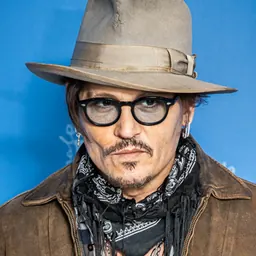
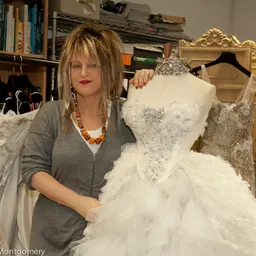


Related people
Same field, nearest in time
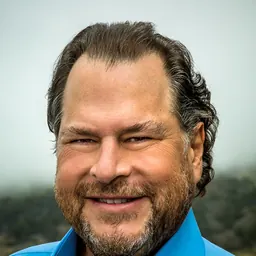




Contemporaries
People whose lives overlapped Edward Davenport's


Frequently asked questions
Who is Edward Davenport?
English fraudster
When was Edward Davenport born?
Edward Davenport was born on 11 July 1966 in London.
What is Edward Davenport's occupation?
Edward Davenport is a businessperson.
What nationality is Edward Davenport?
Edward Davenport is British.
Sources & further reading
· DBpedia: Edward Davenport (born 1966)
Cite this page
APA: Biography.guide. (2026). Edward Davenport. https://biography.guide/edward-davenport-businessperson/
MLA: "Edward Davenport." Biography.guide, https://biography.guide/edward-davenport-businessperson/.
Chicago: "Edward Davenport." Biography.guide. https://biography.guide/edward-davenport-businessperson/.
Data last updated: 2026-09-20 · Spot an error? Report a correction.
Page generated 2026-09-27 05:28 UTC