
About Edward Buxton Cristy
Lived 1860 – 1934 (aged 73). Edward Buxton Cristy was an architect.
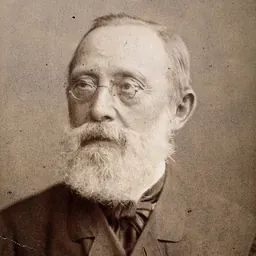
Edward Buxton Cristy (1860–1934) was among the first architects working in and from Albuquerque, New Mexico in the late 19th and early 20th centuries. In a growing city, he designed residential, commercial, and institutional structures. His work with William Tight at the University of New Mexico involved study of pueblos and incorporation of their forms into contemporary projects. This defined Pueblo Revival architecture.
Biography Cristy was born in New York City and raised in nearby Greenwich, Connecticut. He attended Phillips Exeter Academy and Columbia University, His degree is sometimes mis-described as a "Ph.D.", or doctorate, (Bachelor of Philosophy is often abbreviated "Ph.B.")
Due to ill health, he moved to Albuquerque in 1892, where he practiced as "E. B. Cristy." Initially, he supplemented his income by teaching at a private boarding school, by teaching drawing, drafting, and higher mathematics at the University, and by serving as the city's plumbing inspector.
With the then-recent establishment of the Santa Fe Railway Shops, Albuquerque was growing rapidly from village to city. Cristy established himself as a first-rate architect and became architect for the Angus A. Grant estate, a major holder of real estate in Albuquerque's new center.
The novel style was both acclaimed and controversial; detractors described it as "reverting to the primitive." This, and other controversies, led to Tight’s resignation in 1909, but he had successfully commissioned Cristy for six structures in the Pueblo style. (Estufa and Cristy's remodel of Hodgin Hall remain.) In 1910, punctuating Tight’s departure, Cristy’s traditionally styled Hadley Science Hall burned to the ground. Subsequent campus development did not consistently adhere to Pueblo Revival, although Crisy oversaw the 1920 construction of the Pueblo designed Sara Raynolds Hall.
Demolished 1965. "Court" likely refers to Cortez, a.k.a Cort: Cortez Swartz Quickel, 1887-1928. Given as "214" in Pratt, but see Sanborn Maps and Estelle Cristy's death certificate. The later Cristy home. Frame house built for $3,000. (Bldg permit #1726) Demolished.
Don’t just read it —
keep it.
Full-length biographies made to live with: read them, listen on the way to work, watch them tonight.
- E-book
- Audio
- Video
Instant download · yours to keep · every purchase keeps this site free
Important facts
People in Edward Buxton Cristy's life
Named in this biography and alive at the same time

Related people
Same field, nearest in time

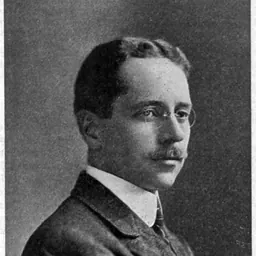


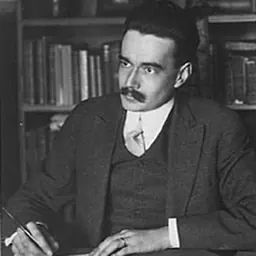
Contemporaries
People whose lives overlapped Edward Buxton Cristy's
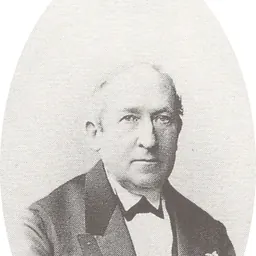
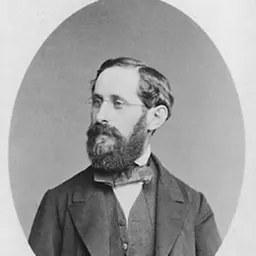


Frequently asked questions
Who was Edward Buxton Cristy?
american/New Mexican architect (1860–1934)
When was Edward Buxton Cristy born?
Edward Buxton Cristy was born on 2 November 1860.
When did Edward Buxton Cristy die?
Edward Buxton Cristy died on 20 February 1934.
What was Edward Buxton Cristy's occupation?
Edward Buxton Cristy was an architect.
Sources & further reading
· Wikipedia: Edward Buxton Cristy
· DBpedia: Edward Buxton Cristy
Cite this page
APA: Biography.guide. (2026). Edward Buxton Cristy. https://biography.guide/edward-buxton-cristy/
MLA: "Edward Buxton Cristy." Biography.guide, https://biography.guide/edward-buxton-cristy/.
Chicago: "Edward Buxton Cristy." Biography.guide. https://biography.guide/edward-buxton-cristy/.
Data last updated: 2026-09-20 · Spot an error? Report a correction.
Page generated 2026-09-27 05:22 UTC