
About Edward Burne-Jones
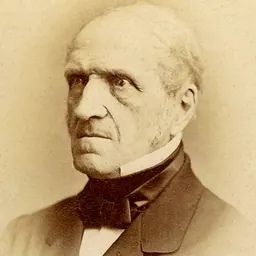
Lived 1833 – 1898 (aged 64). Edward Burne-Jones was a British painter, draftsperson, designer, illustrator, architectural drafter and visual artist.
Sir Edward Coley Burne-Jones, 1st Baronet (; 28 August 183317 June 1898), was an English painter and designer associated with the Pre-Raphaelite Brotherhood's style and subject matter.
Burne-Jones worked with William Morris as a founding partner in Morris, Marshall, Faulkner & Co in the design of decorative arts. His mother Elizabeth Jones (née Coley) died within six days of his birth, and Edward was raised by his father, and the family housekeeper, Ann Sampson, an obsessively affectionate but humourless, and unintellectual local girl. He attended Birmingham's King Edward VI grammar school in 1844 and the Birmingham School of Art from 1848 to 1852, before studying theology at Exeter College, Oxford. At Oxford, he became a friend of William Morris as a consequence of a mutual interest in poetry. The two Exeter undergraduates, together with a group of Jones's friends from Birmingham known as the Birmingham Set, formed a society, which they called "The Brotherhood". The members of the brotherhood read the works of John Ruskin and Tennyson, visited churches, and idealised aspects of the aesthetics and social structure of the Middle Ages.
Burne-Jones had intended to become a church minister, but under Rossetti's influence both he and Morris decided to become artists, and Burne-Jones left college before taking a degree to pursue a career in art. In February 1857, Rossetti wrote to William Bell Scott: quotation|Two young men, projectors of the Oxford and Cambridge Magazine, have recently come up to town from Oxford, and are now very intimate friends of mine. Their names are Morris and Jones. They have turned artists instead of taking up any other career to which the university generally leads, and both are men of real genius. Jones's designs are marvels of finish and imaginative detail, unequalled by anything unless perhaps Albert Dürer's finest works.
Burne-Jones's first sketch in oils dates from this same year, 1856, and during 1857 he made for Bradfield College the first of what was to be an immense series of cartoons for stained glass. In 1858 he decorated a cabinet with the Prioress's Tale from Geoffrey Chaucer's Canterbury Tales, his first direct illustration of the work of a poet whom he especially loved and who inspired him with endless subjects. Thus early, therefore, we see the artist busy in all the various fields in which he was to labour.
In 1861, William Morris founded the decorative arts firm of Morris, Marshall, Faulkner & Co. with Rossetti, Burne-Jones, Ford Madox Brown and Philip Webb as partners, together with Charles Faulkner and Peter Paul Marshall, the former of whom was a member of the Oxford Brotherhood, and the latter a friend of Brown and Rossetti. Stained glass windows in the Christ Church cathedral and other buildings in Oxford are by Morris & Co. with designs by Burne-Jones. Other windows are in St. Philip's Cathedral, Birmingham, Church of St Editha, Tamworth, Salisbury Cathedral, St Martin in the Bull Ring, Birmingham, Holy Trinity Church, Sloane Square, Chelsea, St Peter and St Paul parish church in Cromer, St Martin's Church in Brampton, Cumbria (the church designed by Philip Webb), St Michael's Church, Brighton, Trinity Church in Frome, All Saints, Jesus Lane, Cambridge, St Edmund Hall, St Anne's Church, Brown Edge, Staffordshire Moorlands, Kelvinside Hillhead Parish Church, Glasgow and St Edward the Confessor church at Cheddleton Staffordshire.
Stanmore Hall was the last major decorating commission executed by Morris & Co. before Morris's death in 1896. It was the most extensive commission undertaken by the firm, and included a series of tapestries based on the story of the Holy Grail for the dining room, with figures by Burne-Jones.
In 1891 Jones was elected a member of the Art Workers Guild.
Illustration Although known primarily as a painter, Burne-Jones was active as an illustrator, helping the Pre-Raphaelite aesthetic to enter mainstream awareness. He designed books for the Kelmscott Press between 1892 and 1898. His illustrations appeared in the following books, among others:
The Fairy Family by Archibald MacLaren (1857) The Rubaiyat of Omar Khayyam by William Morris (1872) The Earthly Paradise by William Morris (not completed) The Works of Geoffrey Chaucer by Geoffrey Chaucer (1896) Bible Gallery by Dalziel (1881)
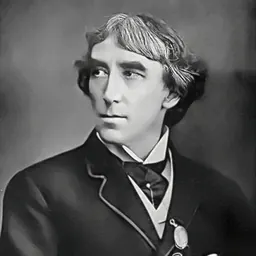
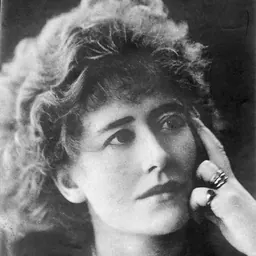
Design for the theatre In 1894, theatrical manager and actor Henry Irving commissioned Burne-Jones to design sets and costumes for the Lyceum Theatre production of King Arthur by J. Comyns Carr, who was Burne-Jones's patron and the director of the New Gallery as well as a playwright. The play starred Irving as King Arthur and Ellen Terry as Guinevere, and toured America following its London run. Burne-Jones accepted the commission with enthusiasm, but was disappointed with much of the final result. He wrote confidentially to his friend Helen Mary Gaskell (known as May), "The armour is good—they have taken pains with it ... Perceval looked the one romantic thing in it ... I hate the stage, don't tell—but I do."
Aesthetics
Burne-Jones's paintings were one strand in the evolving tapestry of Aestheticism from the 1860s through the 1880s, which considered that art should be valued as an object of beauty engendering a sensual response, rather than for the story or moral implicit in the subject matter. In many ways, this was antithetical to the ideals of Ruskin and the early Pre-Raphaelites. Burne-Jones's aim in art is best given in his own words, written to a friend:
I mean by a picture a beautiful, romantic dream of something that never was, never will be – in a light better than any light that ever shone – in a land no one can define or remember, only desire – and the forms divinely beautiful – and then I wake up, with the waking of Brynhild. His memorial service was held six days later, at Westminster Abbey. His ashes were interred in the churchyard at St Margaret's Church, Rottingdean, a place he knew through summer family holidays. In the winter following his death, a second exhibition of his works was held at the New Gallery, and an exhibition of his drawings at the Burlington Fine Arts Club. but remained unhappy about accepting the honour, which disgusted his socialist friend Morris and was scorned by his equally socialist wife Georgiana. Only his son Philip, who mixed with the set of the Prince of Wales and would inherit the title, truly wanted it. Burne-Jones was made an elected member of the Royal Academy of Science, Letters and Fine Arts of Belgium in 1897.
Following Burne-Jones's death, and at the intervention of the Prince of Wales, his memorial service was held at Westminster Abbey. It was the first time an artist had been so honoured.
Influence
Burne-Jones exerted a considerable influence on French painting. He was influential among French symbolist painters, from 1889. His work inspired poetry by Algernon Charles Swinburne – Swinburne's 1866 Poems & Ballads is dedicated to Burne-Jones.
Three of Burne-Jones's studio assistants, John Melhuish Strudwick, T. M. Rooke and Charles Fairfax Murray, went on to successful painting careers. Murray later became an important collector and respected art dealer. Between 1903 and 1907 he sold a great many works by Burne-Jones and the Pre-Raphaelites to the Birmingham Museum and Art Gallery, at far below their market worth. Birmingham Museum and Art Gallery now has the largest collection of works by Burne-Jones in the world, including the massive watercolour Star of Bethlehem, commissioned for the Gallery in 1897. The paintings are believed by some to have influenced the young J. R. R. Tolkien, then growing up in Birmingham.
Burne-Jones was also a very strong influence on the Birmingham Group of artists, from the 1890s onwards.
Neglect and rediscovery On 16 June 1933, Prime Minister Stanley Baldwin, a nephew of Burne-Jones, officially opened the centenary exhibition featuring Burne-Jones's drawings and paintings at the Tate Gallery in London. In his opening speech at the exhibition, Baldwin expressed what the art of Burne-Jones stood for:
But, in fact, long before 1933, Burne-Jones had fallen out of fashion in the art world, much of which soon preferred the major trends in Modern art, and the exhibit marking the 100th anniversary of his birth was a sad affair, poorly attended. It was not until the mid-1970s that his work began to be re-assessed and once again acclaimed, following the publication of Martin Harrison and Bill Waters's 1973 monograph and reappraisal 'Burne-Jones'. In 1975, author Penelope Fitzgerald published a biography of Burne-Jones, her first book. A major exhibit in 1989 at the Barbican Art Gallery, London (in book form as: John Christian, The Last Romantics, 1989), traced Burne-Jones's influence on the subsequent generation of artists, and another at Tate Britain in 1997 explored the links between British Aestheticism and Symbolism.
Gallery Stained and painted glass
Drawings
Paintings Early works
Pygmalion (first series)
Pygmalion and the Image (second series)
The Grosvenor Gallery years
The Legend of Briar Rose (second series)
Later works
Decorative arts
Theatre
Photographs
Don’t just read it —
keep it.
Full-length biographies made to live with: read them, listen on the way to work, watch them tonight.
- E-book
- Audio
- Video
Instant download · yours to keep · every purchase keeps this site free
Important facts
more
Burne Jones, Burne-Jones, Edward Burne JonesFamily & relationships
People in Edward Burne-Jones's life
Named in this biography and alive at the same time






Related people
Same field, nearest in time

Contemporaries
People whose lives overlapped Edward Burne-Jones's

Frequently asked questions
Who was Edward Burne-Jones?
British Pre-Raphaelite painter (1833-1898)
When was Edward Burne-Jones born?
Edward Burne-Jones was born on 28 August 1833 in Birmingham.
When did Edward Burne-Jones die?
Edward Burne-Jones died on 17 June 1898 in London.
What was Edward Burne-Jones's occupation?
Edward Burne-Jones was a painter, draftsperson, designer, illustrator, architectural drafter and visual artist.
What nationality was Edward Burne-Jones?
Edward Burne-Jones was British.
Sources & further reading
· Wikipedia: Edward Burne-Jones
Cite this page
APA: Biography.guide. (2026). Edward Burne-Jones. https://biography.guide/edward-burne-jones/
MLA: "Edward Burne-Jones." Biography.guide, https://biography.guide/edward-burne-jones/.
Chicago: "Edward Burne-Jones." Biography.guide. https://biography.guide/edward-burne-jones/.
Data last updated: 2026-09-20 · Spot an error? Report a correction.
Page generated 2026-09-27 05:30 UTC