
About Edward Burn
Lived 1762 – 1837 (aged 74). Edward Burn was a British anglican priest.
Edward Burn (1762–1837) was an English cleric, known as a Calvinist Methodist preacher and polemical writer.
Life Born on 29 November 1762, Burn was educated for the ministry at Trevecca College. He was ordained orders and obtained a curacy in Birmingham, with John Riland, a Wesleyan and first incumbent at St Mary's Chapel; built 1772–4, it was a new, octagonal evangelical foundation, with Mary Weaman as patron. With Riland, Burn reprinted some religious texts. Burn also began to preach in venues used by dissenters. In 1786 John Wesley visited St Mary's and enjoyed a sermon, by one of Burn and Riland.
Burn then entered St Edmund Hall, Oxford, and graduated B.A. on 20 February 1790, M.A. on 22 June 1791. He returned to Birmingham to take over at St Mary's.
Opponent of Priestley Burn first published in theological controversy with Joseph Priestley, a fellow Birmingham preacher with whom he was acquainted; he received the thanks of Beilby Porteus. The nickname "Gunpowder Priestley" came from a phrase in it. Edmund Burke picked up on the metaphor, which in fact could be found in other places in Priestley's writings.
Burn became identified with a group of local "Church-and-King" clergy in Birmingham, including George Croft and Spencer Madan, and opponents of Priestley, if not the most extreme. On Priestley's account, he met both Burn and Madan through committee work, and was on reasonable terms with them; even on visiting terms with Burn. A subsequent pamphlet of Burn refers to the Birmingham riots of 14 July 1791, its aftermath, and Priestley's Appeal to the Public of 1792. Burn's later judgement (1820, in conversation with Francis William Pitt Greenwood) was that Priestley had handled him roughly; but in October 1825 he expressed public regret at a dinner for his own asperity.
Death Burn died at Birmingham 20 May 1837; at the time of his death he held, with St Mary's, the rectory of Smethcott in Shropshire. He was followed to the grave by ministers of all persuasions. He married and left children. Priestley's successor at the New Meeting House, in Letters to the British Nation, part iv. , and by Priestley in Appeal, part ii, 1792. Pastoral Hints or the Importance of a Religious Education, 1801. Serious Hints &c. to the Clergy at this momentous crisis, Birmingham, 1798, (sermon on Is. i. 9, before the university of Oxford, 4 February 1798).
Don’t just read it —
keep it.
Full-length biographies made to live with: read them, listen on the way to work, watch them tonight.
- E-book
- Audio
- Video
Instant download · yours to keep · every purchase keeps this site free
Important facts
People in Edward Burn's life
Named in this biography and alive at the same time
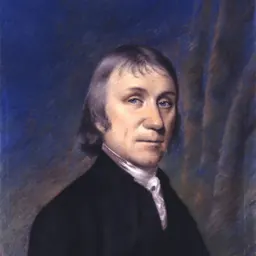
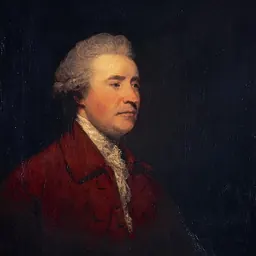
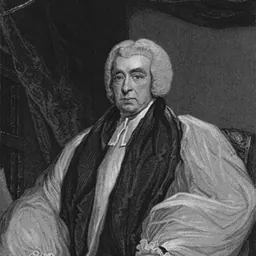
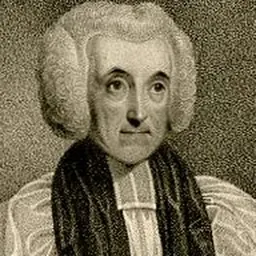



Related people
Same field, nearest in time

Contemporaries
People whose lives overlapped Edward Burn's





Frequently asked questions
Who was Edward Burn?
British priest
When was Edward Burn born?
Edward Burn was born on 29 November 1762.
When did Edward Burn die?
Edward Burn died on 20 May 1837.
What was Edward Burn's occupation?
Edward Burn was an anglican priest.
What nationality was Edward Burn?
Edward Burn was British.
Sources & further reading
· DBpedia: Edward Burn (cleric)
Cite this page
APA: Biography.guide. (2026). Edward Burn. https://biography.guide/edward-burn/
MLA: "Edward Burn." Biography.guide, https://biography.guide/edward-burn/.
Chicago: "Edward Burn." Biography.guide. https://biography.guide/edward-burn/.
Data last updated: 2026-09-20 · Spot an error? Report a correction.
Page generated 2026-09-27 05:18 UTC