
About Edward Bullard
Lived 1907 – 1980 (aged 72). Edward Bullard was a British physicist, geologist and geophysicist, known for Dynamo theory.
Early life Bullard was born into a wealthy brewing family in Norwich, England. His maternal grandfather was Sir Frank Crisp and his paternal grandfather was Sir Harry Bullard, who had been an MP for Norwich. He was educated at Norwich School and later studied Natural Sciences at Clare College, Cambridge. He studied under Ernest Rutherford at the Cavendish Laboratory of University of Cambridge and in the 1930s he received his PhD degree as a nuclear physicist.
Bullard found poor career prospects for nuclear physicists during the Great Slump, so in 1931 he switched fields to take a job as demonstrator in the department of geodesy and geophysics at Cambridge. The department had been founded in 1921 when it consisted of only one person, Sir Gerald Lenox-Conyngham. By 1931 Lenox-Conyngham had persuaded the university that he needed additional staff, so had been given funds for a junior post. Bullard was appointed to this position on the recommendation of Rutherford. At the same time Harold Jeffreys was appointed reader in geophysics. Over the next eight years, these three researchers made numerous advances in geophysics.
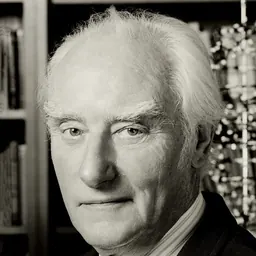
During World War II, he was an experimental officer at HMS Vernon of the Admiralty Mining Establishment with Francis Crick, Thomas Gaskell and Robert Boyd, working on the development of degaussing techniques to protect shipping from magnetic mines.
Career Bullard held a chair at the University of Toronto from 1948 to 1950 and was head of the National Physical Laboratory between 1950 and 1955. He was knighted in the 1953 Coronation Honours List. He returned to Cambridge in 1955, first as an assistant in research, then as a reader and finally to a chair created for him in 1964. He was a founding fellow of Churchill College, Cambridge.
Bullard became one of the most important geophysicists of his day. He also did studies of the ocean floor, even though he suffered from seasickness and could rarely take scientific trips on the ocean. He was important to dynamo theory, hence his most important work concerned the source of the Earth's magnetic field. He was often frustrated by efforts to increase geophysical interest at the University of Cambridge. In his career he won the Hughes Medal, the Vetlesen Prize and the Gold Medal of the Royal Astronomical Society. He was elected to the American Academy of Arts and Sciences in 1954. In 1965, he was awarded the Alexander Agassiz Medal from the National Academy of Sciences, of which he was a member, for his significant investigations of the earth from its surface to its core. He was elected to the American Philosophical Society in 1969. but this work published in French in a francophone journal of low international influence had remained virtually unknown.
After retiring from Cambridge in 1974 he settled to a position at the University of California, San Diego. Bullard died in La Jolla, California, in 1980. His papers are held by the Churchill Archives Centre.
Don’t just read it —
keep it.
Full-length biographies made to live with: read them, listen on the way to work, watch them tonight.
- E-book
- Audio
- Video
Instant download · yours to keep · every purchase keeps this site free
Important facts
People in Edward Bullard's life
Named in this biography and alive at the same time



Related people
Same field, nearest in time




Contemporaries
People whose lives overlapped Edward Bullard's


Frequently asked questions
Who was Edward Bullard?
British geophysicist (1907–1980)
When was Edward Bullard born?
Edward Bullard was born on 21 September 1907 in Norwich.
When did Edward Bullard die?
Edward Bullard died on 3 April 1980 in La Jolla.
What was Edward Bullard's occupation?
Edward Bullard was a physicist, geologist and geophysicist.
What was Edward Bullard known for?
Edward Bullard was known for Dynamo theory.
What nationality was Edward Bullard?
Edward Bullard was British.
Sources & further reading
Cite this page
APA: Biography.guide. (2026). Edward Bullard. https://biography.guide/edward-bullard/
MLA: "Edward Bullard." Biography.guide, https://biography.guide/edward-bullard/.
Chicago: "Edward Bullard." Biography.guide. https://biography.guide/edward-bullard/.
Data last updated: 2026-09-20 · Spot an error? Report a correction.
Page generated 2026-09-27 05:29 UTC