
About Edward Bancroft
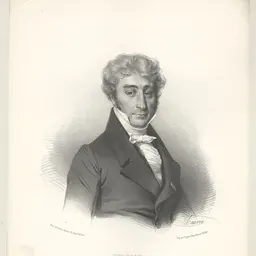
Lived 1745 – 1821 (aged 76). Edward Bancroft was an American physician, spy, explorer, naturalist, chemist and double agent.
Edward Bartholomew Bancroft ( – September 7, 1821) was an American physician and chemist who became a double agent, spying for both the United States and Great Britain while serving as secretary to the American commission in Paris during the American Revolutionary War.
Early life Bancroft was born on January 20, 1745, in Westfield, Massachusetts. His father died of an epileptic seizure when Bancroft was two years old, and his mother remarried five years later to David Bull of Connecticut. Although he left South America in 1766, he published An Essay on the Natural History of Guiana, in South America in London 1769, where with the encouragement of Benjamin Franklin, he embarked on a career as a man of letters. Bancroft later wrote extensively about the chemistry of dyes, based in part on his work in Dutch Guiana, contrasting non-European dyeing techniques unfavorably with the learned "philosophical chemistry" of natural philosophers like himself.
In London, Bancroft's Natural History of Guiana (1769) attracted the attention of Paul Wentworth, New Hampshire's colonial agent in London, who hired Bancroft to survey Wentworth's plantation in Surinam and make recommendations for more efficient operation. Bancroft spent two months there before returning to London. While in Surinam, Bancroft wrote a three-volume, semi-autobiographical novel, The History of Charles Wentworth, Esq. The epistolary novel, which follows the life of a plantation owner (with the same surname as his friend and employer), imitates Voltaire's Candide and reflects Bancroft's deistic beliefs, ridiculing passages in the Bible and criticizing Christianity for its "detestable spirit of intolerance and persecution."
In 1771 Edward married the twenty-two year old Penelope Fellows, daughter of a prominent Catholic family. A son, Edward, was born in 1772; they eventually had six more children. Bancroft was elected a fellow of the Royal Society in 1773 as "a gentleman versed in natural history and Chymistry, and author of the natural history of Guiana". In the summer of 1773, Bancroft joined the Medical Society of London, though he did not receive his M.D. from the University of Aberdeen until 1774.
Spying for the Americans in London When the Committee of Secret Correspondence sent Silas Deane (Bancroft's former teacher) to France in 1776, Franklin instructed Deane to contact Bancroft, believing he would be a source of useful information. Deane arrived in France on June 7, 1776; the next day he wrote to Bancroft in London, asking him to come to Paris. In the letter, Deane said they would discuss procuring goods for trading with the Indians, and he enclosed thirty pounds (a generous amount) for travel expenses. Deane did not mention political issues in case the letter was intercepted. Bancroft met with Deane on July 8 and learned that Deane's purpose in France was to win French aid for the Americans against Britain. While Bancroft declined the invitation to attend negotiations, he did serve as Deane's assistant and interpreter. Deane's negotiations resulted in France sending some supplies to the Americans.
Deane told Bancroft that American leaders hoped to embroil Britain in a war against other foes (specifically, an alliance of France and Prussia), which they hoped would distract Britain. Though Deane and other Americans thought France would form an alliance, the ploy came to nothing. Nevertheless, it greatly troubled Bancroft. On July 26, 1776, Bancroft returned to London, assuring Deane that he would spy for the colonies. In London, Bancroft sent copies of recent newspapers and pamphlets on current affairs and long letters to Deane to keep the Americans informed about the thinking of the British government and people. Bancroft arranged to have his dispatches smuggled into France in French diplomatic pouches to avoid having them opened by the London post office. In December 1776, the arsonist John the Painter set a fire near the Portsmouth dock and then visited Bancroft. Bancroft refused to give him any assistance.
Spying for the British Though Bancroft had worked for Franklin and Deane, he was unenthusiastic about American independence, and the possibility of a French war against Britain alarmed him. Despite his promise to Deane, he had reservations about doing anything that might promote a rift between Britain and the American colonies.
Soon after this, Franklin arrived to take over the negotiations with France. Bancroft was ordered to associate himself with Franklin. Fortuitously, Franklin appointed Bancroft as secretary to the American Commission in Paris. On March 26, 1777, Bancroft departed London for Paris, where his wife and children joined him two months later. For his spying, the British promised Bancroft a pension of £200. (This amount was later increased to £500 and then £1,000.) In the years since Boyd's articles appeared, his thesis has been largely dismissed as "ungrounded conjectures"; nevertheless, the theory has been widely publicized in a popular American textbook: James West Davidson and Mark Hamilton Lytle, After the Fact: The Art of Historical Detection (Boston: McGraw Hill, 1982 [sixth edition, 2010]).
Life after the Revolutionary War Following the Revolutionary War, Bancroft obtained patents to import black oak into Britain and France to be turned into a yellow dye called quercitron; and he convinced John Paul Jones to invest a large sum in the business. In 1789 Jones accused Bancroft of fraud and withholding money owed him. Gouverneur Morris tried to mediate the dispute, and Bancroft did make small payments to Jones; but when Jones died in July 1792, Bancroft apparently still owed him £1,800.
In 1794, Bancroft published Experimental Researches Concerning the Philosophy of Permanent Colors, a book he updated in 1814. He was also elected a Foreign Honorary Member of the American Academy of Arts and Sciences in 1797. Bancroft's wife, Penelope, died on May 10, 1784, at home in London while Bancroft was on a trip to Philadelphia. Bancroft himself died on September 7, 1821, at Addington Place in Margate. Bancroft's activity as a double agent was not revealed until 1891, when British diplomatic papers were released to the public.
Don’t just read it —
keep it.
Full-length biographies made to live with: read them, listen on the way to work, watch them tonight.
- E-book
- Audio
- Video
Instant download · yours to keep · every purchase keeps this site free
Important facts
Family & relationships
People in Edward Bancroft's life
Named in this biography and alive at the same time
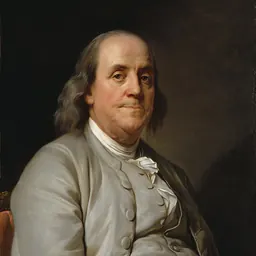
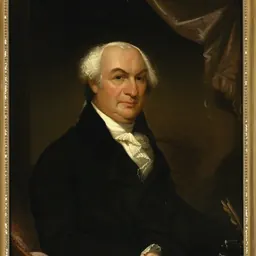


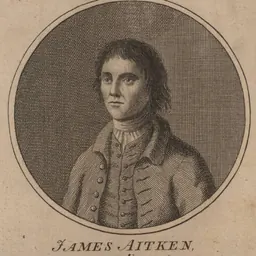

Related people
Same field, nearest in time


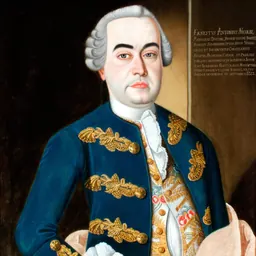
Contemporaries
People whose lives overlapped Edward Bancroft's





Frequently asked questions
Who was Edward Bancroft?
British naturalist and chemist (1745-1821) (1745 in New-Style dating)
When was Edward Bancroft born?
Edward Bancroft was born on 20 January 1745 in Westfield.
When did Edward Bancroft die?
Edward Bancroft died on 8 September 1821 in Margate.
What was Edward Bancroft's occupation?
Edward Bancroft was a physician, spy, explorer, naturalist, chemist and double agent.
What nationality was Edward Bancroft?
Edward Bancroft was American.
Sources & further reading
Cite this page
APA: Biography.guide. (2026). Edward Bancroft. https://biography.guide/edward-bancroft/
MLA: "Edward Bancroft." Biography.guide, https://biography.guide/edward-bancroft/.
Chicago: "Edward Bancroft." Biography.guide. https://biography.guide/edward-bancroft/.
Data last updated: 2026-09-20 · Spot an error? Report a correction.
Page generated 2026-09-27 05:23 UTC