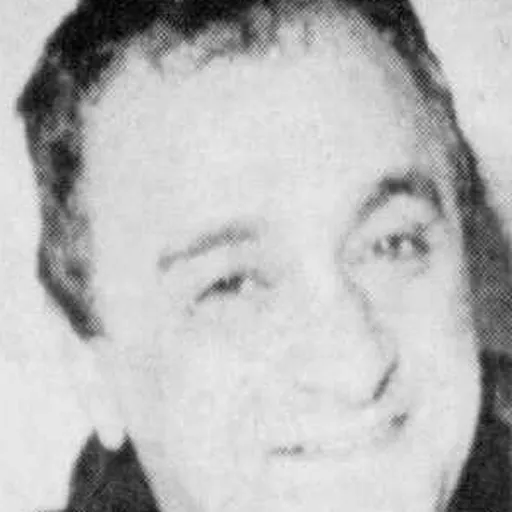
About Edward A. Hanna
Lived 1922 – 2009 (aged 86). Edward A. Hanna was an American military personnel and politician.
Edward Arnold Hanna (April 7, 1922 – March 13, 2009) he once described Utica as "a stinking, rotten town" instead, a State Council of Parks subcommittee said Hanna was unfit to serve and asked the governor to remove him. Hanna continued to escalate, eventually calling for Robert Moses to be dismissed as chairman of the State Council of Parks and for the Central New York State Parks Commission to be replaced. Hanna's fight was covered by The New York Times. The state and local Democratic party saw Hanna's actions as a black eye, putting him out of their good graces: he was not reappointed as a parks commissioner in 1956.
Local Democratic leadership attempted to convince Hanna to run for Congress in 1956, setting him up to lose against the Republican incumbent William R. Williams: he instead ran for the New York State Assembly, where he lost in the Democratic primary.
Mayorship from 1974 to 1978
In 1973, Hanna ran as an independent in the race for Mayor of Utica and won a narrow victory against Republican incumbent Michael Caruso and a Democratic challenger. In 1976, he reduced the Department of Public Works from 240 to 70 employees and introduced legislation to privatize the remaining employees. This was met with complaints from the public about insufficient snow removal and street repair, as well as legal action from the Teamsters.
Hanna removed the door from the mayor's office as a show of openness (although it was replaced a few months later) and invited Uticans to visit City Hall and inspect city files and correspondence at will. He had a sign hung in City Hall that said "This City Government Belongs to the People" and told staff to answer the phone, "People's Government". Hanna later threatened to sue the papers. The ban was lifted and reinstated at times and was sometimes disregarded by city officials such as the comptroller and clerk, who were more independent of Hanna. At one time he telephoned the president of a company who stood in Hanna's way to call him "a pimple on my fanny". Hanna fought with most other groups he saw as uncooperative as well, including the League of Women Voters and a community action group from the impoverished Corn Hill neighborhood. Utica's two Gannett papers returned Hanna's venom in kind: the editor of The Daily Press called him "some kind of emperor [...] allowing the peasants to enjoy the largesse of the sovereign". He let a teen rock band practice in City Hall's underground Civil Defense shelter, then wrote them a check for $1,000 when their instruments were stolen.
Hanna announced his candidacy for the 1976 United States Senate election in New York, stating that he could "do nothing more" for Utica, but he withdrew several weeks later.
One of Hanna's first acts was to order city policemen to salute citizens on the street, which they refused.
In 1976, Hanna brought a locksmith to open Rotundo's office, saying that Rotundo was refusing to provide Hanna and city counsel with certain documents. Rotundo ordered Hanna and the locksmith arrested, although a city judge intervened on Hanna's behalf. Hanna suspended Rotundo again, along with four other officers involved in the arrest. Hanna also declared a state of emergency and asked for assistance from the New York National Guard. Rotundo maintained that Hanna was exceeding his authority in suspending him and his officers, and that the documents requested were confidential and could only be released under court order. Hanna appointed a new Commissioner of Public Safety that night: the chief was no more receptive to him than Hanna, and the Commissioner claimed that the chief and his officers removed documents through a window while he was there. Hanna said he received a threatening phone call from an officer later that night. Two days later, a State Supreme Court justice ordered that the chief and the suspended officers be reinstated, and ordered Hanna to return any documents he may have obtained from the chief's office.
Public projects
Hanna Park, outside Utica City Hall, was built during his first term and named for him later. A giant sundial (now near NY 5S) A replica Liberty Bell (near NY 5S) A large metal sculpture of a United States flag (near NY 5S)
Hanna reopened a number of closed parks. In the 1996 budget, Hanna zeroed out funding for the Utica Public Library and Utica Zoo, although the city council restored most of the funding. Hanna never admitted wrongdoing, but the city approved a $250,000 settlement, and Hanna contributed $75,000 to legal expenses.
Legacy Hanna's election in 1974 was part of a national decline in boss-led political machines, although Elefante's power had been in decline well before Hanna was elected. The New York Times compared him to Maine governor James B. Longley and California governor Jerry Brown, other independent Democrats who came into their roles on a wave of post-Watergate dissatisfaction with the political establishment. During the first presidency of Donald Trump, some Uticans drew parallels between Trump and Hanna.
Hanna's impact on Utica's government was mixed. He achieved an 8 percent property tax cut in his first budget, another tax cut the second year, and avoided any tax increases while he was in office.
Don’t just read it —
keep it.
Full-length biographies made to live with: read them, listen on the way to work, watch them tonight.
- E-book
- Audio
- Video
Instant download · yours to keep · every purchase keeps this site free
Important facts
People in Edward A. Hanna's life
Named in this biography and alive at the same time




Related people
Same field, nearest in time



Contemporaries
People whose lives overlapped Edward A. Hanna's

Frequently asked questions
Who was Edward A. Hanna?
mayor of Utica, New York
When was Edward A. Hanna born?
Edward A. Hanna was born on 7 April 1922.
When did Edward A. Hanna die?
Edward A. Hanna died on 13 March 2009.
What was Edward A. Hanna's occupation?
Edward A. Hanna was a military personnel and politician.
What nationality was Edward A. Hanna?
Edward A. Hanna was American.
Sources & further reading
Cite this page
APA: Biography.guide. (2026). Edward A. Hanna. https://biography.guide/edward-a-hanna/
MLA: "Edward A. Hanna." Biography.guide, https://biography.guide/edward-a-hanna/.
Chicago: "Edward A. Hanna." Biography.guide. https://biography.guide/edward-a-hanna/.
Data last updated: 2026-09-23 · Spot an error? Report a correction.
Portrait: Wikimedia Commons · author & licence
Page generated 2026-09-27 05:06 UTC