
About Eduard Mörike
Lived 1804 – 1875 (aged 70). Eduard Mörike was a poet, writer, translator, parson, university teacher and draftsperson.
Eduard Friedrich Mörike (; 8 September 18044 June 1875) After the death of his father, in 1817, he went to live with his uncle Eberhard Friedrich von Georgii, president of Württemberg Supreme Tribunal in Stuttgart, who intended his nephew to become a clergyman. Seminary to study theology and classics, the latter something that was to become a major influence on his writing. He met the kindred spirit and poetically gifted Ludwig Amandus Bauer (1803–1846). In 1825, Friedrich Theodor Vischer and David Friedrich Strauss joined. dating from 1831. Their shared imaginations gave rise to the Orplid myth, which they later developed into a literary work. He also wrote a somewhat fantastic Idylle vom Bodensee, oder Fischer Martin und die Glockendiebe, the fairy tale Das Stuttgarter Hutzelmännlein (1855), and published a collection of hymns, odes, elegies, and idylls of the Greeks and Romans, entitled Klassische Blumenlese (1840).
His work was greatly praised by the philosopher Ludwig Wittgenstein who recommended him to Bertrand Russell as really a great poet and his poems are among the best things we have...the beauty of Mörike's work is very closely related to Goethe's.
Musical settings Many of his lyrics were set to music by Hugo Wolf, Ludwig Hetsch, Didia Saint Georges, Elise Schmezer, Julie Waldburg-Wurzach, Pauline Volkstein, and Fritz Kauffmann. Ignaz Lachner set to music his opera Die Regenbrüder. Hugo Distler composed 48 settings of Mörike's poetry in his Mörike-Chorliederbuch. Many of his poems became established folksongs.
As an artist
Mörike was also known to produce drawings in his time, though it is not the subject of much discussion. While staying in the town of Wermutshausen in the Autumn of 1843, Mörike produced a drawing of the Petruskirche, a small church built in the early 1800s.
Don’t just read it —
keep it.
Full-length biographies made to live with: read them, listen on the way to work, watch them tonight.
- E-book
- Audio
- Video
Instant download · yours to keep · every purchase keeps this site free
Important facts
People in Eduard Mörike's life
Named in this biography and alive at the same time
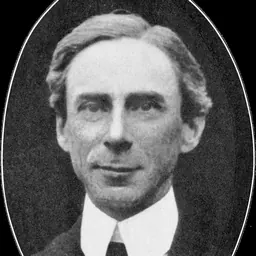
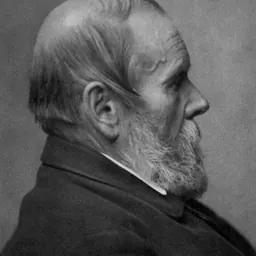
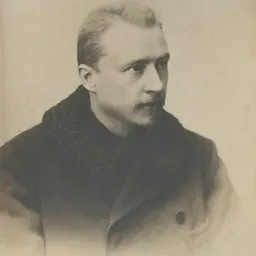

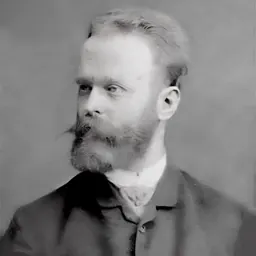



Related people
Same field, nearest in time

Contemporaries
People whose lives overlapped Eduard Mörike's





Frequently asked questions
Who was Eduard Mörike?
German poet (1804–1875)
When was Eduard Mörike born?
Eduard Mörike was born on 8 September 1804 in Ludwigsburg.
When did Eduard Mörike die?
Eduard Mörike died on 4 June 1875 in Stuttgart.
What was Eduard Mörike's occupation?
Eduard Mörike was a poet, writer, translator, parson, university teacher and draftsperson.
What nationality was Eduard Mörike?
Eduard Mörike's recorded nationality: Kingdom of Württemberg.
Sources & further reading
Cite this page
APA: Biography.guide. (2026). Eduard Mörike. https://biography.guide/eduard-morike/
MLA: "Eduard Mörike." Biography.guide, https://biography.guide/eduard-morike/.
Chicago: "Eduard Mörike." Biography.guide. https://biography.guide/eduard-morike/.
Data last updated: 2026-09-20 · Spot an error? Report a correction.
Page generated 2026-09-27 05:29 UTC