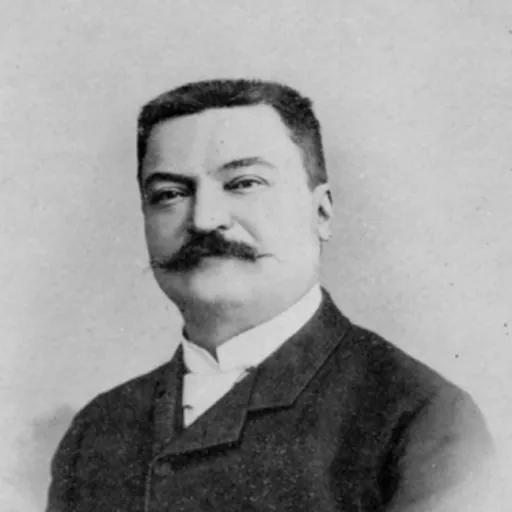
About Édouard Lucas
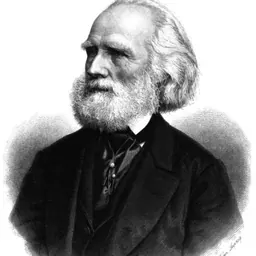
Lived 1842 – 1891 (aged 49). Édouard Lucas was a French mathematician and university teacher, known for Genaille–Lucas rulers, Lucas number and Lucas primality test.
François Édouard Anatole Lucas (; 4 April 1842 – 3 October 1891) was a French mathematician. Lucas is known for his study of the Fibonacci sequence and the Tower of Hanoi. The related Lucas sequences and Lucas numbers are named after him.
Biography Lucas was born in Amiens and educated at the École Normale Supérieure. He worked in the Paris Observatory and later became a professor of mathematics at the Lycée Saint Louis and the Lycée Charlemagne in Paris. More recently, elementary proofs have been published.
He devised methods for testing the primality of numbers. In 1857, at age 15, Lucas began testing the primality of 2127 − 1, a number with 39 decimal digits, by hand, using Lucas sequences. In 1876, after 19 years of testing, he finally proved that 2127 − 1 is prime; it remained the largest known Mersenne prime for three-quarters of a century, and remains the largest prime number proved by hand. Later Derrick Henry Lehmer refined Lucas's primality tests and obtained the Lucas–Lehmer primality test.
He worked on the development of the umbral calculus.
Lucas is credited as the first to publish the Kempner function.
Lucas was also interested in recreational mathematics. He found an elegant binary solution to the Baguenaudier puzzle. He also invented the Tower of Hanoi puzzle in 1883, which he marketed under the nickname N. Claus de Siam, an anagram of Lucas d'Amiens, and published for the first time a description of the dots and boxes game in 1889.
At the banquet of the annual congress of the Association française pour l'avancement des sciences, a waiter dropped some crockery, and a piece of broken plate cut Lucas on the cheek. He died a few days later of a severe skin inflammation, probably caused by sepsis, at 49 years old.
Works Recherches sur plusieurs ouvrages de Léonard de Pise et sur diverses questions d’arithmétique supérieure (1877) Récréations scientifiques (1880) Théorie des nombres, Tome Premier (1891) Récréations mathématiques (1894) L'arithmétique amusante (1895)
Don’t just read it —
keep it.
Full-length biographies made to live with: read them, listen on the way to work, watch them tonight.
- E-book
- Audio
- Video
Instant download · yours to keep · every purchase keeps this site free
Important facts
more
Lucas-Lehmer test, Ménage problem, Tower of Hanoimore
Francois Edouard Lucas, F Edouard Lucas, Francois-Edouard-Anatole Lucas, Edouard LucasRelated people
Same field, nearest in time

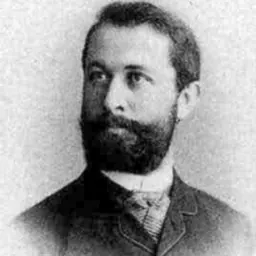

Contemporaries
People whose lives overlapped Édouard Lucas's

Frequently asked questions
Who was Édouard Lucas?
French mathematician (1842–1891)
When was Édouard Lucas born?
Édouard Lucas was born on 4 April 1842 in Amiens.
When did Édouard Lucas die?
Édouard Lucas died on 3 October 1891 in Paris.
What was Édouard Lucas's occupation?
Édouard Lucas was a mathematician and university teacher.
What was Édouard Lucas known for?
Édouard Lucas was known for Genaille–Lucas rulers, Lucas number, Lucas primality test, Lucas prime, Lucas sequence and Lucas's theorem.
What nationality was Édouard Lucas?
Édouard Lucas was French.
Sources & further reading
Cite this page
APA: Biography.guide. (2026). Édouard Lucas. https://biography.guide/edouard-lucas/
MLA: "Édouard Lucas." Biography.guide, https://biography.guide/edouard-lucas/.
Chicago: "Édouard Lucas." Biography.guide. https://biography.guide/edouard-lucas/.
Data last updated: 2026-09-23 · Spot an error? Report a correction.
Portrait: Wikimedia Commons · author & licence
Page generated 2026-09-27 05:04 UTC