
Edmund Matejko
Polish insurgent and teacher, older brother of Jan Matejko
About Edmund Matejko
Lived 1829 – 1907 (aged 77).
Edmund Marcin Matejko, also known as Zygmunt Matejko (12 November 1829 – 2 July 1907), was a Polish insurgent, agronomist and teacher. He was participant in the Hungarian Revolution of 1848 and the January Uprising, tenant of landed estates (including Bieńczyce), and teacher at an agricultural school in Czernichów. He was the older brother of the painter Jan Matejko and the younger brother of the librarian and Slavic historian .
He was a graduate of the St. Anna's High School and studied at the Jagiellonian University for several years. During the Spring of Nations, he was involved in conspiratorial activities and, fearing arrest, moved to Hungary, where he took part in battles against the Austrian army. After their conclusion, he returned to Galicia, where he was arrested but managed to escape and go into exile – first to Greater Poland, then to France. He returned to Polish lands in the late 1850s and participated in the January Uprising. After its conclusion, he focused on managing landed estates.
Biography
Origins and youth Edmund Matejko was born on 12 November 1829 in Kraków. He was the second child of Franciszek Ksawery Matejko (1793–1860), a Czech immigrant from the Hradec Králové area, and his wife Joanna Rosberg (1802–1845), the daughter of a German saddler who had settled in Kraków. Edmund was educated at the St. Anna's High School, from which he graduated with a high school diploma. In 1845, he began his studies at the Jagiellonian University, initially studying philosophy before enrolling in the Faculty of Law.
Spring of Nations Edmund Matejko did not complete his studies in Kraków due to his involvement in political events. In 1848, during the Spring of Nations, he became embroiled in a conspiracy, most likely aimed at freeing recruits taken into the Austrian army. Threatened with arrest, he left Kraków with his younger brother Zygmunt and went to Hungary at the end of that year The Matejko brothers joined the unit of Hipolit Kuczyński, initially part of the German legion stationed in Dolný Kubín, under the command of Major Ármin Görgey. As the unit grew in size, it became an independent Polish legion. The Hungarian commander, operating in the regions of the Árva and Turóc counties, received orders from Józef Wysocki to send this unit to him to be incorporated into the Polish Legion. However, he delayed the execution of the order due to the threat of a Russian attack. After the defeat at Martin, the surviving Poles joined Wysocki's unit.
During the campaign, the brothers fought in the battles of Bánffyhunyad, over the Váh river, and at Martin, where Zygmunt died in the spring of 1849. where he joined the units of Józef Bem. Serving in the 2nd Battalion of the Transylvanian Legion, he earned the rank of lieutenant. After the failure of the Hungarian Revolution, he tried to return to Galicia but was captured by the Austrians while attempting to cross into those territories Sent to a penal company at the Komárno fortress, he escaped from the prisoner transport near Mogilany. He hid for a time in Klecza Górna, and then left Galicia, traveling to Greater Poland. He found employment on the estate of Dezydery Chłapowski in Turew but, harassed by the Prussian police, he decided to leave Polish lands.
Emigration and return to the country
Matejko emigrated to France, where he first completed his studies at a Polish school in Montparnasse and later graduated with distinction from the agricultural school in Orly near Paris. He maintained correspondence with his family. Fearing arrest (due to his involvement in the attempted rescue of recruits), he began using the name and documents of his deceased brother. This led to later biographical accounts confusing the two.
After the insurrection began in the Russian partition, he joined the unit of Colonel and Major , both veterans of the Hungarian campaigns, in February 1863. He achieved the rank of captain and commanded a company of riflemen. After Czechowski's unit suffered defeat on March 20, he returned to Kraków. They joined the unit of . He fought at Krzykawka, where he witnessed the death of Francesco Nullo. Following the defeat, he returned to Kraków on May 7, where he was arrested for his involvement in the skirmish at Szklary and imprisoned at the Wawel Castle, then part of the Austrian fortress. He was likely released in March 1864.
Years after the uprising On 1 April 1864, Edmund Matejko took a position as a teacher of animal husbandry and agricultural administration at the agricultural school in Czernichów, where he taught for a year before resigning. Matejko moved to Kraków, where he spent the remainder of his life. He died on 2 July 1907 and was buried in Rakowice Cemetery. According to , the painter's secretary, Edmund and their eldest sibling, Franciszek, taught Jan to read. After removing his younger brother from St. Barbara's School, where Jan struggled, Edmund successfully prepared him for the entrance exam to St. Anne's High School during the summer of 1848. Letters from Edmund during his time abroad, describing Paris and its art galleries, reportedly inspired the young artist's desire to visit the city. In the spring of 1864, when Edmund was imprisoned in Wawel Castle, Jan intervened to secure better conditions for him, achieving success. In the summer of 1871, the brothers visited their sibling Franciszek, who was in a mental health facility in Vienna. However, their relationship was not always cordial. In November of the same year, when Jan was purchasing a house on Floriańska Street from his siblings, Edmund resisted and negotiated grudgingly, making snide remarks toward his brother. This did not sever their relationship; in 1876, when Jan purchased an estate in Krzesławice, its proximity to Edmund's leased land in Bieńczyce influenced the decision. Edmund and his family were by Jan's side during his final moments.
According to Gorzkowski, Jan Matejko provided significant financial support to Edmund, including monthly allowances, covering his debts (notably in 1886 and 1892), and even redeeming a promissory note despite facing his financial difficulties. Edmund also reportedly raised one of Jan's sons.
Edmund left behind memoirs and demonstrated some artistic talent. Later, he posed for his brother as Jan Žižka in Battle of Grunwald and as a figure in the painting ''Wacław Wilczek Defending the Church in Trzebów.
Don’t just read it —
keep it.
Full-length biographies made to live with: read them, listen on the way to work, watch them tonight.
- E-book
- Audio
- Video
Instant download · yours to keep · every purchase keeps this site free
Important facts
People in Edmund Matejko's life
Named in this biography and alive at the same time

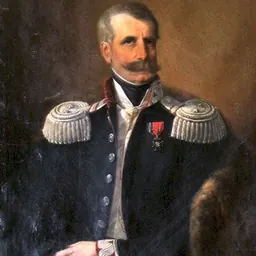

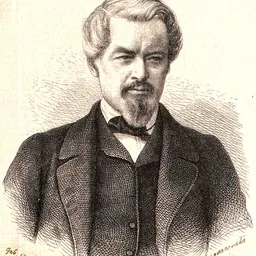
Contemporaries
People whose lives overlapped Edmund Matejko's




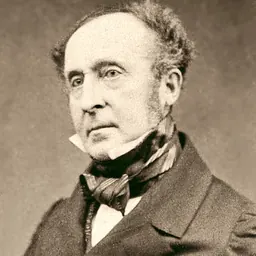
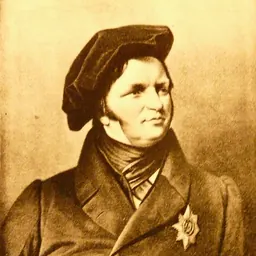
Frequently asked questions
Who was Edmund Matejko?
Polish insurgent and teacher, older brother of Jan Matejko
When was Edmund Matejko born?
Edmund Matejko was born on 12 November 1829 in Kraków.
When did Edmund Matejko die?
Edmund Matejko died on 2 July 1907 in Kraków.
Sources & further reading
Cite this page
APA: Biography.guide. (2026). Edmund Matejko. https://biography.guide/edmund-matejko/
MLA: "Edmund Matejko." Biography.guide, https://biography.guide/edmund-matejko/.
Chicago: "Edmund Matejko." Biography.guide. https://biography.guide/edmund-matejko/.
Data last updated: 2026-09-20 · Spot an error? Report a correction.
Page generated 2026-09-27 05:13 UTC