
About Edmund J. James
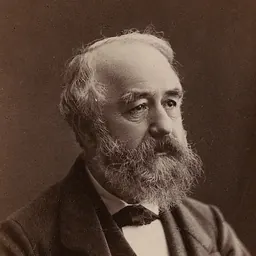
Lived 1855 – 1925 (aged 70). Edmund J. James was an American economist and jurist.
Edmund Janes James (May 21, 1855 – June 17, 1925) was an American academic, president of the University of Illinois from 1904 to 1920, and the primary founder, first president and first editor for the American Academy of Political and Social Science. He also served as the 7th president of Northwestern University from 1902 to 1904.
Early years Born in Jacksonville, Illinois, James was the son of Methodist minister, Colin Dew James, and Amanda Keziah (Casad) James. For his secondary school education, he went to a high school from Illinois State Normal University (now known as Illinois State University) and graduated in 1873. He attended Northwestern in 1874 and Harvard in 1876 but said to not have enjoyed what Harvard had to offer. He transferred to the University of Halle, where he studied economics under the direction of Johannes Conrad. He earned a doctorate in political economy in 1877 with a thesis on the American tariff.
University of Pennsylvania James was a public finance and administration professor at the Wharton School of Finance and Economy and taught political and social science in the Department of Philosophy. In addition to teaching, he would later become director of the Wharton School.
Trustees of the university and many of the staff were conservative and unenthusiastic about the idea of focusing on economics and political science, with courses in accounting, banking, and business law. In 1896, James was dismissed from the university. An observation made by Edward Potts Cheyney in 1940 on both James's and Robert Ellis Thompson's departure, he stated, "The departure of both [James and Thompson] was a serious and unnecessary loss to the University; it has not had too many men of their stature, and neither need have gone if greater reasonableness had been exerted."
Soon after his arrival at Northwestern James identified and committed to correcting wide-ranging problems. Poorly funded library services, science laboratories and professional schools, for example, limited education access for both faculty and students. Enrollment and its revenue stream were hampered by the absence of graduate and technical schools, residence and dining halls, a chapel, gymnasium, and student union.
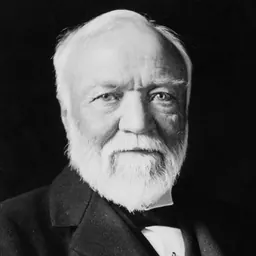
He persuaded the trustees to create a Jubilee Memorial Fund for celebrations during the 1905 semi-centennial but his other fund-raising ideas were less successful. He tried to market the school's name with football, baseball, and debate teams, and with such academic programs as alumni groups, scholarships, and fellowships. He planned to enlist Andrew Carnegie as an advocate of the school but Carnegie objected to the school's Methodist affiliation. James requested and received a half million dollars from the state legislature. Two years later he obtained another half million dollars. In 1909 came three million dollars and in 1911 two hundred thousand dollars. In addition, via the mill tax law, James increased savings by seven times that of the prior thirty-six years.
At James' tenth anniversary the University Senate honored his achievements during the 1914 commencement. A summary was presented by David Kinley (who would eventually succeed James):
President James established ties with China through the Chinese Minister to the United States, Wu Ting-Fang, and created a direct connection between China and the Urbana campus. James also set up the first office for foreign students in the United States. Between 1911 and 1920, the University of Illinois was educating a third of all the Chinese students in the United States; many that held degrees from Illinois later influenced China's development, including Coching Chu (class of 1913) who is known as "Father of Chinese Meteorology". Edward Y. Ying (class of 1939) was influential in the planning of modern Shanghai. H.Y. Moh (class of 1913) later became a cotton manufacturer and government minister.
Personal life James married Anna Margarethe Lange on August 22, 1879, whom he met during his time at the University of Halle.
They had three children named Anthony John (b.1885), Herman Gerlach, (b.1887), and Helen Dickson, (b.1889). James never had the best health with the contribution of working late and not having much exercise except for his hobby of horseback riding. It was said that he would ride around campus in his horse peeking at a window or looking at many lands in the area.
He lived in the old white house in front of the campus until the first world war came and made it be used for the Y.M.C.A for the school of military aeronautics. He then resided to a house on Nevada St., later to be used by successor David Kinley.
James was known to have many acquaintances around the world, including professors from different universities. He was an educated man who conversed on a variety of subjects, such as mathematics and natural sciences. He was said to be a kind person; one faculty member attributed his kindness to a wish to be appreciated.
Motivation was a big factor in James's persona, shown when he encouraged students and faculty to reach for more. In a convocation on December 3, 1914, he said:
Death
On June 17, after living for five years on a farm near Covina, California, James died at the age of seventy. His death was caused by uraemia and hardening of the arteries. He was buried at Mount Hope Cemetery in Urbana.
In the funeral service, the university senate marched in their academic uniform with the active and honorary pallbearers beside them. In the sermon by Reverend James C. Baker, he would talk about the personal characteristics James had. David Kinley gave a speech summarizing the achievements of his old friend and leader. In addition to the speech, Kinley also recited a poem:
Don’t just read it —
keep it.
Full-length biographies made to live with: read them, listen on the way to work, watch them tonight.
- E-book
- Audio
- Video
Instant download · yours to keep · every purchase keeps this site free
Important facts
People in Edmund J. James's life
Named in this biography and alive at the same time




Related people
Same field, nearest in time



Contemporaries
People whose lives overlapped Edmund J. James's




Frequently asked questions
Who was Edmund J. James?
American economist, professor, and university administrator (1855-1925)
When was Edmund J. James born?
Edmund J. James was born on 21 May 1855 in Jacksonville.
When did Edmund J. James die?
Edmund J. James died on 17 June 1925 in Covina.
What was Edmund J. James's occupation?
Edmund J. James was an economist and jurist.
What nationality was Edmund J. James?
Edmund J. James was American.
Sources & further reading
Cite this page
APA: Biography.guide. (2026). Edmund J. James. https://biography.guide/edmund-j-james/
MLA: "Edmund J. James." Biography.guide, https://biography.guide/edmund-j-james/.
Chicago: "Edmund J. James." Biography.guide. https://biography.guide/edmund-j-james/.
Data last updated: 2026-09-20 · Spot an error? Report a correction.
Page generated 2026-09-27 05:28 UTC