
About Edmund Davy
Lived 1785 – 1857 (aged 71–72). Edmund Davy was an Irish chemist and university teacher.
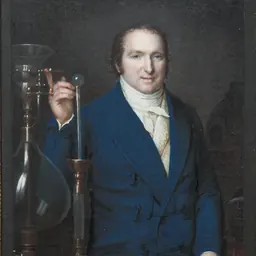
Edmund Davy FRS (1785 – 5 November 1857) was a professor of chemistry at the Royal Cork Institution from 1813 and at the Royal Dublin Society from 1826. He discovered acetylene, as it was later named by Marcellin Berthelot. He was also an original member of the Chemical Society, and a member of the Royal Irish Academy.
Humphry Davy's younger brother, Dr. John Davy, (24 May 1790 – 24 Jan 1868) also was a chemist who spent some time (1808–1811) assisting Humphry in his chemistry research at the Royal Institution. John was the first to prepare and name phosgene gas.
Edmund William Davy (born in 1826), son of Edmund Davy, became professor of medicine in the Royal College, Dublin, in 1870. That they cooperated in research is shown in a notice to the Royal Irish Academy on the manufacture of sulphuric acid which Edmund Davy ends with an acknowledgement of the assistance he received in his experiments given by his son, Edmund William Davy.
Major discoveries Spongy platinum Edmund Davy was the first to discover a spongy form of platinum with remarkable gas absorptive properties. Justus Liebig later prepared this in a purer form able to absorb up to 250 times its volume of oxygen gas. Further, Edmund Davy discovered that even at room temperature, finely divided platinum would light up from heat in the presence of a mixture of coal gas and air. In another such experiment, in 1820, he found that with the platinum, alcohol vapours were converted to acetic acid. (Humphry Davy had discovered a few years earlier that a hot platinum wire lit up in a mixture of coal gas and air. ) This release of energy from oxidation of the compounds, without flame, and without change in the platinum itself, was a sign of the catalytic property of platinum investigated later by Johann Döbereiner and other chemists.
Corrosion In 1829, Edmund Davy found that the use of zinc blocks would prevent corrosion of the iron structure of buoys.
In the Report of the British Association for 1835 he was the first to publish a series of experiments investigating the protective power of zinc employed in simple contact and in massive form. Shortly thereafter a French engineer, M. Sorel, secured a patent for a process of coating an iron surface with fluid zinc to protect against rust, and the technique was adopted by manufacturers of galvanized iron. Davy claimed priority of discovery, but it was found that a patent had long before been issued, on 26 September 1791 to Madame Leroi de Jancourt for the protection of metals with a coating of an alloy of zinc, bismuth and tin (though without a knowledge of the chemical principles involved).
This is an example of cathodic protection, an electrochemical technique developed in 1824 by Humphry Davy to prevent galvanic corrosion. He had recommended that the Admiralty should attach iron blocks to protect the copper sheathing on the hulls of Navy vessels. (The method was shortly discontinued because of an unfortunate side effect - the speed of the ships was reduced by increased fouling by marine life. The protective method reduced the release of copper ions that had otherwise poisoned the organisms and controlled their growth.)
Electrochemistry Edmund Davy made a series of experiments to detect the presence of metallic poisons by means of electricity, as a test of the presence of poisonous substances in cases of suspected poisoning. He applied a current of electricity to precipitate the salts of various metallic poisons from a prepared solution. The method was valuable because the result was not affected by the presence of organic matter from the contents of the stomach. When used as a test, Davy claimed that the presence of only 1/2500th part of a grain of arsenic could be discovered.
Acetylene In 1836, Edmund Davy discovered a gas which he recognised as "a new carburet of hydrogen." It was an accidental discovery while attempting to isolate potassium metal. By heating potassium carbonate with carbon at very high temperatures, he produced a residue of what is now known as potassium carbide, (K2C2), which reacted with water to release the new gas. (A similar reaction between calcium carbide and water was subsequently widely used for the manufacture of acetylene.)
In the paper he read to the British Association at Bristol, Davy anticipated the value of acetylene as an illuminating gas: "From the brilliance with which the new gas burns in contact with the atmosphere it is, in the opinion of the author, admirably adapted for the purpose of artificial light, if it can be procured at a cheap rate."
Thereafter it was forgotten until Marcellin Berthelot rediscovered this hydrocarbon compound in 1860, for which he coined the name "acetylene."
Don’t just read it —
keep it.
Full-length biographies made to live with: read them, listen on the way to work, watch them tonight.
- E-book
- Audio
- Video
Instant download · yours to keep · every purchase keeps this site free
Important facts
People in Edmund Davy's life
Named in this biography and alive at the same time

Related people
Same field, nearest in time



Contemporaries
People whose lives overlapped Edmund Davy's


Frequently asked questions
Who was Edmund Davy?
British chemist
When was Edmund Davy born?
Edmund Davy was born in 1785 in Penzance.
When did Edmund Davy die?
Edmund Davy died on 5 November 1857.
What was Edmund Davy's occupation?
Edmund Davy was a chemist and university teacher.
What nationality was Edmund Davy?
Edmund Davy was Irish.
Sources & further reading
Cite this page
APA: Biography.guide. (2026). Edmund Davy. https://biography.guide/edmund-davy/
MLA: "Edmund Davy." Biography.guide, https://biography.guide/edmund-davy/.
Chicago: "Edmund Davy." Biography.guide. https://biography.guide/edmund-davy/.
Data last updated: 2026-09-20 · Spot an error? Report a correction.
Page generated 2026-09-27 05:29 UTC